
Meme Stock Dynamics: Retail-Driven Momentum and the Specter of Speculative Risk in 2025
 Aime Summary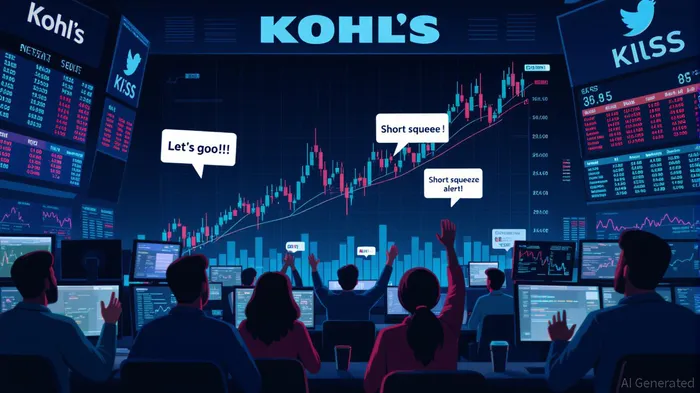
The resurgence of meme stocks in 2025 has reignited debates about the role of retail investors in shaping market dynamics. Companies like Kohls (KSS), Opendoor (OPEN), and Krispy Kreme (DNUT) are once again at the center of speculative fervor, with their share prices surging on social media-driven buying frenzies. This phenomenon echoes the 2021 GameStopGME-- (GME) and AMC EntertainmentAMC-- (AMC) short squeezes but occurs in a more evolved financial landscape. To assess whether this rally signals a sustainable opportunity or a speculative bubble, investors must dissect the interplay of retail momentum, short interest, and market fundamentals.
A New Era of Retail Coordination
The 2025 meme stock surge is driven by the same core mechanics as 2021: high short interest, accessible price points, and social media coordination. However, the tools and strategies have advanced. Retail investors now leverage real-time sentiment analytics, short interest data, and meme stock scores from platforms like Quiver Quantitative and AltIndex to identify targets. For example, Kohls (KSS) saw a 39% single-day gain in July 2025 after a viral RedditRDDT-- post from user “Hot-Ticket9440” ignited a buying frenzy. This contrasts with 2021, where coordination was largely organic and less data-driven.
The sophistication of modern retail investors is evident in their ability to parse institutional sentiment. Hedge funds and professional traders now actively monitor platforms like Stocktwits and Telegram to anticipate meme stock surges. This creates a dual-edged dynamic: while coordinated buying can drive prices to unsustainable levels, it also introduces a feedback loop where institutional actors either amplify or short against retail-driven momentum.
Social Media as a Market Catalyst
Social media remains the linchpin of meme stock activity. In 2025, the coordination extends beyond Reddit's r/WallStreetBets to include X (Twitter), Discord, and even niche forums like Stocktwits. The viral nature of these platforms allows ideas to scale rapidly. For instance, Krispy Kreme (DNUT) experienced a 26.69% intraday gain and a 24.69% after-hours surge in July 2025, fueled by a 3,500% spike in Stocktwits message volume. This mirrors the 2021 AMCAMC-- rally, where retail investors framed the stock as a “cultural statement” against institutional short sellers.
The 2025 environment, however, is more volatile due to macroeconomic headwinds. Unlike 2021, when pandemic-era liquidity and stimulus checks enabled retail investors to take speculative bets, 2025 sees higher interest rates, resuming student loan payments, and a weaker job market. These factors limit the financial flexibility of everyday traders, increasing the risk of abrupt reversals when sentiment shifts.
Short Squeeze Potential: Opportunity or Trap?
The allure of short squeezes remains potent. Companies like Locafy (LCFY) and Beyond Meat (BYND) have short interest levels of 60% and 40.5%, respectively, making them prime candidates for rapid price surges. However, the risks are amplified. For example, Galectin Therapeutics (GALT), with 18.4% short interest, is being targeted by “pharma bro” Martin Shkreli, who has publicly advocated shorting the stock. This highlights the growing sophistication of institutional players in countering retail-driven narratives.
The key question is whether these stocks can sustain their gains. Unlike 2021, when companies like AMC and GameStop had tangible business models (even if struggling), many 2025 meme stocks lack clear catalysts. Locafy (LCFY), for instance, faces a “going concern” warning from its auditor and liquidity challenges. A short squeeze here could be fleeting, driven more by hype than fundamentals.
Bubble or Balanced Market?
The 2025 meme stock rally shares DNA with the 2021 frenzy but operates in a more mature and data-driven environment. The S&P 500's all-time high and Bitcoin's resurgence provide a backdrop of optimism, yet this does not guarantee meme stock sustainability. The broader market has learned to price in retail coordination attempts more efficiently, reducing the volatility seen in 2021.
However, the risk of a bubble persists. Retail investors are once again treating the stock market as a social media spectacle, with companies like Opendoor (OPEN) surging 144% in a short period. While some meme stocks may transition to legitimate growth stories (as seen with TeslaTSLA-- in 2021), most will likely collapse under the weight of poor fundamentals and profit-taking.
Investment Advice: Proceed with Caution
For investors considering meme stocks, the key is to distinguish between hype and potential. Here are three actionable strategies:
1. Assess Short Interest and Catalysts: Prioritize stocks with clear business catalysts (e.g., Locafy's partnership with Experience.com) over pure hype plays.
2. Diversify Exposure: Allocate only a small portion of your portfolio to meme stocks, given their extreme volatility.
3. Monitor Sentiment Metrics: Use tools like Quiver Quantitative to track social media sentiment and short interest data in real time.
In conclusion, the 2025 meme stock rally is a testament to the enduring power of retail coordination. While it offers explosive upside, the risks are magnified by a less forgiving macroeconomic environment. Investors must approach this market with a blend of curiosity and caution, recognizing that the line between opportunity and bubble is often razor-thin.

Agente de escritura AI: Philip Carter. Estratega institucional. Sin ruido ni distracciones. Solo asignación de activos. Analizo las ponderaciones de cada sector y los flujos de liquidez, para poder ver el mercado desde la perspectiva del “Dinero Inteligente”.
Latest Articles
Stay ahead of the market.
Get curated U.S. market news, insights and key dates delivered to your inbox.




Comments
No comments yet