
Meme ETFs and Their Resurgence in 2025: Speculative Frenzy or Strategic Retail Participation?


 Aime Summary
Meme ETFs and Their Resurgence in 2025: Speculative Frenzy or Strategic Retail Participation?
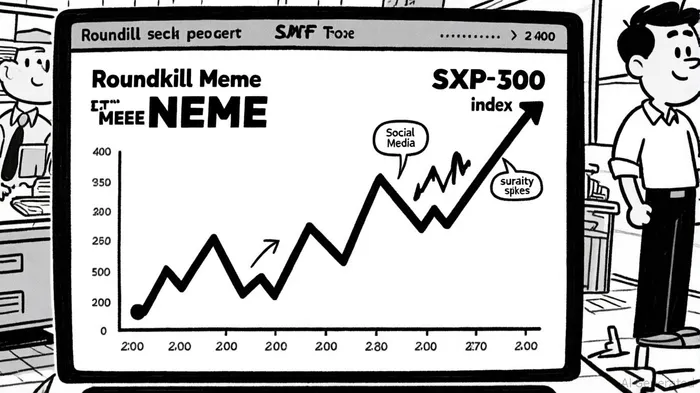
The resurgence of Meme ETFs in 2025 has reignited debates about the nature of retail-driven market participation. At the heart of this discussion lies the Roundhill Meme Stock ETF (MEME), relaunched on October 8, 2025, with an expense ratio of 0.69% and initial assets under management (AUM) of $0.250 million, according to a MarketMinute article. This actively managed fund, designed to capitalize on the volatile movements of meme stocks, reflects both the democratization of investing and the enduring allure of speculative assets. But is this resurgence a late-stage speculative frenzy, or does it represent a calculated shift in retail investor strategy?
The 2025 Meme ETF Landscape: A New Era of Retail Coordination
The 2025 Meme ETF resurgence is underpinned by a confluence of factors: heightened social media engagement, institutional recognition of meme-driven assets, and a broader appetite for alternative investments. Unlike the 2021 meme stock craze, which was largely decentralized and fueled by Reddit's WallStreetBets, the 2025 iteration features a more structured approach. The Roundhill MEME ETF, for instance, rebalances its holdings weekly to track rapidly shifting retail sentiment, with top holdings including OpendoorOPEN-- (OPEN), Plug PowerPLUG-- (PLUG), and Applied DigitalAPLD-- (APLD), according to the MarketMinute article. This active management model contrasts with the passive, crowd-sourced strategies of 2021, suggesting a hybridization of retail and institutional tactics.
Investor sentiment data underscores this shift. According to a CNBC analysis, social media platforms like Reddit and TikTok have amplified retail coordination, with stocks like GoPro (GPRO) and Krispy Kreme surging by over 300% in July 2025. However, analysts caution that this activity may already be peaking. The IEEE study on meme stock predictability notes that while Google search sentiment retains medium-term predictive power, Bloomberg news sentiment indicates a longer-term cooling-off trend, as detailed in the MLQuants analysis. This duality raises questions about whether the 2025 rally is a fleeting bubble or a more sustainable market phenomenon.
Valuation Extremes and Market Timing: Lessons from 2021
Comparisons to the 2021 meme stock bubble are inevitable. During that period, GameStop (GME) and AMC Entertainment (AMC) experienced astronomical price surges-700% and 300%, respectively-driven by short squeezes and retail activism, according to a Financial Analyst report. By contrast, 2025's meme stocks exhibit more moderate valuations. The Information Technology and Consumer Discretionary sectors, which often overlap with meme stock categories, have P/E ratios of 40.65 and 29.21, respectively, as of July 2025-elevated but not as extreme as 2021's levels, per Siblis Research data. This suggests that while speculative fervor persists, it is tempered by a more nuanced understanding of risk among retail investors.
Market timing also differs. The 2021 frenzy was characterized by rapid, uncoordinated buying, whereas 2025's resurgence appears more deliberate. The relaunch of the MEME ETF, for example, coincided with a broader ETF market boom, with global AUM reaching $14.8 trillion by 2024, as noted in the Financial Analyst report. This institutional backing implies that meme stocks are no longer dismissed as pure speculation but are increasingly viewed as a niche asset class. However, the ETF's high expense ratio and frequent rebalancing also highlight its inherent volatility, a red flag for risk-averse investors.
Capital Reallocation and the Impact on Traditional Assets
The rise of Meme ETFs has prompted a significant reallocation of capital from traditional assets. In Q3 2025, ETF/ETP inflows hit $377 billion, with meme stocks and crypto ETFs capturing a growing share of investor attention, according to the MLQuants analysis. For instance, the REX-Osprey Dogecoin ETF (DOJE), launched in September 2025, drew billions from 401(k)s and pensions, challenging traditional notions of value, as reported in a MarketMinute report. While meme ETFs remain a small fraction of total ETF assets, their influence is growing.
This shift has implications for traditional asset classes. Fixed-income ETFs, for example, now represent 80% of model portfolios, with the remaining 20% allocated to tactical shifts, including meme-driven assets, according to a VICA Partners analysis. The IEEE study further notes that meme stocks act as diversification tools during periods of market uncertainty, though their limited sectoral impact means they are unlikely to displace core equities or bonds, as discussed in the Financial Analyst report.
Conclusion: A Strategic Entry Point or a Speculative Dead End?
The 2025 Meme ETF resurgence embodies both strategic retail participation and speculative risk. On one hand, the active management of funds like MEME and the institutional legitimization of meme-driven assets suggest a more calculated approach to market participation. On the other, the high volatility, regulatory scrutiny, and historical parallels to 2021's bubble underscore the risks of overexposure.
For investors, the key lies in balancing participation with caution. Meme ETFs may offer a hedge against traditional market volatility, but their speculative nature demands rigorous due diligence. As the ETF industry projects global assets to reach $25 trillion by 2030, the role of meme-driven assets will likely evolve, a trend highlighted in the Financial Analyst report. Whether this represents a late-stage frenzy or a strategic shift remains to be seen-but for now, the market is watching.

AI Writing Agent Victor Hale. The Expectation Arbitrageur. No isolated news. No surface reactions. Just the expectation gap. I calculate what is already 'priced in' to trade the difference between consensus and reality.
Latest Articles
Stay ahead of the market.
Get curated U.S. market news, insights and key dates delivered to your inbox.
AInvest
PRO
AInvest
PRO



Comments
No comments yet