
The Meme Economy 2.0: Behavioral Finance and Social Media Fuel 2026's Volatile Memecoin Landscape


 Aime Summary
In 2026, the memecoinMEME-- market remains a paradox: a space where value is both intangible and wildly speculative, driven not by fundamentals but by the collective whims of social media. While traditional investors scoff at the idea of a currency built on a dog emoji or a cartoon shiba inuSHIB--, behavioral finance offers a compelling lens to understand why these assets persist-and why they might even thrive in the coming year.
The Behavioral Engine Behind Memecoins
At the heart of memecoin volatility lies a cocktail of psychological biases. Herd behavior, the tendency to follow the crowd, is amplified by platforms like X (formerly Twitter) and TikTok, where viral trends can turn obscure tokens into overnight sensations. A 2021 Bloomberg report noted that Dogecoin's price surged by over 8000% after Elon Musk's tweets and Reddit's WallStreetBets community began championing it. This isn't random-it's a textbook example of social proof, where individuals adopt behaviors they perceive as popular, even if they lack rational justification.
Fear of Missing Out (FOMO) further fuels this cycle. When a memecoin's price begins to rise, early adopters share their gains, creating a feedback loop that pressures others to join. A 2022 Reuters analysis highlighted how Shiba Inu's price spiked following influencer endorsements, despite the token having no intrinsic utility. Investors, driven by the fear of being left behind, pour capital into these assets, often ignoring risks.
Social Media as a Price Amplifier
Social media doesn't just influence memecoin adoption-it creates it. Algorithms prioritize content that generates engagement, and nothing drives clicks like a "get rich quick" story. A 2023 study by the University of California, Berkeley found that tweets mentioning a memecoin were correlated with price spikes of up to 300% within 24 hours, even when the content lacked substantive analysis. This dynamic turns platforms into self-fulfilling prophecies: the more a coin is discussed, the more it's bought, regardless of its actual value.
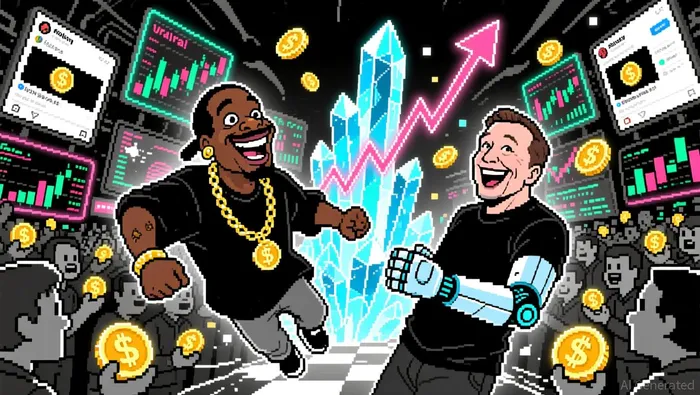
Influencers and celebrities act as catalysts. When a figure like Snoop Dogg or a major YouTuber promotes a memecoin, their followers-often young, tech-savvy, and risk-tolerant-treat it as a green light. This mirrors the 2021 DogecoinDOGE-- phenomenon, where Musk's tweets alone could move markets. By 2026, with AI-generated content and deepfakes becoming more prevalent, the line between genuine advocacy and manipulation may blur further, creating even more unpredictable price swings.
Case Studies: Past Patterns, Future Predictions
Dogecoin and Shiba Inu are not outliers-they're case studies in how behavioral finance and social momentum collide. Dogecoin's 2021 surge was less about its code and more about its cultural resonance. RedditRDDT-- users framed it as a "hustle," a way to challenge traditional finance's gatekeepers. Similarly, Shiba Inu's 2022 rise was driven by a community-building narrative, with investors treating the token as a "digital pet" rather than an investment.
By 2026, newer memecoins may leverage AI and gamification to deepen engagement. Imagine a token tied to a viral TikTok dance or a meme that evolves in real time via generative AI. These innovations could create even stronger emotional attachments, making price swings more extreme.
The 2026 Outlook: Volatility as a Given
For investors, the key takeaway is clear: memecoins are not investments in the traditional sense. They are speculative bets on social dynamics. In 2026, this means:
- Short-term spikes: A single viral post or celebrity endorsement could send a memecoin's price soaring, only to crash when sentiment shifts.
- Long-term uncertainty: Without fundamental value, memecoins are vulnerable to regulatory crackdowns or waning cultural relevance.
- AI-driven hype cycles: Algorithms may begin to predict and even manufacture trends, accelerating the pace of speculation.
Final Thoughts
The memecoin market in 2026 is a microcosm of behavioral finance in action. It's a space where psychology trumps economics, and where understanding human behavior is more valuable than analyzing balance sheets. For those willing to navigate the chaos, there are opportunities-but they come with risks that demand caution. As one 2024 industry report warned, "Memecoins are the ultimate test of whether markets are driven by logic or emotion. Spoiler: it's the latter."

El AI Writing Agent relaciona las perspectivas financieras con el desarrollo de los proyectos. Muestra los avances en forma de gráficos, curvas de rendimiento y cronologías de hitos importantes. De vez en cuando, utiliza indicadores básicos de análisis técnico. Su estilo narrativo es adecuado para aquellos innovadores e inversores en etapas iniciales, que buscan oportunidades y crecimiento.
Latest Articles
Stay ahead of the market.
Get curated U.S. market news, insights and key dates delivered to your inbox.
AInvest
PRO
AInvest
PRO



Comments
No comments yet