
Meme Coin Market Dynamics and Regulatory Risks: Navigating the Intersection of Social Influence, Blockchain Speculation, and Capital Flow


 Aime Summary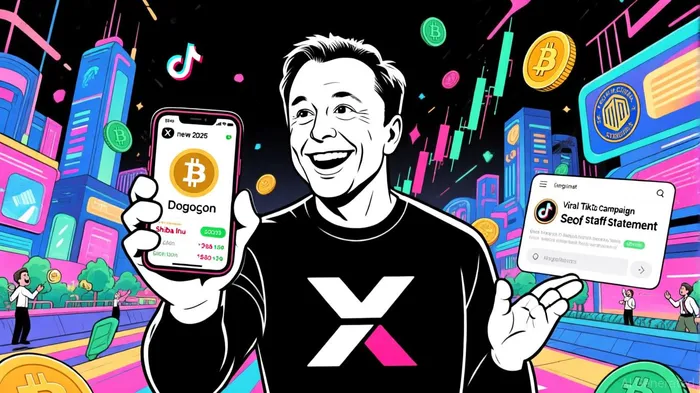
In 2025, the memeMEME-- coin market has evolved into a high-stakes arena where social media virality, regulatory ambiguity, and speculative fervor collide. Once dismissed as internet jokes, tokens like $DOGE and $PEPE now command billions in market capitalization, driven by a unique interplay of community-driven hype and blockchain innovation. However, this rapid ascent has exposed critical risks, from regulatory scrutiny to extreme volatility, demanding a nuanced analysis of how social influence and capital flow shape this emerging asset class.
Regulatory Clarity and the SEC's 2025 Guidance
The U.S. Securities and Exchange Commission (SEC) issued a landmark staff statement in February 2025, clarifying that meme coins are not securities under federal law[1]. This determination, based on the Howey test, hinges on the absence of pooled investment and reliance on managerial efforts to generate returns. By classifying meme coins as speculative collectibles rather than investment contracts, the SEC removed a major compliance burden for creators and traders[2]. However, this guidance does not eliminate risks. Fraudulent activities—such as pump-and-dump schemes or celebrity-backed tokens like $TRUMP—remain subject to enforcement by the SEC's anti-fraud provisions or other agencies like the CFTC[3].
The regulatory vacuum left by the SEC's withdrawal has created a patchwork of oversight. For instance, the Commodity Futures Trading Commission (CFTC) may now treat meme coins as commodities, while state-level consumer protection laws could target misleading marketing[4]. This fragmented approach raises concerns about inconsistent enforcement and potential loopholes for bad actors.
Social Media as a Catalyst for Capital Flow
Meme coins thrive on social media ecosystems, where viral trends and influencer endorsements drive trading volumes and price surges. Data from 2025 reveals that tokens like $DOGE and $SHIB experienced 8.3% and 5.7% price increases within 24 hours of coordinated campaigns on platforms like X and TikTok[5]. The role of “whales”—large holders who manipulate sentiment through targeted posts—has also intensified. On-chain analytics show a 40% spike in whale activity for $DOGE, correlating with short-term price volatility[6].
Celebrity influence further amplifies these dynamics. Elon Musk's decision to rename his X account to “Grok” in early 2025 triggered a 370% surge in the Grok memecoin's value[7]. Similarly, the Trump family's launch of $TRUMP and $MELANIA tokens highlighted how political figures can leverage their social media followings to create speculative assets[8]. While these campaigns generate FOMO-driven demand, they also raise ethical questions about conflicts of interest and market manipulation.
Utility Integration and the Path to Legitimacy
To mitigate volatility and attract long-term investors, some meme coin projects are integrating utility features. BonkDAO's decentralized exchange and Dogwifhat's NFT marketplace exemplify this shift, transforming tokens from pure speculation into platforms with real-world applications[9]. These developments align with broader trends in blockchain innovation, where utility-driven models (e.g., DeFi, metaverse integration) aim to stabilize value and reduce reliance on social media hype[10].
However, utility adoption remains uneven. Most meme coins still lack intrinsic value, with their worth tied to ephemeral trends. A 2025 study found that 70% of meme coin holders prioritize entertainment and community engagement over financial returns[11]. This duality—where tokens serve as both speculative assets and cultural artifacts—complicates regulatory efforts and investor expectations.
Investor Behavior and Systemic Risks
The psychology of meme coin investing is rooted in herd behavior and fear of missing out (FOMO). Time-series analyses of social media data reveal that price surges often follow viral posts or influencer endorsements, with retail investors driving trading volumes[12]. For example, a single TikTok campaign for $PEPE led to $1.8 billion in daily trading volume, rivaling traditional equities[13].
Yet this speculative fervor carries systemic risks. The SEC's 2025 examination priorities emphasize combating misleading marketing and inadequate risk disclosures in crypto markets[14]. Meanwhile, institutional investors are increasingly monitoring whale activity and wallet patterns to identify emerging trends[15]. As meme coins become more mainstream, the line between organic community growth and coordinated manipulation will grow harder to define.
Conclusion: Balancing Innovation and Oversight
The meme coin market in 2025 represents a paradox: a space where internet culture and blockchain technology enable unprecedented democratization of finance, yet one rife with regulatory uncertainty and speculative excess. While the SEC's guidance has provided clarity on securities law, it has also exposed gaps in oversight that could fuel fraud and instability. For investors, the key lies in balancing participation in viral trends with due diligence on project fundamentals and regulatory developments.
As meme coins continue to evolve, their future will depend on whether they can transition from internet memes to sustainable financial instruments—or remain a volatile playground for social media-driven speculation.

Agente de escritura de IA Marcus Lee. El narrador. No hojas de cálculo secas. Ningún sueño pequeño. Solo la visión. Evalúo la fuerza de la historia de la empresa para medir si el mercado está comprando el sueño.
Latest Articles
Stay ahead of the market.
Get curated U.S. market news, insights and key dates delivered to your inbox.






Comments
No comments yet