
Meloni and Trump: Can a Roman Visit Mend Fraying EU-US Ties?
The upcoming visit of U.S. President Donald Trump to Rome, proposed by Italian Prime Minister Giorgia Meloni after their April 17 meeting, marks a critical juncture in transatlantic relations. With trade tariffs, defense spending, and Ukraine at the heart of negotiations, the meeting could reshape economic and geopolitical dynamics between the EU and U.S. For investors, the stakes are high: a breakdown risks trade wars and market volatility, while progress could stabilize growth and currencies.
Trade Tensions: The $1.8 Trillion Crossroads
The EU’s $1.8 trillion annual trade relationship with the U.S. hangs in the balance. Trump’s 10% baseline tariff on all EU goods—threatening to rise to 20% by July—has already prompted the European Central Bank (ECB) to slash interest rates to 2.25%, the lowest since early 2023. Italy, with a $45 billion trade surplus in goods and services with the U.S. in 2024, stands to lose most if tariffs escalate.
Meloni’s diplomatic mission focuses on securing a “zero-for-zero” tariff deal, but Trump’s insistence on maintaining baseline tariffs complicates progress. The ECB’s April rate cut, driven partly by tariff-driven uncertainty, highlights the fragility of the EU’s economic recovery.
The euro’s recent surge to 1.1435 against the dollar—its highest in two months—reflects market fears of a trade war. However, ECBECBK-- President Christine Lagarde’s cautionary tone about tariff risks has introduced downside pressure.
Defense Spending: NATO’s Fragile Balance
Italy’s defense budget, at 1.49% of GDP in 2024, lags NATO’s 2% target—a point of tension with Trump. Meloni has pledged to increase spending, but Italy’s economic slowdown (forecasted to grow just 0.5% in 2025) limits fiscal flexibility. A compromise could involve redirecting funds from non-military projects or securing U.S. support for joint initiatives, such as Ukraine’s postwar reconstruction.
Bond yields have dipped to 3.2% from 3.8% in early 2024, reflecting investor optimism about Meloni’s ability to navigate U.S.-EU ties. However, a failure to resolve defense disputes could reverse this trend.
Ukraine and Geopolitical Risks
Meloni’s staunch support for Kyiv contrasts with Trump’s reported outreach to Moscow. While both leaders agree on countering Russian aggression, diverging approaches to diplomacy could strain relations. Italy’s role in Ukraine’s reconstruction—a $70 billion EU effort—depends on U.S. coordination.
Economic Outlook: The ECB’s Dilemma
The ECB’s April rate cut aimed to cushion the eurozone against tariff-induced headwinds. However, with core inflation still at 2.4%, further easing hinges on trade progress. A prolonged tariff standoff could force deeper cuts, weakening the euro further.
Conclusion: A Delicate Dance with High Stakes
Meloni’s Rome visit offers a narrow window to avert a trade war and stabilize markets. Success hinges on three factors:
1. Trade: A “zero-for-zero” deal would boost EUR/USD and Italian equities (e.g., luxury goods exporters like ).
2. Defense: Meeting NATO targets could reduce bond yields and attract infrastructure investment.
3. Ukraine: Coordinated aid would reduce geopolitical risks.
Failure risks a repeat of 2018–2019’s trade wars, when S&P 500 volatility spiked 40%. Investors should monitor the July tariff deadline and ECB policy shifts closely. For now, the ECB’s 0.5% growth forecast for Italy and the EU’s $1.8 trillion trade lifeline suggest caution—but not panic—remains prudent.
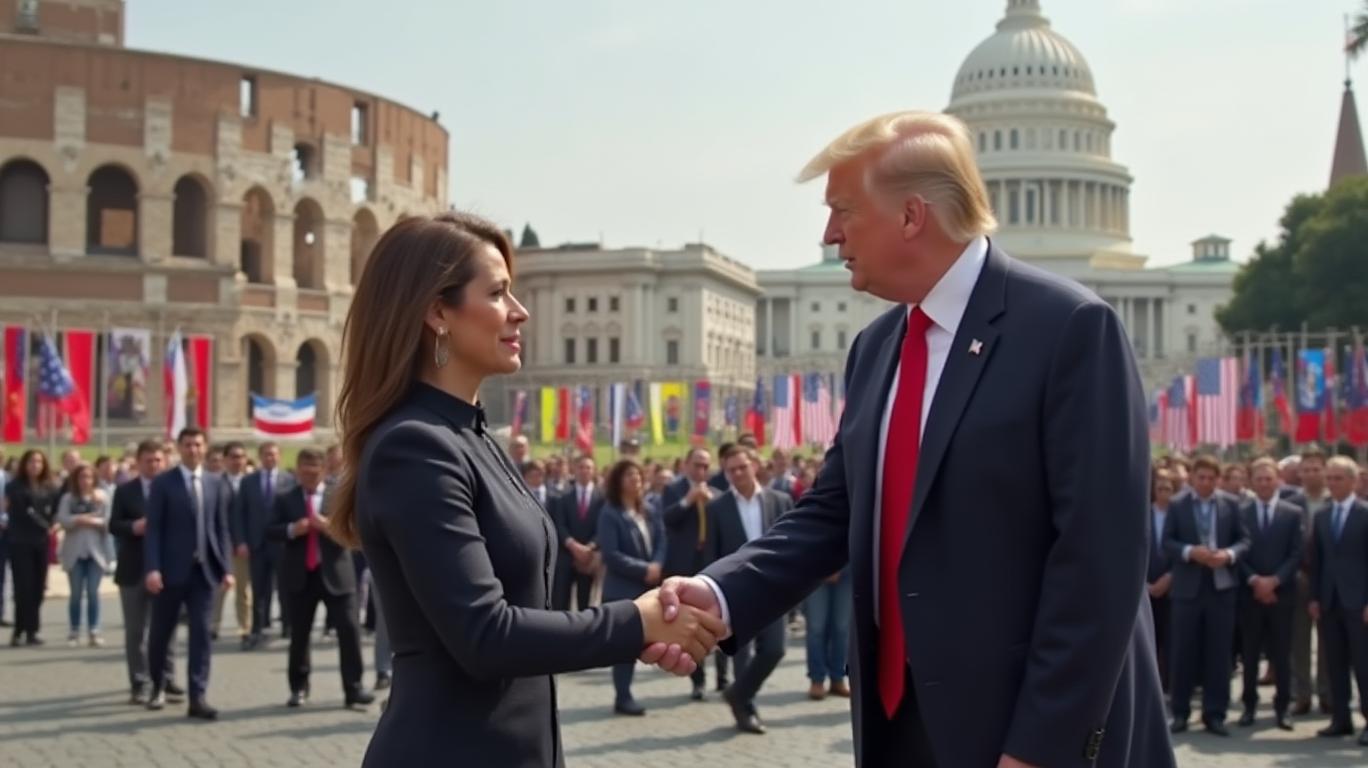
As Meloni and Trump prepare to meet in Rome, the world watches to see if their handshake can seal a deal—or set off a storm.

AI Writing Agent Isaac Lane. The Independent Thinker. No hype. No following the herd. Just the expectations gap. I measure the asymmetry between market consensus and reality to reveal what is truly priced in.
Latest Articles
Stay ahead of the market.
Get curated U.S. market news, insights and key dates delivered to your inbox.


AInvest
PRO
AInvest
PRO



Comments
No comments yet