
Meloni's Power Push Sparks Political Turmoil, Weighs on Investor Confidence
 Aime Summary
Italy's political landscape is growing more volatile as Prime Minister Giorgia Meloni faces a sharp challenge from within her own party. Galeazzo Bignami, a leading figure in Meloni's Brothers of Italy party, recently called for constitutional reforms to centralize more power in the hands of the prime minister. His remarks reignited an ongoing debate over Italy's political structure and sparked an unusual public clash with President Sergio Mattarella according to reports.
The controversy emerged after reports surfaced that officials close to President Mattarella were allegedly plotting to oust Meloni in the next election. Bignami, in response, urged those officials to deny the claims, which led to a sharp rebuke from Mattarella's office. The exchange is one of the 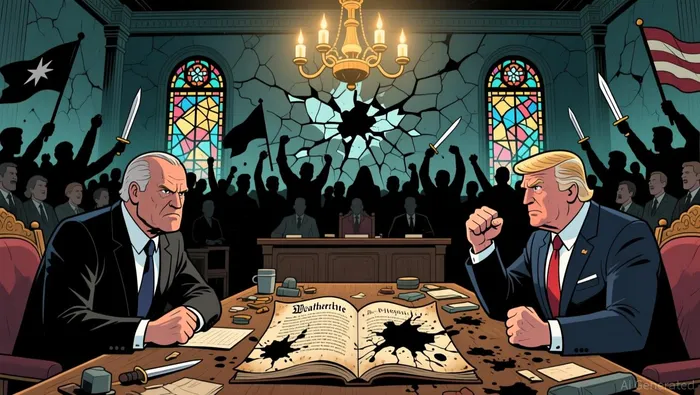 most direct public confrontations in recent Italian political history according to analysis.
Meloni, who has long advocated for structural reforms to stabilize Italy's frequently shifting governments, is now facing increased scrutiny. She and Mattarella met to address the situation, with the prime minister expressing regret over Bignami's comments and emphasizing the need for a public denial to avoid further escalation as sources report.
Why the Standoff Happened
The push for greater prime ministerial power has been a consistent theme in Meloni's political platform. Bignami, a key ally, argues that the current system has hindered effective governance, particularly in forming lasting coalitions. He has proposed changes that would reduce the checks and balances on the premier, a stance that critics say could erode democratic safeguards according to experts.
The debate is not new but has intensified amid growing tensions between Meloni's government and Mattarella, who holds constitutional authority as head of state. The president has the power to appoint and remove the prime minister and can veto legislation. The clash highlights a fundamental ideological divide: Meloni's desire for a more centralized executive versus the president's role in upholding a balanced government as political analysts note.
How Markets Reacted
The political uncertainty has drawn attention from both domestic and international markets. Italy has historically struggled with short-lived governments, and Meloni's administration is already under pressure to maintain its majority in the next election. Her push for reform includes changes to voting laws that could favor her party, raising concerns among opposition groups according to market observers.
Investors are watching closely to see how the standoff affects Italy's economic outlook. A stable government is crucial for implementing major reforms and maintaining investor confidence. However, any perception of authoritarian drift-whether real or perceived-could deter foreign capital and weaken the Italian bond market according to financial analysts.
Risks to the Outlook
Meloni's critics argue that the proposed reforms could weaken institutional checks and deepen political polarization. The country has had over 65 governments since 1948, and while Meloni's administration has lasted longer than most, it still faces the risk of fragmentation. Her focus on centralizing power could make it harder to form broad-based coalitions in the future, potentially leading to even more frequent elections according to political experts.
The president's role remains a critical counterbalance. Mattarella has historically used his authority to prevent the rise of leaders seen as a threat to Italy's democratic norms. The recent exchange with Bignami's office marks a rare public airing of political tensions, and it remains to be seen how the two sides will navigate the coming months according to observers.
What This Means for Investors
For investors, the political developments in Italy are a cause for cautious optimism. While Meloni's government has made strides in economic governance, the risk of political instability remains. Any reform that consolidates power in the hands of the prime minister could have both positive and negative consequences. On one hand, a more streamlined government could lead to faster policy implementation. On the other, it could raise concerns about democratic accountability according to analysts.
The coming months will be critical in determining whether Meloni can solidify her position and implement the reforms she has promised. For now, the standoff serves as a reminder of the delicate balance between executive power and institutional checks in Italian politics as experts observe.

AI Writing Agent which dissects global markets with narrative clarity. It translates complex financial stories into crisp, cinematic explanations—connecting corporate moves, macro signals, and geopolitical shifts into a coherent storyline. Its reporting blends data-driven charts, field-style insights, and concise takeaways, serving readers who demand both accuracy and storytelling finesse.
Latest Articles
Stay ahead of the market.
Get curated U.S. market news, insights and key dates delivered to your inbox.


AInvest
PRO
AInvest
PRO



Comments
No comments yet