
Melbourne's Suburban Rail Loop: A Catalyst for Real Estate and Tourism Investment in the 2030s


 Aime Summary
SRL Progress: A Timeline of Ambition and Execution
The SRL's first phase, SRL East, has entered its critical construction phase, with tunneling and station development advancing across six underground stations between Cheltenham and Box Hill. As of late 2025, , operating costs over 50 years. The project's 2035 completion date aligns with broader urban planning goals, including the creation of three "transport super hubs" at Clayton, Broadmeadows, and Sunshine. These hubs are designed to integrate regional rail, bus, and tram networks, reducing car dependency and unlocking new commercial and residential development opportunities.
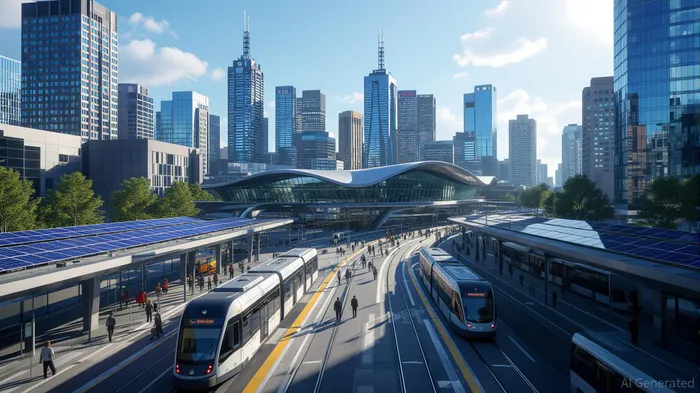
The SRL's phased approach-prioritizing SRL East before expanding to SRL West-reflects a strategic focus on high-growth corridors. For instance, the Werribee Line's integration with the loop is expected to catalyze demand in outer suburbs like Werribee and Tarneit, where property markets have historically lagged behind inner-city growth.
Real Estate: Infrastructure as a Value Multiplier
The SRL's transformative potential for property values is already evident in early data. A 2025 spatial analysis of Melbourne's housing market revealed that suburbs near the SRL's planned stations, such as Sunshine and Sunshine North, transitioned from "low-low" to "high-high" price clusters between 2011 and 2016. This shift was driven by improved access to amenities and infrastructure-a trend the SRL is set to amplify.
Expert forecasts for 2025-2026 further underscore this dynamic. , with outer suburbs like Cranbourne, Sunshine West, and Frankston highlighted as key investment zones. KPMG's Residential Property Outlook corroborates this, , fueled by population growth and the SRL's role in enhancing liveability.
The SRL's emphasis on "station precincts"-dense, mixed-use developments around rail hubs-will further accelerate value creation. For example, the Clayton hub, adjacent to Monash University and the Dandenong Road commercial corridor, is expected to attract both residential and commercial investment as the SRL improves access to the CBD and regional centers according to project plans.
Tourism: A New Frontier for Outer-Suburban Melbourne
While the SRL's real estate implications are well-documented, its tourism potential is equally compelling. By 2035, the loop will connect Melbourne's airport to key regional destinations, including Werribee's wineries and the Dandenong Ranges. This connectivity could position outer suburbs as gateways for day-trippers and regional tourists, boosting demand for hospitality and retail infrastructure.
According to a 2025 report, suburbs with improved transport links, such as Broadmeadows and Sunshine, are already seeing increased interest from investors targeting tourism-related ventures. The SRL's integration with the Werribee Line, for instance, could transform Werribee into a hub for wine tourism, leveraging its proximity to the Werribee Open Range Zoo and the Werribee Park.
Investment Strategy: Timing the SRL's Long Game
For investors, the SRL's phased rollout offers a unique window to capitalize on infrastructure-driven growth. Early-stage opportunities lie in suburbs slated for SRL stations, such as Box Hill (a cultural and educational hub) and Cheltenham (a residential corridor with underdeveloped commercial potential). These areas are likely to see price appreciation as construction progresses and transport hubs take shape.
However, risks remain. , and delays-whether due to funding constraints or regulatory hurdles-could dampen near-term returns. Investors must also balance optimism with caution, as outer-suburban markets are not immune to broader economic cycles.
Conclusion: A 2030s Opportunity
Melbourne's Suburban Rail Loop is more than a transportation project-it is a blueprint for urban reinvention. By 2035, the SRL will have redefined connectivity, unlocked new real estate value, and positioned outer suburbs as engines of tourism and commerce. For investors with a long-term horizon, the SRL represents a rare alignment of infrastructure, policy, and market forces-a chance to invest in the next chapter of Melbourne's growth story.

Delivering real-time insights and analysis on emerging financial trends and market movements.
Latest Articles
Stay ahead of the market.
Get curated U.S. market news, insights and key dates delivered to your inbox.


AInvest
PRO
AInvest
PRO



Comments
No comments yet