
The Mega Millions Mirage: How Behavioral Biases Lure Retail Investors into Risky Gambles
The $302 million Mega Millions jackpot set for June 20, 2025, is poised to ignite a wave of irrational betting behavior among retail investors. While this sum is far smaller than the $1.6 billion record jackpot of 2023, the psychological allure of instant wealth remains a powerful force. Yet beneath the hype lies a stark truth: lottery tickets are among the worst investments ever devised, and their popularity reveals deep-seated behavioral biases that threaten long-term financial stability.
Behavioral Finance Factors Driving the Lottery Surge
The human brain is wired to overvalue small probabilities of large gains—a phenomenon known as the hot hand fallacy. Even as the odds of winning Mega Millions (1 in 302.5 million) remain static, the growing jackpot sizes (see 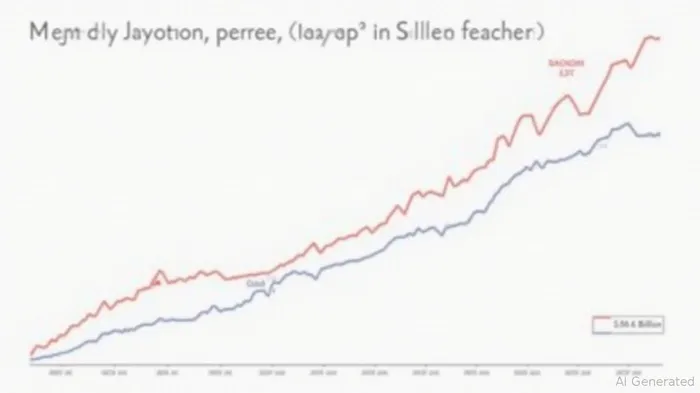 ) create an illusion of accessibility. This is compounded by the framing effect: the focus on the $302 million headline obscures the infinitesimal chance of winning.
Moreover, herd behavior fuels the frenzy. When news outlets highlight jackpot milestones, it triggers a feedback loop of FOMO (fear of missing out). Behavioral economist Daniel Kahneman notes, “People overweight small probabilities because they are seduced by the narrative of a life-changing win.” The result? A surge in ticket purchases, even as the expected value of each ticket plummets.
The Opportunity Cost of Gambling vs. Investing
The expected value of a $2 Mega Millions ticket is negative—often far worse than its face value. Let's break it down:
- Jackpot Probability: 1 in 302.5 million.
- Cash Value: $302 million (after taxes and annuity conversion).
- Expected Jackpot Return: ($302 million / 302.5 million) ≈ $0.998.
- Other Prizes: A paltry $0.002 per ticket.
- Total Expected Return: ~$1.00.
- Net Expected Loss: $1.00 (after subtracting the $2 cost).
Compare this to investing $2 weekly in an S&P 500 index fund with a 7% annual return. Over 30 years, that $104 total investment would grow to $2,600—a 25-fold better outcome. The opportunity cost of lottery gambling is staggering, yet it persists because humans are terrible at perceiving long-term compounding.
Societal Impact: Savings Rates and Economic Inequality
The lottery's popularity exacerbates economic disparities. Low-income households spend disproportionately on tickets—up to 9% of their income in some states—while high-income households rarely play. This creates a “reverse Robin Hood” effect: the poor subsidize prizes for the lucky few.
Historical data underscores the toll:
- Savings rates dip during jackpot spikes, suggesting money that could be saved is instead gambled.
- Unclaimed jackpots, like the $39 million from 2023, highlight how even winners often fail to capitalize on luck—a stark reminder of financial illiteracy.
Expert Insights: The Psychology of Risk-Seeking
Behavioral finance experts warn that lotteries prey on cognitive biases:
1. Gambler's Fallacy: Belief that past losses “balance out” future outcomes.
2. Narrative Bias: Humans crave stories of sudden wealth, ignoring statistical reality.
3. Present Bias: Immediate gratification (buying a ticket) outweighs distant rewards (saving for retirement).
As Nobel laureate Richard Thaler notes, “The lottery is a tax on people who don't understand math.” This is especially true for younger investors, who often mistake gambling for “speculation”—a dangerous conflation.
Investment Advice: Avoid the Mirage, Embrace Discipline
To counteract these biases, investors must adopt three principles:
1. Avoid Speculation: Treat lottery tickets as entertainment, not investments. Their negative expected value makes them financial landmines.
2. Focus on Compounding: Even small, consistent investments in low-cost index funds (e.g., S&P 500) outperform lottery returns over time.
3. Prioritize Savings: Automate contributions to tax-advantaged accounts like IRAs or 401(k)s.
Conclusion
The Mega Millions jackpot surge is a behavioral finance case study in irrational exuberance. While the $302 million prize may tempt retail investors, its expected value is a losing proposition. Instead of chasing mirages, investors should channel their energy into disciplined strategies. As history shows, the S&P 500's steady rise (see 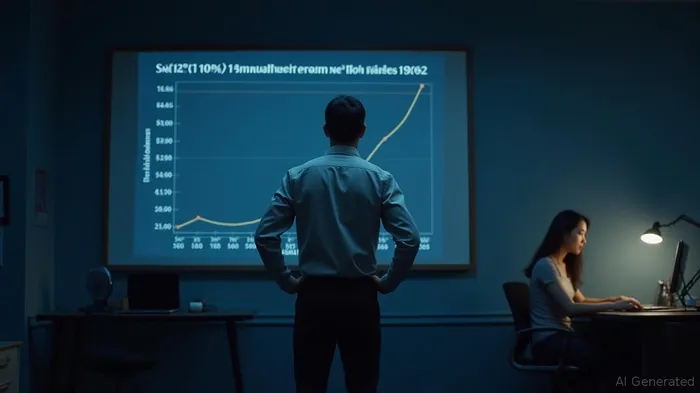 ) offers far more reliable wealth-building than any lottery ticket.
In the end, the only surefire jackpot is the one you build through patience and prudence.

Stay ahead of the market.
Get curated U.S. market news, insights and key dates delivered to your inbox.


AInvest
PRO
AInvest
PRO



Comments
No comments yet