
Mega Millions Jackpot Surge: When Hope Outweighs Reason—A Behavioral Economics Playbook
 Aime Summary
The Mega Millions jackpot has hit $90 million as of July 15, 2025, and shows no signs of stopping. But here's the kicker: this isn't a record. Not even close. The $1.58 billion jackpot in 2023 still reigns supreme. So why does the public keep buying tickets? Let's unpack the psychology driving this frenzy and what it means for your wallet—and your portfolio.
The Allure of “Someday”
The human brain is wired to crave hope, especially when life feels stagnant. Mega Millions' recent surge—climbing from $50 million to $90 million in just two weeks—taps into that primal urge. The math is laughably bleak: a 1-in-290 million chance to win. Yet, sales data shows a clear correlation between jackpot size and ticket purchases. Take July 2025: as the pot grew, so did sales. On July 15, sales hit $20.5 million. By July 21, they skyrocketed to $101.4 million. 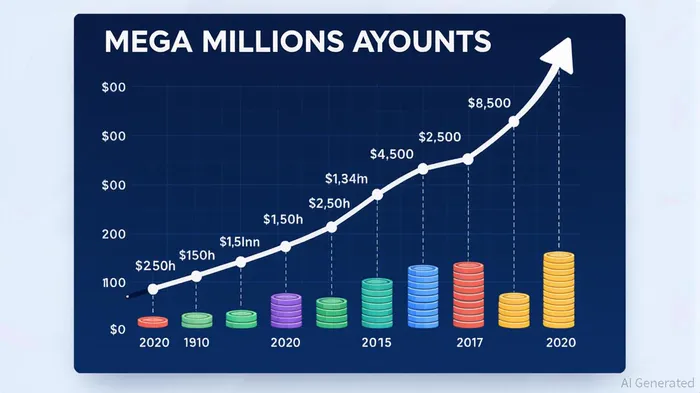 .
.
This isn't just about luck—it's about prospect theory, a cornerstone of behavioral economics. People overvalue the tiny chance of a life-changing win and ignore the near-certain loss. The $5 ticket becomes a “low-cost dream,” a psychological escape from reality. And now, with ticket prices doubling to $5 in 2025, states are cashing in.
The Multiplier Madness
The lottery's 2025 rule change—adding a built-in multiplier to boost smaller prizes—hasn't just increased ticket costs. It's created a dopamine-driven feedback loop. Match three numbers and suddenly your $5 ticket could be worth $50. That's not a jackpot, but it's enough to keep players coming back. The July 15 draw saw seven tickets win $1 million or more for partial matches. These “near misses” trick the brain into thinking, “Next time, I'll hit it big.”
States Cash In—But at What Cost?
The sales surge isn't just about individual gambles. It's a windfall for states. Texas alone saw Mega Millions sales jump from $1.7 million to $5.2 million between July 15 and July 21. . These revenues fund schools, roads, and pensions. But there's a dark side: studies link lottery spending to lower savings rates in low-income households. Yet, states keep raising ticket prices, betting that hope will always outweigh rationality.
The Investment Play: Follow the Cash Flow
Here's where this matters to investors: follow the money.
- Lottery Tech & Distribution: Companies enabling online ticket purchases or instant-win games (think Scientific Games or International Game Technology) could profit as digital adoption grows.
- Financial Services: Wealth management firms catering to sudden lottery winners (like Raymond James or niche advisors) will see demand spike after a big win.
- State Infrastructure: States like Texas and California, where sales dominate, may redirect lottery revenue to public projects. Look for municipal bonds tied to high-lottery states.
Avoid getting swept up in the “get rich quick” hype. The lottery isn't an investment—it's a tax on optimism. But the industries and sectors benefiting from this behavior? That's a different story.
Final Takeaway: Hope ≠ Strategy
The Mega Millions surge is a masterclass in behavioral economics. People gamble not because they'll win, but because they might. As an investor, don't mimic their irrational exuberance. Instead, track the industries that profit from it. And remember: the real jackpot is in understanding human psychology—and betting on the systems that win when we lose.
Stay vigilant, stay smart—and never let hope cloud your portfolio.

Stay ahead of the market.
Get curated U.S. market news, insights and key dates delivered to your inbox.


AInvest
PRO
AInvest
PRO



Comments
No comments yet