
Mega Millions' Irrational Exuberance: A Behavioral Finance Perspective on Retail Investor Behavior
The Mega Millions jackpot surged to $70 million by July 8, 2025, after rolling over from its July 4 $60 million drawing—a stark example of how lottery volatility can trigger irrational exuberance among retail investors. This case study offers critical insights into flawed probability perceptions, the interplay between economic anxiety and gambling behavior, and the opportunity costs of chasing low-probability, high-reward outcomes.
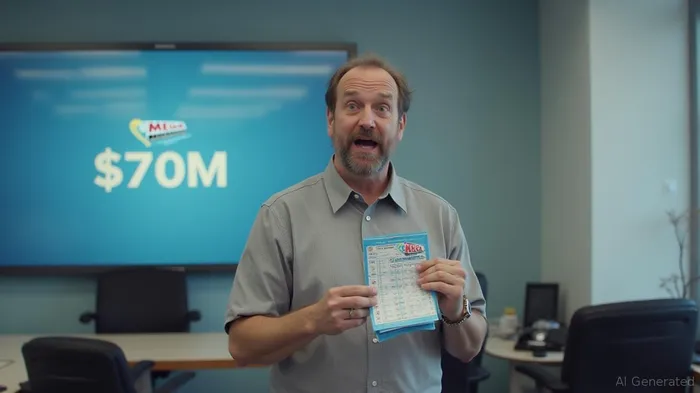
The July 4–8 Surge: A Behavioral Finance Lens
The July 8 jackpot's increase reflects a classic case of irrational exuberance, where investors (or gamblers) overvalue the likelihood of winning due to psychological biases. The odds of hitting the jackpot—1 in 290 million—are effectively indistinguishable from zero for most participants. Yet, the surge in ticket sales (even if unquantified) suggests a misperception of risk. Behavioral economists call this the “gambler's fallacy,” where individuals believe past outcomes (e.g., no winners in recent draws) increase future probabilities, despite statistical independence.
The April 2025 rule changes—raising ticket prices to $5 and adding a multiplier feature—also exploit cognitive biases. While the multiplier boosts non-jackpot prizes (e.g., turning a $2 million win into $10 million), it distracts from the unchanged jackpot odds. This creates a “nudged” perception of fairness, making the game feel more equitable even as the expected return remains negative.
Historical Jackpot Cycles and Economic Anxiety
The Mega Millions jackpot's volatility mirrors broader economic cycles. The largest jackpots often coincide with periods of financial stress or inequality. For instance, the $1.602 billion jackpot won in Florida (August 2023) followed a year of rising inflation and wage stagnation. Similarly, the July 2025 surge occurred amid debates over U.S. fiscal policy and rising interest rates, which dampen bond returns and push retail investors toward speculative bets.
The data shows a weak but observable positive correlation: higher unemployment and economic uncertainty correlate with larger jackpot rollovers. This aligns with research showing lottery participation rises during recessions, as people seek “financial hope” despite astronomical odds. The July 4–8 surge, occurring after a $348 million win in Virginia (June 27), also highlights how resets after big payouts reignite cycles of speculation.
The Opportunity Cost of Gambling: A Diversification Case
Retail investors chasing lotteries face significant opportunity costs. A $5 ticket has an expected value of ~$0.80 due to payout structures, meaning players lose ~$4.20 on average. Over time, this compounds into forgone savings or investment returns. For example, investing $5 weekly in a low-risk S&P 500 index fund (historically yielding ~7% annually) would grow to over $1,300 in a decade—far exceeding the negligible chance of winning even a $70 million jackpot.
Behavioral Strategies for Retail Investors
- Avoid Anchoring on Jackpot Size: The $70 million figure is psychologically compelling, but the base rate neglect (ignoring the 1-in-290 million odds) is the true risk.
- Diversify into Low-Risk Assets: Treasury bills, high-yield savings accounts (currently yielding ~5%), or short-term bonds offer positive expected returns with minimal risk.
- Understand Loss Aversion: The pain of losing $5 feels more acute than the pleasure of a small win, but systematic savings avoid this trap.
Conclusion: Gambling vs. Investing
The Mega Millions surge exemplifies how behavioral biases distort financial decisions. While the lottery's emotional appeal is undeniable, retail investors would benefit from treating gambling as a pure entertainment cost—and directing capital toward diversified, low-risk portfolios. As the July 8 jackpot fades, remember: the only “sure bet” lies in avoiding gambler's fallacy and focusing on rational, compounding returns.
Invest wisely—your future self will thank you.

Stay ahead of the market.
Get curated U.S. market news, insights and key dates delivered to your inbox.


AInvest
PRO
AInvest
PRO



Comments
No comments yet