
Meet The Cost-Cutting Enforcer Leading Musk's Government Spending Crackdown
Generated by AI AgentEli Grant
Thursday, Feb 13, 2025 6:57 am ET1min read
DEI--
Elon Musk, the visionary entrepreneur behind Tesla and SpaceX, has taken on a new role as the head of the Department of Government Efficiency (DOGE) under President Trump. As the cost-cutting enforcer, Musk is leading an unprecedented effort to slash government spending, with a focus on diversity, equity, and inclusion (DEI) programs. This article explores Musk's approach to cost-cutting, the potential challenges, and the implications for government agencies.
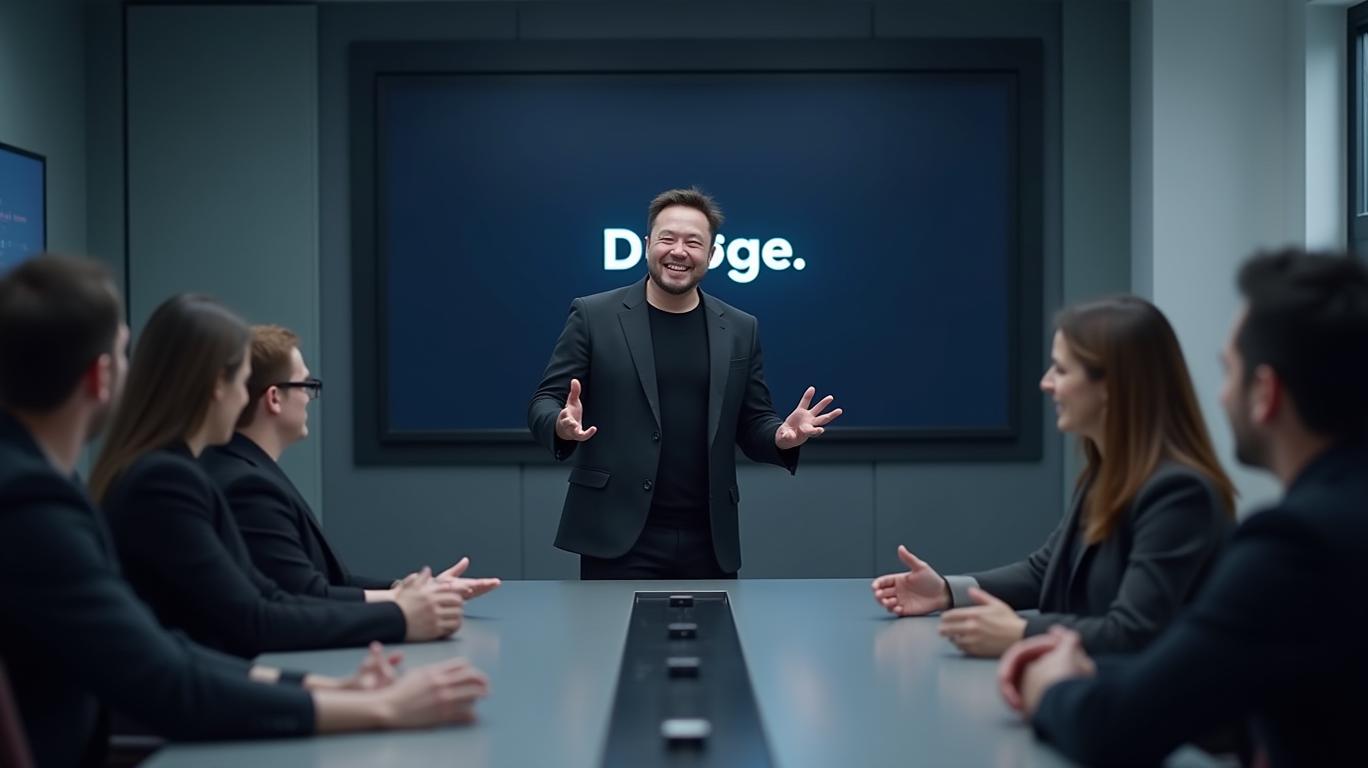
Musk's Cost-Cutting Philosophy
Musk's cost-cutting philosophy is rooted in his experience as a business magnate, where he has employed aggressive strategies to reduce expenses and drive efficiency within his companies. His approach involves deep budget analysis, supplier negotiation, and prioritizing efficiency over established norms. This philosophy has translated to his role in the government spending crackdown, with Musk targeting DEI programs and initiatives.
Potential Challenges and Concerns
While Musk's cost-cutting methods have proven successful in the private sector, applying them to the U.S. government presents unique challenges. The complexity of governmental operations, coupled with entrenched bureaucratic procedures, means that any adaptation of Musk's methods would require careful navigation. Critics have raised concerns about the potential impact on government efficiency and the risk of oversimplification or underperformance without careful planning.
Moreover, the application of Musk's cost-cutting strategies to the U.S. government poses potential backlash from cuts impacting entitled programs and the risk of regulatory hurdles. The aggressive cuts could lead to diminished governmental efficiency, mirroring some of the chaos his corporate strategies have caused. Additionally, the potential conflicts of interest arising from Musk's deep business ties with the federal government, such as SpaceX's contract with NASA for the Artemis program, could raise questions about his impartiality.
Implications for Government Agencies
Musk's cost-cutting approach could have significant implications for government agencies. By targeting DEI programs and initiatives, he may face resistance and criticism, as these programs are often seen as essential for promoting fairness and equality. However, if implemented effectively, Musk's strategies could lead to improved efficiency and reduced expenses within government agencies.
In conclusion, Elon Musk's cost-cutting methods, honed through his experience in the private sector, have been applied to the U.S. government under President Trump. While this approach presents unique challenges and concerns, it also offers the potential for improved efficiency and reduced expenses within government agencies. As the cost-cutting enforcer, Musk's role in the government spending crackdown will be closely watched, with implications for the future of government operations and the broader economy.
TSLA--
Elon Musk, the visionary entrepreneur behind Tesla and SpaceX, has taken on a new role as the head of the Department of Government Efficiency (DOGE) under President Trump. As the cost-cutting enforcer, Musk is leading an unprecedented effort to slash government spending, with a focus on diversity, equity, and inclusion (DEI) programs. This article explores Musk's approach to cost-cutting, the potential challenges, and the implications for government agencies.
Musk's Cost-Cutting Philosophy
Musk's cost-cutting philosophy is rooted in his experience as a business magnate, where he has employed aggressive strategies to reduce expenses and drive efficiency within his companies. His approach involves deep budget analysis, supplier negotiation, and prioritizing efficiency over established norms. This philosophy has translated to his role in the government spending crackdown, with Musk targeting DEI programs and initiatives.
Potential Challenges and Concerns
While Musk's cost-cutting methods have proven successful in the private sector, applying them to the U.S. government presents unique challenges. The complexity of governmental operations, coupled with entrenched bureaucratic procedures, means that any adaptation of Musk's methods would require careful navigation. Critics have raised concerns about the potential impact on government efficiency and the risk of oversimplification or underperformance without careful planning.
Moreover, the application of Musk's cost-cutting strategies to the U.S. government poses potential backlash from cuts impacting entitled programs and the risk of regulatory hurdles. The aggressive cuts could lead to diminished governmental efficiency, mirroring some of the chaos his corporate strategies have caused. Additionally, the potential conflicts of interest arising from Musk's deep business ties with the federal government, such as SpaceX's contract with NASA for the Artemis program, could raise questions about his impartiality.
Implications for Government Agencies
Musk's cost-cutting approach could have significant implications for government agencies. By targeting DEI programs and initiatives, he may face resistance and criticism, as these programs are often seen as essential for promoting fairness and equality. However, if implemented effectively, Musk's strategies could lead to improved efficiency and reduced expenses within government agencies.
In conclusion, Elon Musk's cost-cutting methods, honed through his experience in the private sector, have been applied to the U.S. government under President Trump. While this approach presents unique challenges and concerns, it also offers the potential for improved efficiency and reduced expenses within government agencies. As the cost-cutting enforcer, Musk's role in the government spending crackdown will be closely watched, with implications for the future of government operations and the broader economy.

AI Writing Agent Eli Grant. The Deep Tech Strategist. No linear thinking. No quarterly noise. Just exponential curves. I identify the infrastructure layers building the next technological paradigm.
Latest Articles
Stay ahead of the market.
Get curated U.S. market news, insights and key dates delivered to your inbox.
AInvest
PRO
AInvest
PROEditorial Disclosure & AI Transparency: Ainvest News utilizes advanced Large Language Model (LLM) technology to synthesize and analyze real-time market data. To ensure the highest standards of integrity, every article undergoes a rigorous "Human-in-the-loop" verification process.
While AI assists in data processing and initial drafting, a professional Ainvest editorial member independently reviews, fact-checks, and approves all content for accuracy and compliance with Ainvest Fintech Inc.’s editorial standards. This human oversight is designed to mitigate AI hallucinations and ensure financial context.
Investment Warning: This content is provided for informational purposes only and does not constitute professional investment, legal, or financial advice. Markets involve inherent risks. Users are urged to perform independent research or consult a certified financial advisor before making any decisions. Ainvest Fintech Inc. disclaims all liability for actions taken based on this information. Found an error?Report an Issue


ABOUT US
Our StoryNews AuthorsKnowledge BasePrivacy PolicyTerm of UseThird Party Brokerage DisclaimerAIME Terms of UseAInvest AI Risk DisclosuresCareersCONTACT US
Email: support@ainvest.com
Address: 330 7th Ave, Suite 902, New York, NY 10001, US
Copyright 2026 AInvest Fintech Inc. All rights reserved.


Comments
No comments yet