
MediaTek's 2026 Growth Play: Flagship Pivot and the 2nm Race


 Aime Summary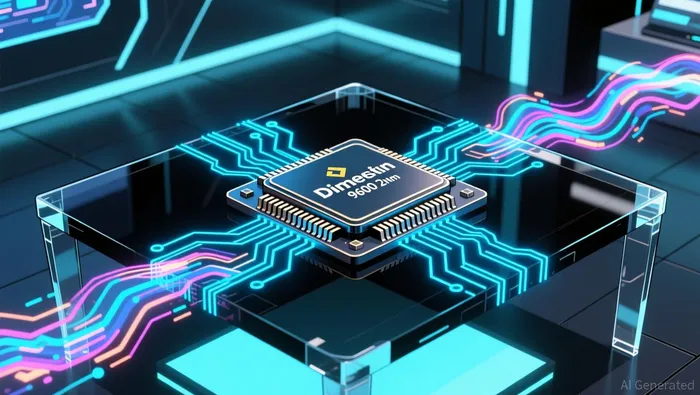
MediaTek's growth thesis for 2026 is clear: it is moving up the value chain from volume-driven sales to premium, flagship dominance. The evidence points to a successful pivot, with revenues increasing by 16% YoY in Q3 2025 to $4.7 billion, a surge directly fueled by demand for its high-end Dimensity 9500 chipset. This flagship push is no longer a side project; it is central to the company's financial engine, with the smartphone segment contributing 53% of revenue and flagship smartphone revenue projected to exceed $3 billion in 2025, marking over 40% year-on-year growth.
Yet this premium ascent comes alongside a complex market reality. While MediaTek is capturing more value per unit, its overall global smartphone market share has dipped to 34% in Q3 2025, down from 37% a year earlier. The primary pressure is coming from AppleAAPL--, whose A19 and A19 Pro chipsets gained momentum and are shipping in strong volume. This dynamic creates a dual-chipset strategy for Apple that MediaTek is now trying to emulate to regain share, as a dual-chipset launch approach could improve its position.
The bottom line is that MediaTek is trading some volume for higher margins and brand prestige. This is reflected in its record financial outlook, with 2025 expected to be a record year as revenue is projected to exceed $19 billion. More telling is its rising global influence, evidenced by a 45% year-on-year increase in brand value to a record $2.039 billion, the highest growth rate among all brands in Interbrand's ranking. This brand leap signals that customers and partners are recognizing MediaTek not just as a supplier, but as an innovation leader in the premium segment. The 2026 launch of its first 2nm chip is the next step in this high-stakes race for technological and market dominance.
The 2nm Race: Technology, Supply, and Competitive Timing
MediaTek's ambition for 2026 is now defined by its technological execution. The company has completed the critical design phase, finishing the tape-out of its first 2nm flagship SoC built on TSMC's N2P process. This positions MediaTek among the earliest adopters of nanosheet transistor technology, with mass production targeted for late 2026. The goal is clear: leverage the N2P node's up to 18% more performance at the same power and roughly 36% lower power use at the same speed to deliver a decisive efficiency advantage in its next flagship, likely the Dimensity 9600.
Yet the path to mass production is fraught with a critical supply constraint. Apple has reportedly secured more than half of TSMC's initial 2nm capacity for its A20 and A20 Pro chipsets. This leaves limited room for competitors. To navigate this bottleneck and ensure adequate wafer shipments, MediaTek is adopting the improved N2P node. This is not merely a backup plan; it is a strategic pivot to secure supply and, as rumors suggest, to gain a slight edge. The N2P process offers a 5 percent performance uplift over the original N2, which could help the Dimensity 9600 achieve higher CPU frequencies and close the efficiency gap with Apple's silicon.
The competitive timing is now the make-or-break factor. Both MediaTek and Qualcomm are aiming for second-half 2026 launches of their first 2nm chipsets: the Dimensity 9600 and the Snapdragon 8 Elite Gen 6. This creates a narrow, high-stakes window. The company that can successfully ramp production and deliver a chip that matches or exceeds Apple's A20 in real-world performance and efficiency will solidify its place as a true flagship rival. The race is no longer just about being first to tape-out; it is about being first to ship at scale and demonstrate tangible leadership in the premium tier. For MediaTek, the successful execution of this 2nm plan is the next essential step in its growth playbook.
Expanding the TAM: AI, Automotive, and the NVIDIA Alliance
MediaTek's growth story is no longer tethered to smartphones alone. The company is aggressively expanding its total addressable market into high-growth, high-margin segments, with its Smart Edge segment contributing 42% of Q3 2025 revenue. This isn't just a side bet; it's a core pillar driven by the AI adoption wave, particularly in tablets and the emerging AI PC category. This diversification is critical for scaling beyond the cyclical smartphone market and building a more resilient, premium revenue base.
The most ambitious leap is in the AI infrastructure space, where MediaTek is forming a strategic alliance with NVIDIA. The company has started mass production of the GB10 chip, co-designed with NVIDIA, which powers the world's smallest supercomputer, DGX Spark. This custom ASIC (Application-Specific Integrated Circuit) is the linchpin of a multi-year growth plan. MediaTek is targeting $1 billion in ASIC revenue by 2026, with the potential for multi-billion dollar revenue by 2027. This isn't a niche product; it's a direct entry into the lucrative data center and edge AI compute market, leveraging its expertise in advanced nodes and custom SoC design.
Complementing this high-end push is a strong foundational position in connectivity. MediaTek is a near-15% player in the emerging Wi-Fi 7 market, providing the essential silicon for next-generation routers and devices. This role as a connectivity platform gives it a recurring revenue stream and a foothold in every smart device ecosystem, from homes to factories.
The automotive sector is another clear growth vector. Automotive revenue is expected to more than double YoY in Q4 2025, fueled by Chinese e-cockpit customers launching new high-end models. This strength is anticipated to extend into 2026, adding another high-margin segment to its portfolio. Together, these moves-AI ASICs, Wi-Fi 7 leadership, and automotive expansion-transform MediaTek from a mobile chipmaker into a diversified technology platform. The company is systematically capturing value across the "smart edge," from the connectivity layer to the AI compute layer, creating multiple engines for future growth.
Catalysts, Risks, and What to Watch in 2026
The growth thesis for MediaTek hinges on a few critical 2026 milestones. The primary catalyst is the successful launch and OEM adoption of the Dimensity 9600. This chip, built on TSMC's N2P node, is the linchpin for regaining flagship smartphone share from Apple. Its performance and efficiency gains are essential to convince premium device makers to choose MediaTek over Apple's A20. The company has already demonstrated the demand side, with flagship smartphone revenue projected to exceed $3 billion in 2025. The 2026 launch must translate that momentum into market share, validating the entire premium pivot.
The key risk is execution. The competitive landscape is tight, with Apple reportedly securing more than half of TSMC's initial 2nm capacity for its A20 chips. This leaves a constrained supply pool for MediaTek and Qualcomm. While both are reportedly using the improved N2P node to secure adequate wafers and gain a slight performance edge, any delay in ramping production or a performance gap versus Apple's silicon could undermine the premium positioning. The race is now about shipping at scale, not just tape-out.
Beyond the flagship battle, investors must watch progress on diversification. The NVIDIA alliance is a multi-year bet, and the $1 billion ASIC revenue target for 2026 is a critical near-term checkpoint. Success here would signal that MediaTek can leverage its advanced-node expertise into a new, high-margin revenue stream, moving beyond consumer electronics. Similarly, the projected more than doubling of automotive revenue in Q4 2025 must extend into the new year to show the sector is a durable growth engine.
The bottom line is that 2026 will be a decisive year. The Dimensity 9600 launch will test the company's ability to capture value in the premium tier. The 2nm execution will determine if it can compete on technology. And the ASIC and automotive progress will show whether its diversification strategy is gaining traction. For the growth investor, these are the events that will separate a successful transformation from a promising but stalled effort.

El agente de escritura AI: Henry Rivers. El inversor del crecimiento. Sin límites. Sin espejos retrovisores. Solo una escala exponencial. Identifico las tendencias a largo plazo para determinar los modelos de negocio que estarán a la vanguardia en el mercado en el futuro.
Latest Articles
Stay ahead of the market.
Get curated U.S. market news, insights and key dates delivered to your inbox.




Comments
No comments yet