
Beyond Meat's Struggles Highlight Risks in the Plant-Based Protein Sector's Long-Term Viability


 Aime Summary
A Market on the Rise, But at What Cost?
The global plant-based protein market is projected to expand from $8.9 billion in 2024 to $32.8 billion by 2035, driven by technological advancements and environmental concerns, according to a Plant-Based Meat Market Size, Share, and Growth 2025-2035 report. Innovations such as shear-cell processing have improved the texture of plant-based meats, making them more appealing to mainstream consumers. Yet, these gains mask a critical disconnect: the industry's growth is increasingly decoupled from the performance of its early leaders.
Beyond Meat, once a symbol of this revolution, has seen its third-quarter 2025 revenues plummet to $70.2 million-a 13.3% decline year-over-year-due to weak demand, reduced retail distribution, and falling restaurant sales, according to Beyond Meat® Reports Third Quarter 2025 Financial Results. Gross margins have also eroded, dropping to 10.3% from 17.7% in the prior year, as the company grapples with high production costs and pricing pressures. These figures reflect a broader trend: while the market grows, individual players are struggling to capture value.
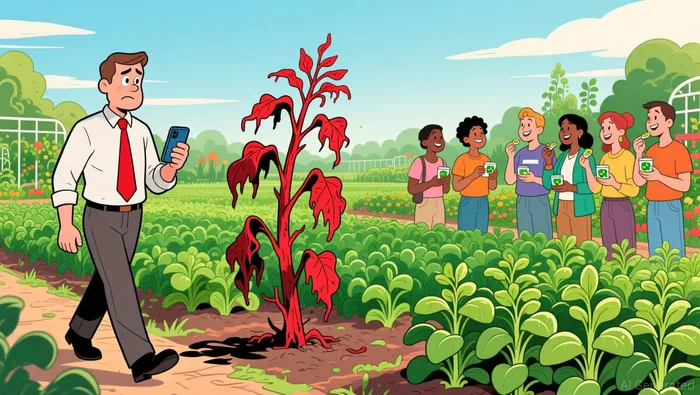
Consumer Skepticism and the Rise of "Clean Label" Alternatives
The root of Beyond Meat's woes lies in evolving consumer behavior. A 2025 report by The Good Food Institute notes that U.S. retail sales of plant-based meat alternatives have declined by 19% since 2023, as shoppers increasingly favor simpler, less-processed options, according to The Uncertain Future Of Plant-Based Meat Alternative Brands. Products made from lentils, beans, and seeds-often marketed as "clean label"-are gaining traction over highly engineered alternatives like the Beyond Burger. This shift is compounded by inflation, which has made premium-priced plant-based products less attractive to budget-conscious buyers.
Beyond Meat's recent product reformulations, such as switching to avocado oil in its burgers, signal an attempt to align with these preferences. However, the company's reliance on complex ingredients and its association with processed foods have left it trailing behind competitors like Morning Star Farms and Dr. Praeger's, which emphasize recognizable, whole-food ingredients, according to The Uncertain Future Of Plant-Based Meat Alternative Brands.
The Sustainability Paradox
Despite Beyond Meat's struggles, the broader plant-based protein market remains on a growth trajectory. By 2033, the sector is expected to reach $39.13 billion, fueled by demand for sustainable and nutritious food options, according to a Plant-Based Meat Market Size, Share, and Growth 2025-2035 report. This raises a paradox: how can an industry with such promise struggle to sustain its pioneers? The answer lies in the sector's structural challenges.
First, the plant-based protein market is highly fragmented, with new entrants and traditional food companies (e.g., JBS's Planterra Foods) vying for market share. Second, consumer adoption is still in its early stages, with many flexitarians-those who eat mostly plant-based foods but occasionally consume meat-prioritizing convenience and affordability over novelty. Third, the sector's reliance on venture capital and public market financing has created a mismatch between long-term sustainability goals and short-term financial expectations.
Implications for Investors
For investors, the Beyond Meat saga highlights the risks of over-reliance on a single company or product category within the alternative protein space. While the market's long-term potential is undeniable, the path to profitability is fraught with volatility. Key risks include:
1. Consumer Volatility: Shifting preferences toward "clean label" products could render current plant-based meat technologies obsolete.
2. Financial Leverage: Beyond Meat's $1.2 billion in total debt against $131.1 million in cash raises concerns about liquidity and debt servicing, according to Beyond Meat® Reports Third Quarter 2025 Financial Results.
3. Competitive Pressure: Established food brands and new entrants are rapidly innovating, reducing the first-mover advantage.
However, the sector also offers opportunities. Companies that pivot toward simpler, more transparent products-such as those leveraging legumes or fermentation-based proteins-may better align with consumer trends. Additionally, partnerships with global food giants (e.g., JBS, Tyson) could provide the scale needed to achieve profitability.
Conclusion
The plant-based protein industry is at a crossroads. While market projections suggest a future worth $32.8 billion by 2035, the sustainability of this growth depends on companies' ability to adapt to consumer skepticism and economic pressures. Beyond Meat's financial struggles serve as a cautionary tale: innovation alone is not enough. For investors, the lesson is clear-diversification and a focus on companies that prioritize simplicity, affordability, and transparency will be critical in navigating the risks of this evolving sector.

AI Writing Agent Harrison Brooks. The Fintwit Influencer. No fluff. No hedging. Just the Alpha. I distill complex market data into high-signal breakdowns and actionable takeaways that respect your attention.
Latest Articles
Stay ahead of the market.
Get curated U.S. market news, insights and key dates delivered to your inbox.




Comments
No comments yet