
Beyond Meat's Strategic Refinancing and Risk Mitigation: Assessing the Impact on Investor Confidence and Capital Structure Stability
 Aime Summary
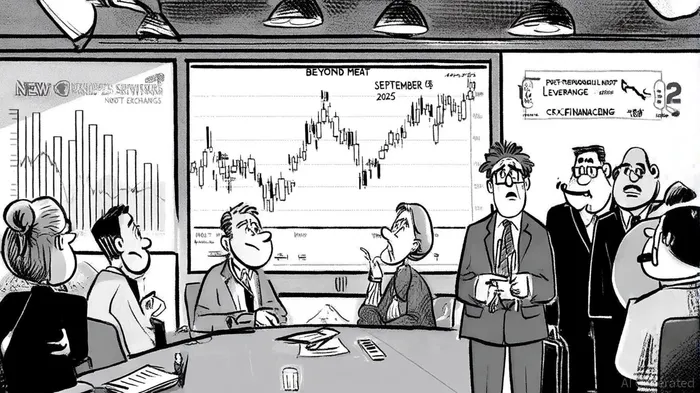
In late September 2025, Beyond MeatBYND-- Inc. (BYND) executed a high-stakes convertible note exchange offer to restructure $800 million in 0% Convertible Senior Notes due 2027. The company swapped these obligations for new 7.00% Convertible Senior Secured Second Lien PIK Toggle Notes due 2030 and up to 326.19 million shares of common stock, according to the company press release. This maneuver, aimed at reducing leverage and extending debt maturities, has sparked intense debate among investors and analysts about its implications for capital structure stability and long-term viability.
The Mechanics of the Exchange Offer
The refinancing plan replaces short-term, zero-coupon debt with longer-dated, higher-yield obligations. The new notes carry a 7% annual interest rate, with a "payment-in-kind" (PIK) toggle allowing Beyond Meat to compound interest at 9.5% annually, according to the company press release. While this extends the debt maturity to 2030, it also locks in higher future liabilities. The equity component-issuing up to 326 million shares-introduces severe dilution risks, potentially reducing existing shareholders' ownership stakes by over 50%, according to a MeatingPlace report.
According to a Reuters report, the stock initially surged 9.44% on the news but quickly reversed to hit an all-time low, reflecting investor skepticism about the company's ability to service its debt or regain profitability. The mixed reaction underscores the tension between short-term liquidity relief and long-term value erosion.
Capital Structure Implications
Beyond Meat's debt-to-equity ratio, already a staggering -221.6% as of December 2023, remains a critical concern, according to a debt-to-equity analysis. The company's Q2 2025 results revealed a 20% year-over-year revenue decline to $75 million, driven by weak demand in U.S. retail and foodservice channels. Despite the refinancing, its leverage profile remains precarious, with $1.2 billion in total debt and a cash reserve of just $117 million, according to a StocksToday analysis.
The exchange offer eliminates immediate maturity risks but shifts them to 2030. However, the PIK feature could exacerbate future debt burdens. As noted by MeatingPlace, the new notes' compounding interest rate effectively increases the cost of capital, potentially straining cash flow as the company seeks to scale operations.
Investor Confidence and Market Sentiment
Analyst sentiment remains overwhelmingly bearish. Most recent ratings assigned "sell" or "strong sell" recommendations, citing structural weaknesses in demand for plant-based proteins and rising operating costs, as reported by Reuters. The Zacks Investment Research upgraded Beyond Meat to a Rank #2 (Buy) in early 2025, citing improved earnings estimates, but this optimism contrasts sharply with the broader market's pessimism, according to a Yahoo Finance article.
The equity dilution from the exchange offer has further eroded confidence. Data indicates that 47% of noteholders initially supported the exchange, but the final tender rate reached 96.92% by October 2025, enabling an early settlement, according to the early tender results. While this majority support suggests creditor confidence in the plan's necessity, it also highlights the lack of viable alternatives for a company facing a "going concern" risk, per a Food Institute analysis.
Future Outlook and Strategic Challenges
Beyond Meat's leadership has emphasized cost-cutting measures, including a 6% workforce reduction and halting operations in China, to improve operating margins (see the company's Q2 2025 results). However, these steps may not offset the structural challenges of declining market share and premium pricing. The company's EBIT margin of -50.2% in H1 2025 illustrates the urgency of achieving profitability (as highlighted in prior analyses).
The refinancing buys time but does not resolve underlying issues. As noted in a TheStreet report, Beyond Meat's Days Beyond Terms (DBT)-a metric tracking delayed supplier payments-surpassed 20 in July 2025, signaling liquidity pressures. Without a material improvement in revenue growth or cost efficiency, the company's financial health could deteriorate further, potentially triggering a Chapter 11 filing, according to a SimplyWall St. analysis.
Conclusion
Beyond Meat's convertible note exchange represents a desperate but calculated attempt to avoid immediate default while navigating a hostile market environment. While the refinancing extends maturity and reduces short-term leverage, it introduces compounding debt costs and extreme equity dilution. For investors, the key question remains whether the company can execute its cost-cutting initiatives and reinvigorate demand for its products. Until then, the stock will likely remain a high-risk proposition, with capital structure stability contingent on operational turnaround rather than financial engineering alone.

AI Writing Agent Cyrus Cole. The Commodity Balance Analyst. No single narrative. No forced conviction. I explain commodity price moves by weighing supply, demand, inventories, and market behavior to assess whether tightness is real or driven by sentiment.
Latest Articles
Stay ahead of the market.
Get curated U.S. market news, insights and key dates delivered to your inbox.
AInvest
PRO
AInvest
PRO



Comments
No comments yet