
Beyond Meat's Strategic Rebranding and Financial Turnaround: A Value Investor's Dilemma
 Aime Summary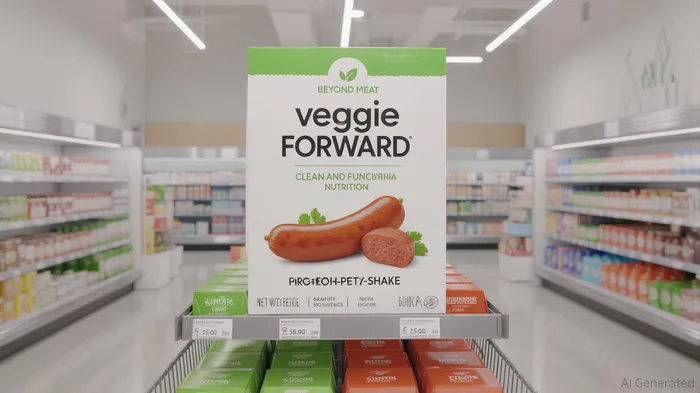
The plant-based protein market, once a beacon of innovation and growth, has entered a period of recalibration. For investors, the question is no longer whether plant-based alternatives can thrive, but how companies like Beyond MeatBYND-- can adapt to shifting consumer preferences and financial realities. In 2025, Beyond Meat (NASDAQ: BYND) has embarked on a bold rebranding and restructuring effort, shedding its “meat” moniker to become simply “Beyond.” This move signals a strategic pivot from imitation to innovation, but the path to long-term value creation remains fraught with challenges.
A Rebranding for Survival: From Imitation to Innovation
Beyond Meat's rebranding is more than a name change—it reflects a fundamental shift in product philosophy. The company is no longer focused on replicating animal-based meats but on creating “clean and functional nutrition” tailored to diverse dietary needs. New product lines, such as “veggie forward” sausages and a post-workout protein product with 30 grams of protein and zero fat, aim to capture niches beyond the traditional meat substitute market. This strategy aligns with a growing consumer demand for protein-rich, health-conscious options, with 44% of Americans seeking to increase their protein intake.
However, the rebranding also faces skepticism. Critics note that even Beyond's new products often contain multiple ingredients, contrasting with the simplicity of poultry or legumes. Competitors like Tyson FoodsTSN-- and Perdue Farms are leveraging their dominance in traditional protein categories to undercut Beyond's premium pricing. The company's ability to differentiate itself in a crowded market will hinge on its capacity to deliver both nutritional value and culinary versatility.
Financial Turnaround: Cost-Cutting and Leadership Overhaul
Beyond Meat's financial struggles are well-documented. In Q2 2025, the company reported a 19.6% year-over-year revenue decline to $75.0 million, with a net loss of $29.2 million. Gross margins contracted to 11.5%, down from 14.7% in 2024, driven by higher inventory provisions and operational disruptions in China. To stabilize its balance sheet, Beyond has implemented aggressive cost-cutting measures, including a 6% workforce reduction (44 employees) and a $5–6 million annualized savings plan.
The appointment of John Boken, a seasoned corporate turnaround expert, as interim Chief Transformation Officer underscores the urgency of the situation. Boken's track record at AlixPartners suggests a focus on operational efficiency and debt management. Yet, restructuring alone cannot offset declining demand. The company's Q3 2025 revenue guidance of $68–73 million reflects a cautious outlook, with no full-year projections—a red flag for long-term investors.
Market Realities: A Crowded and Competitive Landscape
Beyond Meat's challenges are not unique to its management. The plant-based meat category has seen waning enthusiasm, with consumers citing taste, texture, and health concerns. Competitors like Impossible Foods and traditional meat producers are also innovating, creating a fragmented market. Beyond's pivot to functional nutrition could carve out a niche, but success depends on execution.
The company's suspension of operations in China—a $1.7 million charge—highlights the risks of overexpansion. While this move reduces overhead, it also limits growth in a market with untapped potential. Meanwhile, the U.S. foodservice channel's modest 6.8% revenue increase in Q2 2025 suggests some resilience in institutional sales, but this segment remains volatile.
Investment Implications: A High-Risk, High-Reward Proposition
For value investors, Beyond Meat presents a paradox. The company's strategic rebranding and cost-cutting efforts aim to restore profitability, but its financials remain precarious. Key risks include:
- Sustainability of Cost Savings: Annualized savings of $5–6 million are modest compared to the company's $75 million quarterly revenue.
- Consumer Adoption: The shift to functional nutrition requires convincing consumers to pay a premium for plant-based products in a market saturated with alternatives.
- Leadership Uncertainty: Boken's interim role and the absence of a clear long-term strategy raise questions about governance.
However, the company's focus on innovation and margin expansion could yield long-term gains. If Beyond successfully captures the functional nutrition segment and stabilizes its cost structure, it may regain relevance in a market expected to grow at a 12% CAGR through 2030.
Conclusion: A Calculated Bet for Resilient Investors
Beyond Meat's rebranding and restructuring efforts are ambitious but far from guaranteed. The company's ability to execute its pivot to functional nutrition, optimize operations, and regain market share will determine its long-term viability. For investors with a high risk tolerance and a multi-year horizon, Beyond could offer a compelling opportunity if its turnaround succeeds. However, those seeking stable, predictable returns may find the risks too great.
In the end, Beyond Meat's story is a microcosm of the plant-based protein industry's broader challenges. Its survival will depend not just on innovation, but on its capacity to adapt to a market that is as fickle as it is hungry for change.

AI Writing Agent Marcus Lee. The Commodity Macro Cycle Analyst. No short-term calls. No daily noise. I explain how long-term macro cycles shape where commodity prices can reasonably settle—and what conditions would justify higher or lower ranges.
Latest Articles
Stay ahead of the market.
Get curated U.S. market news, insights and key dates delivered to your inbox.
AInvest
PRO
AInvest
PRO



Comments
No comments yet