
Beyond Meat's Meme-Fueled Surge Fizzles: A Short Squeeze Sputters Amid Lingering Doubts


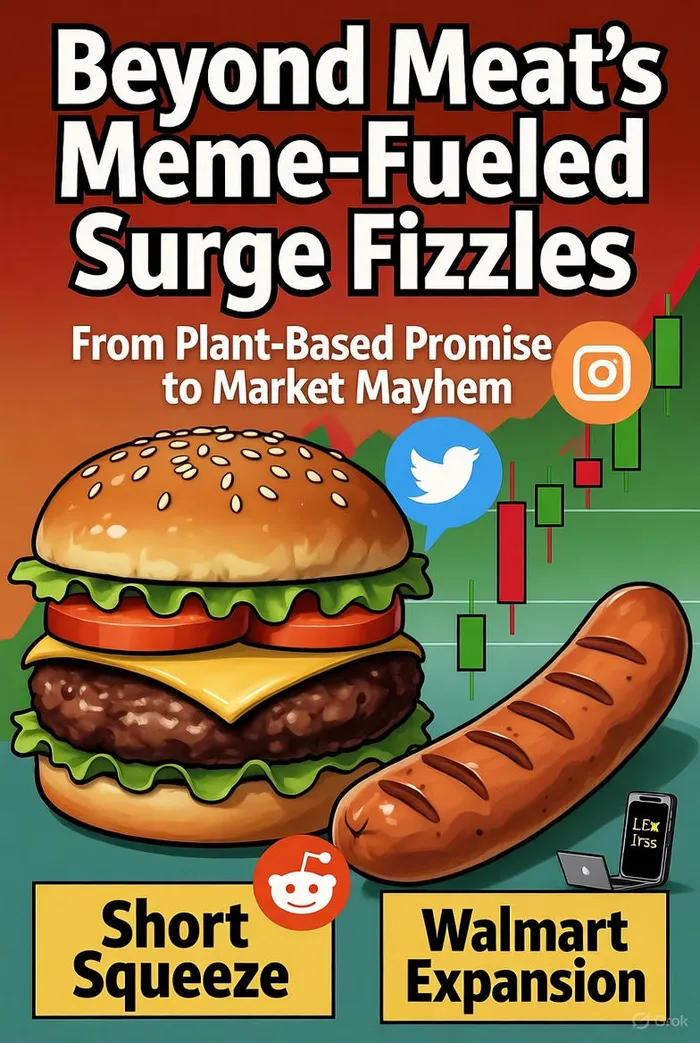
The trading floor buzzed with the kind of chaos that recalls the wildest days of 2021, as Beyond MeatBYND-- Inc. shares rocketed skyward only to plummet back to earth in a single session.
On Wednesday, the plant-based meat pioneer's stock erased a staggering intraday gain of 112%, closing down 1.1% at $3.58 after touching a high of $7.69. This dizzying reversal capped a week of volatility that saw the shares balloon over 1,300% from Thursday's lows, driven by a cocktail of social media hype, short squeezes, and a timely distribution deal. Yet, as the dust settles, questions loom larger than ever about whether this fleeting revival signals a genuine turnaround or just another spasm in a market awash with speculation.
The Spark: Social Media and the Meme Revival
It all ignited last Friday, but the real fireworks came Monday when reports surfaced of trader Demitri Semenikhin aggressively promoting Beyond MeatBYND-- on social media platforms. Semenikhin's endorsements, amplified across online trading communities, appeared to galvanize retail investors nostalgic for the pandemic-era meme-stock mania. By Monday's close, shares had surged more than 127%, a move that caught the eye of Roundhill Investments. The firm promptly added Beyond Meat to its Roundhill MemeMEME-- Stock ETF (MEME), a thematic fund that had been shuttered due to waning interest but was revived earlier this month amid resurgent retail enthusiasm.
This inclusion wasn't just symbolic; it amplified the momentum. With over 63% of the float sold short as of late September, according to FactSet data, the stage was set for a classic short squeeze. Short sellers, betting against the stock by borrowing and selling shares, faced mounting pressure to buy back positions as prices climbed. The result? A feeding frenzy among day traders aiming to force those covers, pushing the stock into overdrive. Trading volumes spiked, and options activity hit record levels, with exchange data showing unprecedented bets on further upside.
Matt Maley, chief market strategist at Miller Tabak + Co., captured the sentiment succinctly: "It's definitely a sign that the level of speculation and froth in the market is still extremely high." Indeed, echoes of 2021 reverberated through forums like Reddit's WallStreetBets, where users swapped tales of bold bets. One poster bragged about snapping up 10,000 shares at $7.50, only to draw snarky replies like, "You're already down 7k, impressive." Another quipped, "You know the economy is cooked when BYND stock is making a comeback." These anecdotes underscore how Beyond Meat, once a darling of health-conscious investors, has morphed into a vehicle for high-stakes gambling rather than fundamentals.
The Catalyst: Walmart's Expansion Deal
Tuesday delivered the rally's peak, with shares exploding 146%—the stock's best single-day performance ever. The trigger? Beyond Meat's announcement of an expanded partnership with Walmart Inc., rolling out its plant-based burgers and sausages to over 2,000 additional stores. This move promised broader shelf space in one of America's largest retailers, potentially revitalizing sales in a category battered by consumer fatigue.
For a company grappling with post-pandemic headwinds, the news landed like a lifeline. During the height of COVID-19, Beyond Meat rode a wave of demand for healthier, meat-free alternatives, propelling its stock past $230 per share after its 2019 IPO. But the trend proved ephemeral. As lockdowns eased, shoppers recoiled from the high prices, perceived over-processing, and inconsistent taste of plant-based meats. Revenue growth stalled, and the company piled on debt, culminating in last week's announcement of a debt swap accepted by nearly all creditors. That deal, while averting immediate crisis, will dilute existing shareholders substantially, sending shares tumbling 67% to a low of 65 cents by week's end.
The Walmart expansion offered a glimmer of hope, suggesting improved accessibility could reignite consumer interest. Yet, Wednesday's session exposed the fragility of this optimism. Trading was halted over a dozen times due to extreme volatility, a regulatory safeguard that only heightened the drama. By midday, the gains evaporated, leaving the stock in the red before a partial rebound.
Analyst Skepticism: Fundamentals vs. Frenzy
Wall Street's response has been resoundingly cautious. Beyond Meat carries six sell-equivalent ratings, five holds, and zero buys from analysts tracked by Bloomberg. This bearish consensus reflects deep-seated doubts about the company's path forward. Danni Hewson, head of financial analysis at AJ Bell, minced no words: "A deal to increase distribution is great if sales follow, but looking at consumer sentiment over meat replicas, it's clear Beyond Meat has a huge mountain to climb." She emphasized that the recent surge owes more to short-squeeze dynamics than any fundamental shift in investor appetite.
Hewson's critique hits at the core of Beyond Meat's struggles. The firm has posted annual declines for five straight years: down 47% in 2021, 81% in 2022, 27% in 2023, 57% in 2024, and over 3% so far in 2025. From its IPO peak, the stock has shed more than 98% of its value, relegating it to penny-stock status. Operational challenges abound—rising ingredient costs, competition from rivals like Impossible Foods, and a broader retreat from ultra-processed foods have eroded market share.
Still, Hewson leaves room for redemption: "Beyond Meat could still turn things around, but that turnaround must be based on solid products that recapture the interest it initially enjoyed by tapping into current eating trends and delivering the kind of value for money that today's shopper requires." This echoes a broader debate in the food sector: Can plant-based innovators adapt to price-sensitive consumers amid inflation, or will they remain niche players?
Market Implications: A Broader Warning Sign?
Beyond Meat's whirlwind week serves as a microcosm of a market teetering on exuberance. The S&P 500 has climbed relentlessly this year, brushing off concerns over lofty valuations and potential bubbles in artificial intelligence and other growth sectors. The revival of meme stocks—evident in Roundhill's ETF resurrection—signals that retail traders, emboldened by easy gains, are diving back into speculative plays.

Bank of America flagged Beyond Meat as a Reddit stock to watch back in 2021, though it ended that year in the red. Today's parallels are striking, but with a twist: the current bull market lacks the fiscal stimulus and lockdown boredom that fueled the original frenzy. Instead, it's propped up by hopes of Federal Reserve rate cuts and economic soft landings. Yet, as Maley warns, such froth can presage corrections. When a struggling company like Beyond Meat becomes a battleground for shorts and squeezes, it raises red flags about underlying market health.
Looking ahead, Beyond Meat's fate hinges on execution. The Walmart deal could boost volumes if products resonate, but dilution from the debt swap looms as a drag. Investors betting on a sustained recovery must weigh these risks against the allure of quick profits. For now, Wednesday's fizzle reminds us that meme-driven rallies, while electrifying, often leave scorched earth in their wake.
In the end, Beyond Meat's story is one of promise unfulfilled, a cautionary tale for an industry at the crossroads of health trends and economic realities. As traders lick their wounds from this latest whiplash, the question remains: Will the company reinvent itself, or fade further into irrelevance? The market, ever fickle, holds the answer.

Expert analysis on U.S. markets and macro trends, delivering clear perspectives behind major market moves.
Latest Articles
Stay ahead of the market.
Get curated U.S. market news, insights and key dates delivered to your inbox.
AInvest
PRO
AInvest
PRO



Comments
No comments yet