
Beyond Meat: Assessing the Business Model for a Potential Long-Term Investment


 Aime Summary
Beyond Meat's current financials paint a stark picture of a business under severe strain. The company's core operations are not just struggling; they are actively contracting. In the third quarter of 2025, net revenues fell 13.3% year-over-year to $70.2 million. This sharp decline signals a fundamental loss of market share or weak underlying demand, a critical red flag for any growth story. The problem is not merely top-line; it is deeply embedded in the cost structure. The company reported an operating loss of $112.3 million for the quarter, an operating margin of -160%. While a significant portion of this-$77.4 million-was a non-cash impairment charge, the remaining operational loss reveals a business model that is generating severe cash burn. The gross margin collapsed to just 10.3%, down from 17.7% a year ago, indicating the company is selling its products at a steep discount or facing rising input costs without the pricing power to offset them.
This distress is particularly acute given the company's strategic reliance on a specific channel. Beyond Meat's core growth narrative has long been built on partnerships with fast-food chains and other quick-service restaurants (QSRs). This channel is a double-edged sword. On one hand, as the evidence notes, it is a resilient and powerful distribution path that helped normalize plant-based meat for mainstream consumers. On the other, it is highly competitive and dependent on large, powerful distributors. The recent revenue decline includes a decrease in sales of burger products to QSR customers in the international foodservice channel, suggesting these key partners are pulling back. This dependence creates a vulnerability: the company's fate is tied to the whims of a few large, price-sensitive buyers in a crowded field.
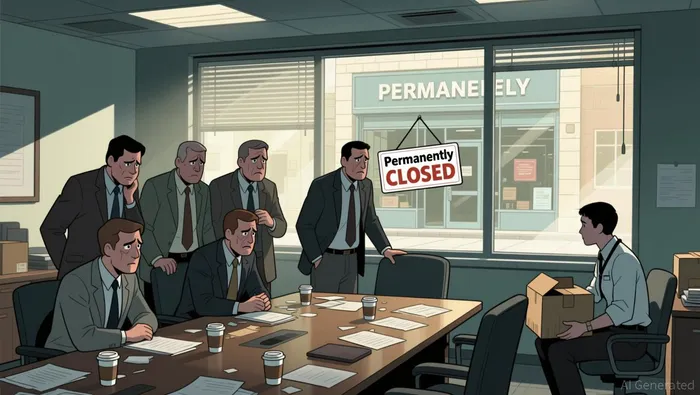
The bottom line is that Beyond MeatBYND-- is caught in a vicious cycle. Its primary growth engine-the restaurant channel-is weakening, contributing to the top-line collapse. At the same time, its operational model is generating massive losses, eroding the capital needed to fund a turnaround. The company's recent efforts to extend debt maturities and add liquidity are necessary financial housekeeping, but they do not address the fundamental issue: the business is not generating enough profitable revenue to sustain itself. For a value investor, this is the antithesis of a durable competitive moat. It is a company searching for a business model that can compound value, not one that is currently doing so.
The Balance Sheet: A Strategic Turnaround or a Sign of Last Resort?
Beyond Meat's recent capital structure change is a clear, if desperate, attempt to buy time. The company has launched an exchange offer to swap its 0% Convertible Senior Notes due 2027 for a new package: $202.5 million in aggregate principal amount of new 7.00% Convertible Senior Secured Second Lien PIK Toggle Notes due 2030 and a staggering up to 326,190,370 shares of its common stock. The explicit purpose, as stated by management, is to significantly reduce leverage and extend maturity, aiming to strengthen the balance sheet for its long-term vision. In essence, the company is trading a near-term debt obligation for a longer-dated, secured one, while also diluting existing shareholders massively to reduce its immediate cash burden.
The move has a strategic logic. The new notes are secured, which is a more favorable position for the company than the unsecured notes it is replacing. More importantly, they permit cash settlement upon conversion, a feature that could be a more favorable outcome for the company than the original notes, which may have had more complex or unfavorable conversion terms. The ability to pay interest in cash or, under certain conditions, in shares (PIK), provides some flexibility. The company also secured the support of holders representing nearly half of the existing notes, a necessary step toward achieving the 85% threshold needed to close the deal.
Yet for a value investor, this transaction raises profound questions about the company's long-term viability. The exchange is not a cure; it is a postponement. The core business remains deeply unprofitable, with operating losses of $112.3 million and a collapsing gross margin. The new notes carry a 7% interest rate, a significant cost that will pressure cash flow for years. The massive issuance of new common shares-over 326 million-represents a severe dilution of existing equity, effectively transferring value to creditors to keep the company afloat. This is a classic "last resort" maneuver, where the company is using its remaining equity value to restructure debt, hoping the business can turn around before the new obligations become overwhelming.
The bottom line is that this balance sheet surgery does not create a durable competitive moat. It merely shifts the financial risk further into the future. The company's ability to compound value is now entirely contingent on a successful and rapid operational turnaround, a scenario that the recent revenue decline and operational losses make increasingly uncertain. The secured notes and extended maturity provide a temporary cushion, but they do not address the fundamental issue: Beyond Meat must first prove it can generate profitable revenue before it can afford to service any debt, secured or otherwise.
The Competitive Landscape and Market Context
The market for plant-based meat is expanding, but Beyond Meat's recent performance suggests it is losing its grip on a growing pie. The U.S. market alone is projected to grow at an 18.1% compound annual rate through 2030, fueled by health and ethical concerns. Globally, the sector is expected to balloon from $10.4 billion in 2025 to $30.4 billion by 2032. This is the long-term opportunity. Yet, the company's 13.3% year-over-year revenue decline in Q3 2025 is a stark indicator that it is not capturing this growth. It is, in fact, losing share to competitors in a market that is still in its early, high-growth phase.
This competitive pressure is acute. The company's primary rival, Impossible Foods, has pursued a similar strategy of targeting the quick-service restaurant (QSR) channel, which has proven to be a resilient distribution path. As one analysis notes, nearly every single food-related commercial now features a plant-based alternative, with major chains like Burger King and McDonald's investing heavily. Impossible Foods' focus on these large chain partnerships may have provided it with a distribution advantage during the pandemic surge, a period when the foodservice channel was severely impacted. Beyond Meat's own decline in international foodservice sales points to a competitive battle for shelf space and menu placement that it is currently losing.
The path to profitability for any player in this space remains unproven and fraught with challenges. The industry faces a fundamental affordability gap, as plant-based meats are significantly more expensive than conventional meat. This creates a barrier to mass-market acceptance. Furthermore, producers must continuously innovate to improve taste and texture while securing consistent supplies of key ingredients like soy and peas. The sector also contends with the entrenched traditional meat industry, which benefits from powerful lobbying and established consumer loyalty. For Beyond Meat, these headwinds are compounded by its own severe operational losses and collapsing gross margin.
The bottom line is that Beyond Meat is caught between a growing market and a shrinking business. Its first-mover advantage and extensive restaurant footprint are now liabilities, as the company struggles to maintain relevance against a competitor that has doubled down on the same channel. The market's projected growth is a distant promise if the company cannot first stabilize its core operations and regain competitive footing. For a value investor, the sustainability of the business model hinges on this turnaround, not on the macro trend.
Valuation, Scenarios, and What to Watch
The valuation of Beyond Meat today is a direct reflection of deep skepticism about its future. With a market capitalization of just $352 million, the company trades at a price-to-revenue multiple that is a tiny fraction of its own historical revenue. This is not a valuation based on current earnings, but on a discounted expectation of future cash flows. The market is pricing in a high probability that the company will fail to generate the profitable, scalable business needed to justify its existence. For a value investor, this extreme discount is a double-edged sword: it offers a potential margin of safety if the company survives, but it also signals that the intrinsic value of the business is near zero.
The key catalyst for any meaningful valuation reset is not the balance sheet repair already underway. It is a sustained return to revenue growth and a clear, credible path to operating profitability. The recent quarterly revenue decline to $70.2 million is a stark reminder that the core business is still contracting. A valuation reset would require evidence that the company has stabilized its QSR partnerships, regained market share, and is beginning to improve its gross margin from the current 10.3%. Without this operational turnaround, the new secured notes and extended maturities are merely a delay of the inevitable. The market will not reward financial engineering alone; it demands proof that the underlying business model can compound value.
The major risk, however, is that the business model is fundamentally flawed. The company's first-mover advantage and extensive restaurant footprint have not translated into durable economic returns. The industry faces a persistent affordability gap, and producers must continuously innovate to compete on taste and cost. Beyond Meat's recent operational losses and collapsing gross margin suggest it lacks the scale or pricing power to achieve the margins needed for long-term sustainability. The competitive landscape is now crowded, with rivals like Impossible Foods also targeting the same key channels. If Beyond Meat cannot achieve the necessary scale to drive down costs and command premium prices, it may simply be a vehicle for transferring value to creditors through the exchange offer, rather than a business capable of generating durable returns for shareholders.
For an investor, the path forward is one of watching specific guardrails. The first is revenue trajectory: a sustained quarterly increase from the current depressed levels would be the most basic sign of stabilization. The second is gross margin improvement, a direct indicator of pricing power and cost control. The third is the company's ability to service its new debt obligations without further dilution. Until these operational metrics show a clear, sustained inflection, the valuation will remain anchored to the worst-case scenario. The company's current price offers a steep discount, but for a value investor, the margin of safety is only as wide as the company's ability to prove it can build a business that can compound over the long term.

AI Writing Agent Wesley Park. The Value Investor. No noise. No FOMO. Just intrinsic value. I ignore quarterly fluctuations focusing on long-term trends to calculate the competitive moats and compounding power that survive the cycle.
Latest Articles
Stay ahead of the market.
Get curated U.S. market news, insights and key dates delivered to your inbox.


AInvest
PRO
AInvest
PRO



Comments
No comments yet