
McDonald's Value Menu Revamp: A Catalyst for Consumer Engagement and Profit Margins


 Aime Summary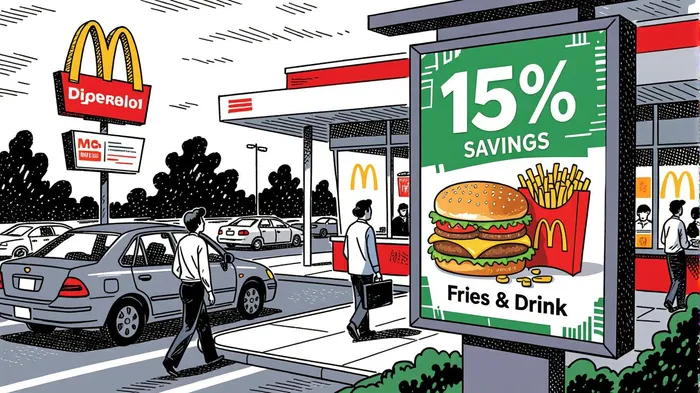
In the shadow of a post-pandemic economy marked by inflation and shifting consumer priorities, McDonald'sMCD-- has recalibrated its value proposition with a strategic reintroduction of the Extra Value Meals. Launched in September 2025, this initiative offers 15% savings on popular items like the $8 Big Mac meal and $5 Sausage McMuffin with Egg, targeting a demographic that has seen double-digit declines in fast-food visits. For investors, this move is not just a tactical response to declining traffic but a masterclass in leveraging brand resilience and pricing agility to navigate a fractured economic landscape.
The Strategic Rationale: Balancing Affordability and Profitability
McDonald's has long understood that its brand equity hinges on its ability to serve as an “everyday affordable” dining option. The 2025 revamp reflects this ethos, with meals designed to appeal to low- and middle-income consumers who now spend 30% more on groceries compared to pre-pandemic levels. By bundling high-demand items at a discount, McDonald's aims to restore its position as a go-to choice for budget-conscious diners. The results are already visible: U.S. same-store sales rose 2.5% in Q2 2025, outpacing rivals like Burger King and Wendy'sWEN--, which have also rolled out aggressive value campaigns.
However, the strategy's success hinges on a delicate balancing act. While the 15% savings attracts price-sensitive customers, it also compresses profit margins. Rising labor and ingredient costs—up 40% over five years—have already eroded margins, and the company's financial support to franchisees to sustain these discounts adds another layer of complexity. Yet, McDonald's has mitigated these risks through its franchise model, which allows 95% of its U.S. locations to absorb operational costs while benefiting from centralized brand-driven demand. This structure has preserved a 56.8% gross profit margin in Q2 2025, a testament to the company's operational discipline.
Broader Industry Trends: A Sector-Wide Shift to Value
McDonald's is not alone in this pivot. The 2025 QSR 50 report reveals that 47% of operators plan to introduce new value promotions, reflecting a sector-wide recalibration. Competitors like Wendy's and Burger King have launched “$2 Value Menus” and “Buy One, Get One Free” deals, while digital campaigns amplify these offers. This shift underscores a fundamental truth: in a two-tiered economy, where lower-income consumers face disproportionate financial strain, value is no longer a niche strategy—it's a survival tactic.
What sets McDonald's apart is its ability to scale. Its digital infrastructure, including AI-driven loyalty programs and edge computing, has reduced labor costs and boosted customer retention. The MyMcDonald's Rewards program, with 185 million active users, has driven a 26-visit-per-year frequency among members, doubling pre-enrollment rates. This digital stickiness, combined with localized innovations like the McAloo Tikki in India, ensures that value offerings remain culturally relevant without sacrificing margins.
Investment Implications: Navigating Risks and Opportunities
For investors, McDonald's 2025 strategy highlights both opportunities and risks. The company's 2.4% dividend yield and 50-year streak of consecutive payouts make it a defensive play in the volatile consumer discretionary sector. Its robust balance sheet—$4 billion in franchisee-driven operating profits in Q2 2025—further supports long-term resilience. However, margin pressures persist. Rising input costs and the risk of brand devaluation (if value becomes synonymous with low quality) could dampen returns.
Actionable insights for investors include:
1. Monitor Same-Store Sales Trends: A sustained 2-3% growth in U.S. same-store sales would validate the value strategy's effectiveness.
2. Track Digital Engagement Metrics: A 10% increase in loyalty program sign-ups or app downloads signals successful customer retention.
3. Assess Unit Economics: The 2,200 new restaurant openings in 2025 must be evaluated for profitability, particularly in markets with volatile supply chains.
Conclusion: A Model for Consumer Discretionary Investing
McDonald's 2025 value menu revamp is a case study in strategic adaptability. By aligning affordability with brand strength, the company has positioned itself to thrive in a fragmented economic environment. For investors, the key takeaway is clear: in a world where value is king, McDonald's blend of pricing agility, digital innovation, and operational efficiency offers a compelling blueprint for navigating the challenges of the post-pandemic era. While risks remain, the company's ability to balance affordability with profitability makes it a standout in the consumer discretionary sector—a sector where resilience is the ultimate currency.

Delivering real-time insights and analysis on emerging financial trends and market movements.
Latest Articles
Stay ahead of the market.
Get curated U.S. market news, insights and key dates delivered to your inbox.
AInvest
PRO
AInvest
PRO



Comments
No comments yet