
McDonald's Campaign Against Tipped Wages and Its Implications for the Restaurant Sector


 Aime Summary
The restaurant industry is at a crossroads, with labor cost dynamics and operational efficiency emerging as defining factors for profitability. McDonald'sMCD--, a global fast-food leader, has taken a bold stance against the tipped wage system, advocating for a unified minimum wage across all restaurant workers. This move not only challenges the status quo but also signals a potential structural shift in how labor costs are managed across the sector. For investors, the implications are profound: wage reform could reshape competitive dynamics, drive margin improvements, and unlock opportunities in companies positioned to address the evolving labor landscape.
The Labor Cost Divide: Fast Food vs. Full-Service Restaurants
Fast-food chains like McDonald's operate on a fundamentally different labor model compared to full-service restaurants. Fast food relies on standardized processes, automation, and a no-tipping structure, allowing for predictable labor cost management. In 2025, , a figure bolstered by advanced scheduling software, self-service kiosks, and a franchise model that distributes labor cost risks across thousands of independent operators.
Full-service restaurants, by contrast, face higher labor intensity. , driven by the need for skilled staff, longer service times, and the tipped wage system. Under the current federal framework, , with tips expected to bridge the gap. This system creates a dual-tier economy: fast-food workers receive a base wage, while tipped workers rely on variable, customer-dependent income.
McDonald's CEO has criticized this disparity, arguing that the tipped wage system creates an “uneven playing field.” By allowing full-service restaurants to reduce labor costs through tax advantages and subminimum wages, the system indirectly shifts labor expenses to consumers via higher menu prices or lower wages for non-tipped workers. For McDonald's, , the current tipped wage model disadvantages its business model by enabling competitors to offer lower prices without comparable wage investments.
The Push for : Implications for the Industry
McDonald's advocacy for a single federal minimum wage—eliminating the tipped wage distinction—could have cascading effects on the restaurant sector. If enacted, such a policy would force full-service restaurants to absorb higher labor costs, potentially leading to menu price increases or reduced staffing. For fast-food chains, the impact is more nuanced. While McDonald's already pays above the federal minimum wage, a unified wage system could level the playing field by removing the competitive advantage of tipped restaurants. This could drive margin improvements for fast-food operators, particularly those with robust automation and scheduling technologies to offset higher wages.
The proposed of 2025, , underscores the legislative momentum behind wage reform. States like California and Nevada, which already enforce equal minimum wages for tipped and non-tipped workers, provide a blueprint for how the industry might adapt. In these markets, , . Lower turnover and higher employee retention in these regions also suggest that wage equity could reduce long-term labor costs for businesses.
Investment Opportunities in
As the restaurant industry grapples with wage reform and rising labor costs, companies that enable operational efficiency stand to benefit. Three key sectors are emerging as critical to this transformation:
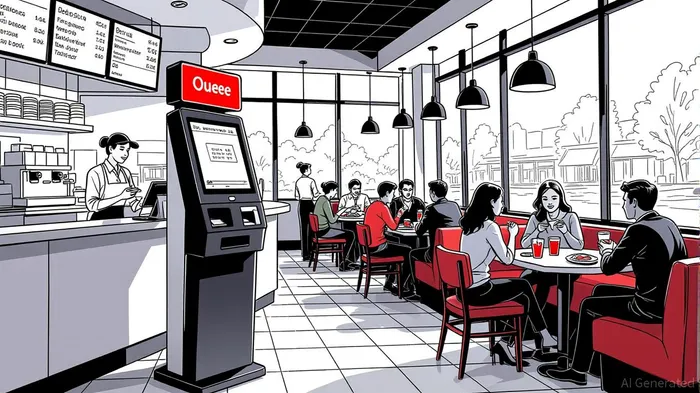
and AI Providers: McDonald's has already invested heavily in self-service kiosks, which now operate in over 60% of U.S. locations. These kiosks reduce reliance on counter staff, reallocating labor to higher-impact roles. Companies like NCR Corporation (NCR) and Toast Inc. (TOST), which provide digital ordering systems and AI-driven labor planning tools, are well-positioned to capitalize on the shift toward automation.
Scheduling and Labor Analytics Software: Advanced scheduling software, such as Lightspeed Restaurant (LSPD) and Toast's labor management solutions, helps operators align staffing with demand. These tools are critical for mitigating labor waste, particularly in high-cost markets where wage inflation is outpacing revenue growth.
and Employee Retention Platforms: With labor turnover remaining a challenge, platforms like Workday (WDAY) and BambooHR are gaining traction. These solutions offer tools for training, performance tracking, and benefits management, addressing the root causes of employee attrition.
for Investors
For investors, the key is to identify operators and technology providers that are proactively adapting to the new labor reality. McDonald's, , demonstrates that fast-food chains can thrive even in a high-wage environment by leveraging scale, automation, and franchisee collaboration. However, the broader restaurant sector remains fragmented. Full-service restaurants with limited technological adoption may struggle to absorb higher labor costs, while those investing in AI-driven labor optimization could see improved margins.
Conclusion
McDonald's campaign against tipped wages is more than a moral stance—it's a strategic move to reshape the restaurant industry's labor economics. By advocating for wage equity, the company is positioning itself to benefit from a more level playing field, where operational efficiency and technological innovation drive profitability. For investors, the opportunities lie in supporting companies that enable this transition, from automation providers to labor analytics platforms. As wage reform gains momentum, the restaurant sector's winners will be those that embrace innovation and adapt to the evolving labor landscape.

Stay ahead of the market.
Get curated U.S. market news, insights and key dates delivered to your inbox.




Comments
No comments yet