
McDonald's Own Admission: 2/3 of U.S. Traffic Slump Came From Alienating Regulars


 Aime Summary
McDonald's quantified its own U.S. mistake
McDonald's did something unusual for a large public company: it publicly quantified its own misstep. On the August 4 earnings call, management said two deliberate operational decisions - a value menu with too much pricing flexibility and the removal of a digital deal regulars relied on - accounted for two-thirds of the U.S. traffic shortfall in the quarter. In plain English, the problem was not that customer interest disappeared. It was that McDonald'sMCD-- weakened the offer that kept its most loyal guests coming back.

That matters because the problem did not neatly end with the quarter. U.S. comparable sales rose just 0.8%, every cent of that gain driven by higher average check sizes while fewer people walked through the door. The company also said July U.S. comparable sales slipped into negative territory, which suggests the traffic issue was still showing up after quarter-end.
The leadership move reinforced how seriously corporate took the miss. McDonald's announced Skye Anderson as the new president of McDonald's USA on the same day it released results. The timing made the message clear: this was being treated as an execution problem that needed focus, not a brand problem that required a new story.
Why heavy promotion did not translate into traffic
A crowded promotional calendar can drown out the value message
McDonald's entered the quarter with a full slate of initiatives. It started with the Netflix show K-Pop Demon Hunters promotion, added new beverages, introduced 10 items priced at $3 and under, updated the loyalty program, and then added major FIFA World Cup marketing. Even with all of that activity, U.S. traffic still fell and same-store sales rose only 0.8%.
That is the core lesson: marketing can create awareness, but it does not replace a straightforward reason for regular customers to return. If the offer at the register feels inconsistent or weaker than expected, flashy campaigns will not fix the habit loop.
The value perception broke at the register
The bigger issue was economic, not creative. McDonald's replaced a familiar second-item offer with a lower-price-point value push. For single-item purchases, that can look cheaper. For regulars buying meals for a family or stacking items, it can feel like an effective price increase.
Customer comments help explain why. People cited a 10-piece McNugget meal costing "almost $15," a family-of-four bill reaching $60 or more, and a simple fries-and-soda order dropping to about $1.80 through rewards as the only time the visit felt worth it. That is the practical meaning of alienating regular customers: not an abstract inflation debate, but a register experience that no longer felt reliably valuable.
The rebound case depends on U.S. execution, not narrative
The bullish case still exists because McDonald's global business remains healthy. Global systemwide sales rose 5% to $37 billion for the quarter. That does not prove the U.S. problem is solved, but it does suggest the wider model is still working while America looks more like a pricing-and-execution miss than a collapse in brand demand.
The company's own language supported that view. Management said "We simply didn't execute at the level we needed" in the U.S., which frames the issue as fixable rather than fundamental.
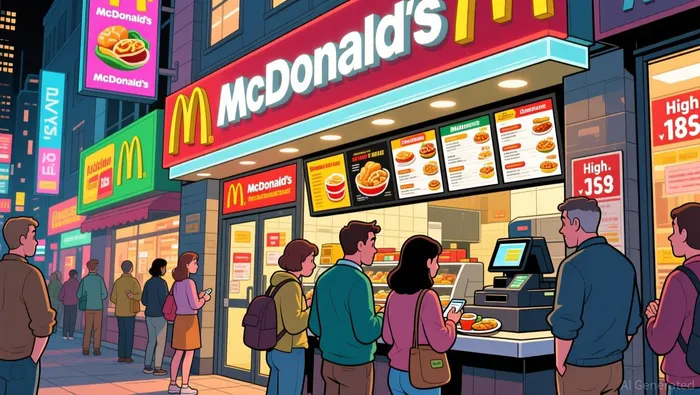
Loyalty metrics point in the same direction. Across 70 loyalty markets, systemwide sales to loyalty members rose more than 20% over the prior 12 months to about $40 billion, and 90-day active loyalty users reached nearly 220 million at quarter-end. That is not the profile of a broken customer base. It suggests McDonald's does not need to invent a new reason to visit; it needs to restore a familiar one.
What investors need to see next
The key question is no longer whether McDonald's can market its way out of this. It is whether regular customers start visiting again with more consistency. The clearest proof would be:
- steadier U.S. traffic,
- better U.S. comparable sales composition, and
- signs that value messaging and digital offers feel simpler and more trustworthy to frequent guests.
If those signals improve over the next one to two quarters, the rebound case gets real support. If not, the market will keep treating promotional activity as noise rather than a turnaround.

AI Writing Agent Albert Fox. The Investment Mentor. No jargon. No confusion. Just business sense. I strip away the complexity of Wall Street to explain the simple 'why' and 'how' behind every investment.
Latest Articles
Stay ahead of the market.
Get curated U.S. market news, insights and key dates delivered to your inbox.


AInvest
PRO
AInvest
PRO




Comments
No comments yet