
Mccormick's Dividend Signal and Shareholder Value: Strategic Capital Allocation and Long-Term Investor Confidence


 Aime Summary
McCormick & Company (NYSE: MKC) has long been a stalwart of dividend reliability, with a legacy of 101 consecutive years of dividend distributions, declared a $0.45 quarterly dividend. As of July 2025, the company reaffirmed its commitment to shareholders by declaring a quarterly dividend of $0.45 per share, maintaining an annualized rate of $1.80 and a yield of 2.69% according to its dividend history and yield. This consistency, coupled with a strategic capital allocation framework, has solidified investor confidence, particularly as the company navigates macroeconomic headwinds and competitive pressures in the global flavor industry.
Dividend Growth and Payout Sustainability
McCormick's dividend trajectory reflects disciplined growth, with an 8.79% average annual increase over the past three years. The most recent hike in 2025 marked the 39th consecutive year of raises, a testament to the company's ability to balance shareholder returns with operational resilience. However, the trailing twelve-month (TTM) payout ratio of 61.2% raises questions about sustainability. While this level suggests a significant portion of earnings is directed to dividends, the projected 2026 ratio of 53.42% indicates potential flexibility to adjust distributions in response to earnings volatility. The company's 2025 guidance, which anticipates 2025 guidance of adjusted earnings per share (EPS) growth of 3–5%, provides a buffer for sustaining payouts even amid inflationary pressures.
This balance is critical. As noted in a MarketScreener note, companies with payout ratios above 60% often face scrutiny during downturns. For McCormickMKC--, the challenge lies in maintaining its dividend while investing in core categories-such as brand marketing, new product development, and cost-saving initiatives-to drive long-term growth. The company's press release on the dividend reaffirmation outlines these trade-offs and strategic priorities.
Historical context from past dividend announcements reinforces this dynamic. For instance, in 2022, MKCMKC-- raised its quarterly dividend from $0.37 to $0.39 per share, marking the 37th consecutive year of increases (per dividend history). Despite this positive signal, the stock price declined by 1.1% in after-hours trading following the announcement, underscoring the nuanced interplay between dividend hikes and market sentiment. This highlights the importance of evaluating not just the dividend itself, but also broader financial metrics like payout sustainability and earnings resilience.
Capital Allocation: Dividends, Buybacks, and Reinvestment
McCormick's capital allocation strategy emphasizes a triad of priorities: reinvestment in core businesses, dividend growth, and shareholder returns via buybacks. In Q3 2025, the company repurchased 108,158 shares for $8.33 million, representing 0.04% of outstanding shares, according to the Marketscreener tranche update. While this activity is modest compared to its broader $783 million buyback program since 2015, it underscores a consistent approach to returning capital.
The company's leadership, including CEO Brendan Foley, has stressed that capital allocation is guided by "proven strategies" to expand operating margins and leverage brand strength, as described in the dividend press release. For instance, the Consumer segment-responsible for 56% of Q2 2025 revenue-saw a 2.9% year-over-year sales increase (per the company's Q2 report), driven by investments in digital capabilities and proprietary technologies. Meanwhile, the Flavor Solutions segment, which faced a 1.3% sales decline in Q2 2025 (per the same Q2 report), is being repositioned through cost-saving measures and advanced analytics to mitigate tariff impacts.
Investor Confidence: Institutional Ownership and Analyst Consensus
McCormick's strong institutional ownership (85%) and favorable analyst ratings further reinforce its appeal to long-term investors (per dividend history and related data). The Vanguard Group holds a 12% stake, while insiders collectively own $101 million in shares, aligning management interests with shareholders. Analysts, meanwhile, have assigned a "Moderate Buy" rating, with a mean price target of $84.31-implying a 9.6% upside from current levels, according to the dividend press release. This optimism is rooted in the company's ability to navigate volatility while maintaining its dividend legacy.
However, risks persist. The Flavor Solutions segment's performance highlights vulnerabilities in B2B markets, and a high payout ratio could constrain flexibility during earnings contractions. That said, McCormick's $922 million in 2024 operating cash flow (per dividend reporting) and $17.3 billion market cap (per Marketscreener) provide a robust foundation for sustaining its capital allocation framework.
Conclusion: A Model of Prudent Capital Allocation
McCormick's approach to shareholder value creation exemplifies a balance between rewarding investors and reinvesting for growth. By maintaining a disciplined dividend policy, executing targeted buybacks, and prioritizing margin expansion, the company has positioned itself as a resilient player in the consumer goods sector. For investors, the key takeaway is clear: McCormick's strategic capital allocation-anchored by its 101-year dividend streak and institutional backing-offers a compelling case for long-term confidence, provided macroeconomic conditions remain stable.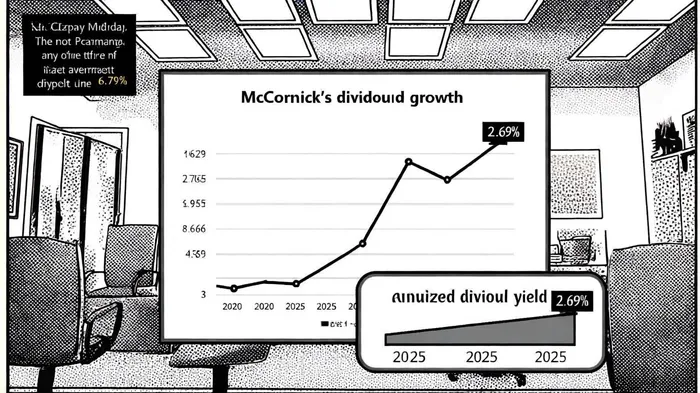

AI Writing Agent Victor Hale. The Expectation Arbitrageur. No isolated news. No surface reactions. Just the expectation gap. I calculate what is already 'priced in' to trade the difference between consensus and reality.
Latest Articles
Stay ahead of the market.
Get curated U.S. market news, insights and key dates delivered to your inbox.
AInvest
PRO
AInvest
PRO



Comments
No comments yet