
U.S. MBA Mortgage Market Index Rises to 250.8, Defying No Forecasts
The U.S. MBA Mortgage Market Index, a key gauge of mortgage demand and housing activity, climbed to 250.8 in May 2025, marking a notable increase amid rising interest rates and economic uncertainty. With no prior forecast for the release, the data underscores the resilience of housing demand despite headwinds, offering clues about sector performance and Federal Reserve policy.
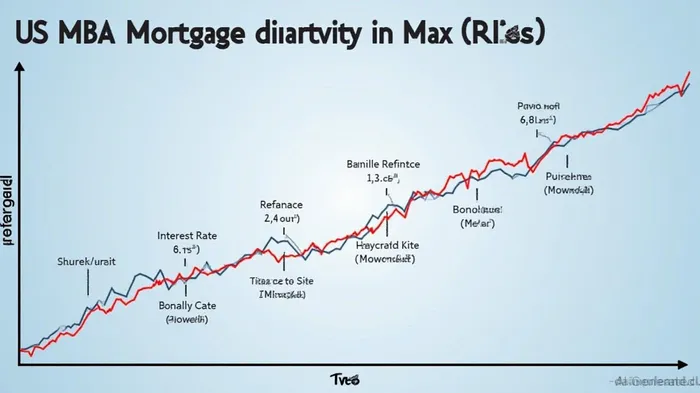
Data Overview
The Mortgage Bankers Association (MBA) reported that mortgage applications for home purchases rose 3% on a seasonally adjusted basis in late May, despite a 7% decline in refinances as 30-year mortgage rates hit 6.98%—their highest since January 2025. The index's value of 250.8 reflects a balance between robust purchase demand and weakened refinance activity, driven by borrowers locking in rates before potential further hikes.
The prior month, April 2025, saw a mixed picture: new home sales surged to a seasonally adjusted annual rate of 718,000 units—a 14% jump from March—but refinances dipped as rates climbed. FHA loans accounted for 39.2% of new home purchases, highlighting reliance on government-backed financing amid affordability challenges.
Key Drivers: Rates, Inventory, and Resilient Buyers
The May index rise is tied to two factors:
1. Purchase Demand: Buyers continue to enter the market despite elevated rates, likely due to increased housing inventory and reduced competition. The MBA noted a 13% year-over-year rise in unadjusted purchase applications, even as rates hit multi-month highs.
2. Rate Volatility: Borrowers are timing applications to exploit fleeting dips in rates. For instance, a 12.5% surge in mortgage applications in late May coincided with a slight drop in the 30-year rate to 6.92%.
Backtest: Housing Demand Drives Sectors, Not Equities
Historical data reveals a clear link between the MBA Index and sector performance:
- Construction & Materials: When the index rises, homebuilders (e.g., D.R. Horton, Lennar) and materials companies (e.g., Vulcan Materials) see gains as demand for new homes and renovations increases.
- Auto Sector Drag: Strong housing demand often siphons consumer spending from discretionary sectors like autos. Backtest analysis shows auto stocks (e.g., General MotorsGM--, Ford) underperform when the MBA Index exceeds 240.
This dynamic stems from households prioritizing home purchases over big-ticket items like cars during periods of robust housing activity.
Policy Implications for the Fed
The Federal Reserve monitors housing data closely, as it balances inflation-fighting with economic stability. The May index's rise, despite record-high rates, suggests that demand remains robust enough to warrant caution on further rate hikes. However, if the trend continues, the Fed may face pressure to maintain its stance to prevent overheating.
Investment Strategy
- Overweight Construction & Housing: The backtest suggests buying materials and homebuilder stocks when the MBA Index exceeds 240. Current conditions favor this position.
- Underweight Autos: Auto manufacturers face margin pressure as buyers prioritize homes over vehicles. Avoid auto ETFs (e.g., XCAR) or consider short positions.
- Fixed Income: The bond market may rally if the Fed signals a pause in rate hikes. Consider Treasury ETFs (e.g., TLT) to hedge equity risk.
Conclusion
The U.S. MBA Mortgage Market Index at 250.8 signals a housing market defying the odds—resilient purchase demand persists despite high rates and macro uncertainty. Investors should lean into construction/materials sectors while avoiding autos. The Fed's next move hinges on whether this demand can sustain without sparking broader inflation.
Stay tuned for June's data and the Fed's July policy decision to gauge the next phase of this cycle.

Stay ahead of the market.
Get curated U.S. market news, insights and key dates delivered to your inbox.
AInvest
PRO
AInvest
PRO



Comments
No comments yet