
U.S. MBA 30-Year Mortgage Rate Hits 6.67%—Implications for Housing-Linked Sectors
 Aime Summary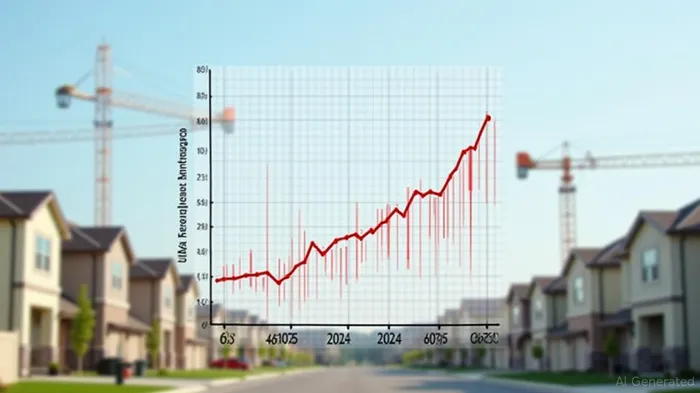
The U.S. MBA 30-year mortgage rate has settled at 6.67% as of August 2025, a level that reflects both the lingering effects of post-pandemic economic adjustments and the Federal Reserve's cautious approach to inflation. This rate, while elevated compared to the historic lows of 2021 (2.65%), remains within a range that suggests stabilization rather than volatility. For investors, this presents a critical inflection point for sector rotation strategies, particularly in housing-linked industries such as construction, real estate, and home furnishings.
The Mortgage Rate Landscape: Stability Amid Uncertainty
The 6.67% rate is part of a broader trend of gradual decline in 2025, following a peak of 7.08% in October 2022. This moderation is driven by weakening economic signals—slower home price growth, a softening labor market, and declining Treasury yields. However, the Federal Reserve's reluctance to cut rates aggressively (projecting only one or two reductions by year-end) means affordability constraints for homebuyers will persist.
Sector Impacts: Winners and Losers in a High-Rate Environment
- Homebuilders and Real Estate Agencies: Elevated mortgage rates have dampened demand for new homes, leading to reduced sales volumes. Companies like LennarLEN-- (LEN) and D.R. Horton (DHI) have seen profit margins compress as buyers delay purchases. Real estate agencies, including Keller WilliamsWMB-- (KW), face similar headwinds as transaction volumes remain subdued.
- Financials and Mortgage Servicers: Conversely, higher rates have bolstered net interest margins for banks and mortgage servicers. Institutions like JPMorgan ChaseJPM-- (JPM) and Wells FargoWFC-- (WFC) benefit from increased borrowing costs, while mortgage servicers such as PennyMac (PMT) see stronger refinancing activity as rates stabilize.
- Home Furnishing and Appliance Retailers: Sectors tied to new home purchases, such as furniture (Ashley HomeStore, ASH) and appliances (Whirlpool, WHR), face reduced demand. However, a potential rebound in 2026 could create buying opportunities for investors.
- REITs and Residential Leasing: Multifamily REITs (e.g., Equity ResidentialEQR--, EQR) have gained traction as homebuyers shift to rentals due to affordability challenges. This trend is likely to continue until rates drop below 6%.
Strategic Rotation: Positioning for the New Normal
Given the current rate environment, investors should consider the following rotation strategies:
- Exit Housing-Linked Sectors: Reduce exposure to homebuilders, real estate agencies, and furniture retailers. These sectors remain vulnerable to further rate hikes or prolonged affordability issues.
- Overweight Financials and Mortgage Servicers: Allocate capital to banks and servicers that benefit from stable or rising rates. ETFs like the Financial Select Sector SPDR (XLF) offer broad exposure.
- Hedge with Defensive Sectors: Increase allocations to utilities and consumer staples, which are less sensitive to rate fluctuations.
- Monitor Rate-Driven Opportunities: Keep a portion of the portfolio agile to capitalize on potential 2026 rebounds in housing-linked sectors if rates fall to 6.1% as projected.
The Macroeconomic Ripple Effect
Mortgage rates are not isolated to housing—they influence broader economic dynamics. Higher borrowing costs reduce consumer spending, which can slow GDP growth. However, a stable rate environment (as seen in 2025) allows households to adjust budgets, mitigating the worst effects. Investors should also consider the interplay between mortgage rates and inflation: if core CPI drops closer to the Fed's 2% target, rate cuts in 2026 could catalyze a housing market rebound.
Conclusion: Patience and Precision in a Shifting Landscape
The 6.67% mortgage rate underscores a market in transition. While housing-linked sectors face near-term challenges, the broader economy's resilience and potential for gradual rate declines offer long-term opportunities. A disciplined sector rotation strategy—shifting toward rate-insensitive or rate-benefit industries while hedging against volatility—can position portfolios to navigate this complex environment. Investors should remain vigilant, tracking key indicators like the 10-year Treasury yield and Fed policy signals to time their rotations effectively.

Stay ahead of the market.
Get curated U.S. market news, insights and key dates delivered to your inbox.




Comments
No comments yet