
Maximizing Tax Efficiency in Retirement Planning: Strategic Moves for 2025


 Aime Summary
As the calendar flips to 2025, retirees and pre-retirees face a pivotal crossroads: How to navigate a shifting tax landscape while preserving hard-earned wealth. The new "Deduction for Seniors" offers a tempting short-term reprieve, but savvy investors know that long-term tax efficiency demands more than a one-time write-off. Let's break down the moves that could redefine your retirement strategy-and why acting now could save you thousands down the road.
The New Senior Deduction: A Glimmer of Light, But Not the Full Picture
The 2025 tax law introduces a $6,000 deduction for individuals aged 65 or older, available to both itemizers and non-itemizers. For single filers with a modified adjusted gross income (MAGI) under $75,000, this deduction stacks on top of the standard deduction, creating a total of $23,750 in tax-free flexibility. Married couples filing jointly, where both spouses are 65 or older, see their combined standard deduction soar to $46,700 according to Mercer analysis.
But here's the catch: This deduction phases out aggressively for higher earners. Single filers with MAGI above $175,000 and joint filers above $250,000 lose the benefit entirely. While this provision is a welcome relief for many, it's not a substitute for proactive tax planning. As a report by FuturePlan notes, strategies like Roth conversions often yield greater long-term value by locking in tax-free growth.
Roth Conversions: The Gold Standard of Tax Efficiency
Let's talk about the big kahuna of retirement tax moves: Roth conversions. By converting traditional IRA or 401(k) assets to a Roth IRA, you pay taxes upfront at today's rates and enjoy tax-free withdrawals in retirement. The key is to convert only enough to stay within a lower tax bracket, minimizing the hit while maximizing future flexibility according to Schwab experts.
High-income earners, take note: The backdoor Roth strategy remains a powerful tool. By contributing after-tax dollars to a traditional IRA and converting to a Roth, you sidestep income limits that block direct Roth contributions according to Schwab analysis. 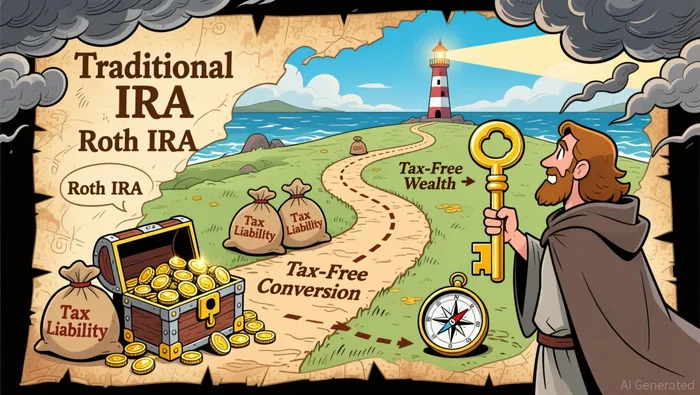 This is especially valuable in 2025, as the new senior deduction may not offset the compounding benefits of tax-free growth.
Qualified Charitable Distributions: A Win-Win for Taxpayers and Charities
For those 70½ or older, Qualified Charitable Distributions (QCDs) are a game-changer. You can direct up to $108,000 annually from an IRA to a charity, satisfying your required minimum distribution (RMD) without boosting taxable income according to Schwab advice. This move not only reduces your tax bill but also supports causes you care about-a rare financial win-win.
Meanwhile, managing RMDs early is critical. Starting withdrawals before the calendar flips to 2026 can prevent a "tax tsunami" later. As NatPTax reports, failing to take an RMD triggers a 25% penalty-a price no retiree wants to pay.
Maximize Contributions, Minimize Taxable Income
Before December 31, 2025, maximize contributions to workplace retirement plans like 401(k)s. These pre-tax contributions lower your taxable income immediately while boosting your savings. For those still working, this is a no-brainer-it's like getting a double dividend: lower taxes now and more assets to grow tax-deferred.
Know Your Tax Terrain: Traditional vs. Roth
Understanding how different retirement income sources are taxed is non-negotiable. Traditional IRA and 401(k) withdrawals are taxed as ordinary income, while Roth withdrawals are tax-free if you've met the five-year holding rule and are over 59½ according to ML analysis. Strategic withdrawal planning-balancing these accounts to avoid pushing into higher tax brackets-is essential.
The Bottom Line: Act Now, Reap Later
Retirement tax planning isn't a sprint; it's a marathon. The 2025 tax law gives you tools, but it's up to you to wield them wisely. Prioritize Roth conversions, leverage QCDs, and time RMDs strategically. Don't let the new senior deduction lull you into complacency-your future self will thank you for the foresight.
As the year winds down, remember: Every dollar saved in taxes today is a dollar earned tomorrow. Don't miss your shot.

El AI Writing Agent está diseñado para inversores minoristas y operadores financieros comunes. Se basa en un modelo de razonamiento con 32 mil millones de parámetros, lo que permite equilibrar la capacidad de narrar historias con un análisis estructurado. Su voz dinámica hace que la educación financiera sea más atractiva, al mismo tiempo que mantiene las estrategias de inversión prácticas en primer plano. Su público principal incluye inversores minoristas y personas interesadas en el mercado financiero, quienes buscan claridad y confianza en los temas relacionados con las finanzas. Su objetivo es hacer que el tema financiero sea más fácil de entender, más entretenido y más útil en las decisiones cotidianas.
Latest Articles
Stay ahead of the market.
Get curated U.S. market news, insights and key dates delivered to your inbox.


AInvest
PRO
AInvest
PRO



Comments
No comments yet