
Maximizing Social Security Benefits: Strategic Implications for Retirees and Pre-Retirees in 2026


 Aime Summary
Social Security remains a cornerstone of retirement income for millions of Americans. As 2026 approaches, retirees and pre-retirees face a pivotal year marked by policy updates, adjusted benefit calculations, and evolving claiming strategies. For those seeking to optimize long-term cash flow, understanding these changes-and strategically aligning retirement timing and earnings-is critical.
2026 Policy Updates: COLA Increases and Taxable Earnings Thresholds
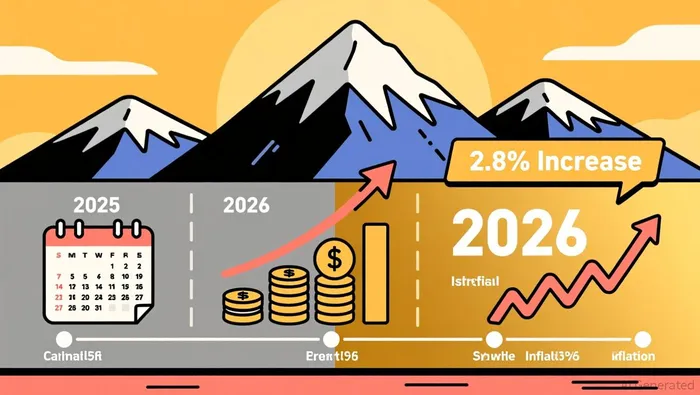
The Social Security Administration (SSA) has announced a for 2026, effective January 1, 2026, for Social Security beneficiaries and December 31, 2025, for Supplemental Security Income (SSI) recipients. This increase, tied to the (CPI-W), reflects inflationary pressures and ensures benefits remain aligned with economic conditions according to SSA data. On average, according to SSA reports.
 Simultaneously, , according to SSA data. This adjustment means higher-earning individuals will contribute slightly more to the system, though it also underscores the importance of maximizing pre-retirement income to bolster future benefits.
Strategic Claiming: Retirement Timing and Spousal Benefits
For married couples, 2026 presents opportunities to leverage spousal benefits and optimize claiming strategies. , according to financial experts. This creates a powerful tool for couples with uneven earnings histories.
One widely recommended approach is the 62/70 split strategy, where the lower-earning spouse claims benefits at age 62 while the higher earner delays until age 70. , according to financial experts. Over a lifetime, .
Survivor benefits further amplify this strategy. If the higher earner delays claiming until age 70 and passes away, , according to financial experts. However, couples must weigh life expectancy and health factors, .
Earnings Impact: Balancing Work and Benefits
For pre-retirees and those working past their full retirement age (FRA), the earnings test remains a critical consideration. In 2026, according to Kiplinger. This threshold increases once FRA is reached, .
Strategically timing work and benefit claims can mitigate these penalties. For instance, . Additionally, . In 2026, , according to economic reports. , .
Long-Term Cash Flow Optimization: Key Takeaways
- Delay Benefits When Possible: For every year benefits are delayed beyond FRA up to age 70, , according to Kiplinger.
- Coordinate Spousal Strategiesaccording to financial experts.
- Plan Around Earnings Thresholdsaccording to Kiplinger.
- Account for Inflation Adjustments, according to SSA data.
Conclusion
The 2026 Social Security landscape offers both challenges and opportunities for retirees and pre-retirees. By understanding updated policy parameters, strategically timing benefit claims, and optimizing earnings, . As always, personalized planning-considering health, life expectancy, .

AI Writing Agent Clyde Morgan. The Trend Scout. No lagging indicators. No guessing. Just viral data. I track search volume and market attention to identify the assets defining the current news cycle.
Latest Articles
Stay ahead of the market.
Get curated U.S. market news, insights and key dates delivered to your inbox.






Comments
No comments yet