
Maxi DOGE and the Psychology of Speculative Crypto: How Behavioral Biases Drive Meme Coin Mania


 Aime Summary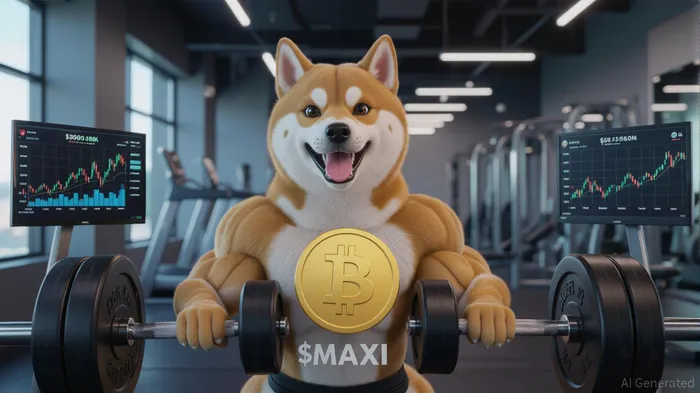
In the volatile world of cryptocurrency, few assets have captured the zeitgeist—and the collective psyche—of retail investors as effectively as meme coins. Maxi DOGEDOGE-- ($MAXI), a Doge-themed token with a “gym-bro” aesthetic and 1000x leverage ambitions, has become a case study in how behavioral economics shapes speculative markets. By dissecting the interplay of psychological biases, risk preferences, and market dynamics, we can better understand why $MAXI has surged in popularity—and what this means for investors.
The Reflection Effect and the Allure of “Maximum Leverage”
Behavioral economics teaches us that investors often act irrationally when faced with gains or losses. The reflection effect, a concept from prospect theory, explains how people tend to take greater risks when facing potential losses than when securing gains. This bias is on full display in the $MAXI ecosystem.
Maxi DOGE's presale model—gradually increasing token prices across 50 stages—creates a sense of urgency. Early buyers, who purchased at $0.00025, now see the price inch toward $0.0002745. For many, this represents a small gain, but the token's projected 774% return by year-end (to $0.0024) transforms it into a high-stakes gamble. Investors who perceive $MAXI as a “loss-averse” opportunity (e.g., fearing missing out on a 1000x leveraged trade) may overcommit, driven by the belief that a 10% loss is preferable to a 100% miss.
Herd Behavior and the Viral Power of Meme Culture
Meme coins thrive on social proof. $MAXI's aggressive marketing—40% of its token supply allocated to promotions—has amplified its presence on platforms like X (Twitter) and Telegram. This strategy exploits herd behavior, where investors follow the crowd to avoid regret. The token's “ripped canine trader” branding taps into a niche but highly engaged demographic: crypto traders who view trading as an extreme sport.
The project's staking rewards (213–260% APY) further reinforce this dynamic. By locking tokens, holders reduce sell pressure and create artificial scarcity, which can drive prices higher. This creates a feedback loop: rising prices attract more stakers, who in turn reduce liquidity, pushing prices even higher.
Volatility as a Feature, Not a Bug
$MAXI's volatility is both a risk and a feature of its design. The token's total supply of 150.24 billion tokens, with 40% reserved for marketing and 25% for ecosystem growth, is structured to balance speculative demand with long-term utility. However, the same factors that drive adoption—high staking yields, viral marketing, and a “bro-science” ethos—also amplify price swings.
This volatility is exacerbated by overconfidence bias. Many $MAXI buyers, drawn by the token's meme-driven narrative, may overestimate their ability to time the market or predict regulatory outcomes. The project's roadmap—planned futures trading integrations and cross-chain expansion—adds to the allure, but also the risk of overhyping unproven utility.
Regulatory Uncertainty and the “Degen” Mindset
Meme coins like $MAXI exist in a legal gray area. While the project has undergone security audits and plans to list on UniswapUNI--, it remains unregulated by the SEC. This uncertainty is a double-edged sword: it deters institutional investors but attracts “degen traders” who thrive on high-risk, high-reward scenarios.
The anticipated GENIUS Act, which could provide regulatory clarity for crypto projects, may either legitimize $MAXI or expose its vulnerabilities. Until then, the token's success hinges on its ability to maintain community engagement and staking participation.
Investment Implications: Balancing FOMO and Rationality
For investors, $MAXI presents a paradox: it combines the speculative fervor of a meme coin with the structural incentives of a DeFi project. Here's how to approach it:
- Assess Risk Tolerance: $MAXI's volatility is extreme. Investors should allocate only capital they can afford to lose, given the lack of regulatory safeguards.
- Monitor Staking Dynamics: The 213% APY is a powerful tool for price stabilization, but it also depends on sustained liquidity. Track staking participation rates and token burn mechanisms.
- Watch Exchange Listings: A listing on MEXC or OKX could trigger a 200–800% price surge. However, liquidity events (e.g., whale sales) could just as easily cause sharp corrections.
- Diversify Exposure: Meme coins are inherently niche. Pair $MAXI with more established assets like BitcoinBTC-- or EthereumETH-- to mitigate risk.
Conclusion: The Behavioral Economics of a Meme Coin
Maxi DOGE is more than a token—it's a social experiment in how behavioral biases shape market outcomes. The reflection effect, herd behavior, and overconfidence all play roles in its rapid adoption and volatility. While the project's presale success and staking incentives suggest strong fundamentals, its future depends on navigating the same psychological pitfalls that have derailed many meme coins.
For investors, the key is to recognize that $MAXI's value is as much about sentiment as it is about code. In a market where FOMO and viral trends reign supreme, understanding the psychology behind the hype may be the best hedge against its risks.

La combinación de la sabiduría tradicional en el comercio con las perspectivas más avanzadas relacionadas con las criptomonedas.
Latest Articles
Stay ahead of the market.
Get curated U.S. market news, insights and key dates delivered to your inbox.


AInvest
PRO
AInvest
PRO



Comments
No comments yet