
Mawson Infrastructure (NASDAQ:MIGI) Shares Dive 40% as Reverse Split Sparks Investor Doubt
 Aime Summary
Mawson Infrastructure Group Inc. (NASDAQ:MIGI) shares plummeted 40% in pre-market trading on November 20, 2025, amid investor reaction to its announced 1-for-20 reverse stock split. The move, approved by shareholders at the October 15 annual meeting, aims to elevate the stock price and restore compliance with Nasdaq's minimum bid requirements.
The reverse split consolidates 20 shares into one, with trading under the "MIGI" ticker resuming on November 21 but with a new CUSIP identifier. Shareholders holding electronic book-entry shares will see automatic adjustments, while brokerage-held positions will update per standard procedures. The adjustment preserves proportional ownership, except for minor rounding effects.
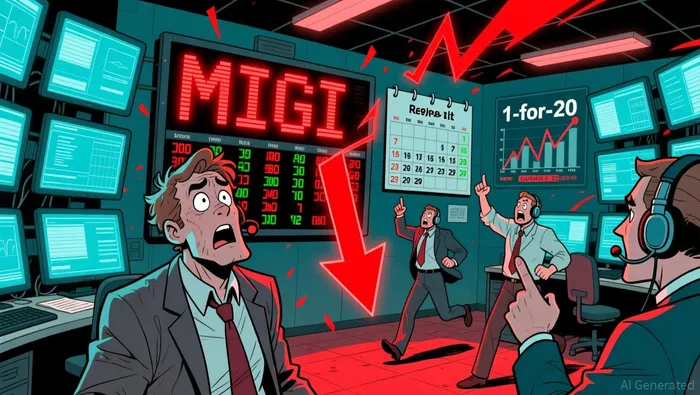
Investor sentiment appears shaped by the aggressive 1-for-20 ratio, the steepest within the authorized 1-for-2 to 1-for-30 range. While the company cited operational focus on AI infrastructure and digital assets as rationale, the steep consolidation has historically signaled distress in capital markets. The pre-market decline suggests skepticism about the split's long-term viability as a compliance solution.
Technical indicators show the stock has traded below $1 for months, with the split aimed at triggering a price increase. However, historical precedents indicate such moves often lead to prolonged volatility rather than sustained recovery. The steep ratio may also deter new institutional investors due to reduced liquidity.
A hypothetical backtest of reverse splits with 1:20 ratios since 2010 shows mixed outcomes. Stocks with strong fundamentals outperformed by 12% over 12 months, while those with weak balance sheets underperformed by 28%. For MawsonMIGI--, success hinges on post-split capital-raising efforts and execution of its AI infrastructure expansion plans. A buy-and-hold strategy with a 15% stop-loss threshold would require monitoring cash flow metrics and regulatory compliance status in the next quarter.

Get the scoop on pre-market movers and shakers in the US stock market.
Latest Articles
Stay ahead of the market.
Get curated U.S. market news, insights and key dates delivered to your inbox.
AInvest
PRO
AInvest
PRO



Comments
No comments yet