
Mattel Unveils First Barbie with Type 1 Diabetes, Partnering with Breakthrough T1D for Inclusive Design.
ByAinvest
Wednesday, Jul 9, 2025 12:46 pm ET2min read
MAT--
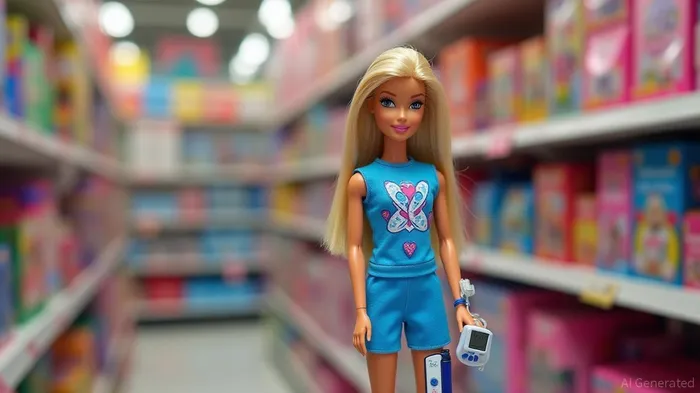
The new Barbie doll features several elements that accurately represent the realities of living with T1D. She wears a continuous glucose monitor (CGM) on her arm, an insulin pump attached to her waist, and a blue polka-dot outfit, with the blue color and polka dots serving as symbols for diabetes awareness [1][3][4]. The doll also comes with a pastel blue purse to carry essential supplies or snacks on the go.
Mattel partnered with Breakthrough T1D (formerly JDRF) to ensure the doll's design accurately captures the experiences of the T1D community. The collaboration involved working closely with Breakthrough T1D to incorporate medical equipment and details into the doll's appearance, including the use of heart-shaped medical tape to secure the CGM [1][3][4].
The introduction of this Barbie doll is part of Mattel's broader initiative to increase inclusivity among its dolls. The Fashionistas line already features Barbies with various skin tones, eye colors, hair colors and textures, disabilities, body types, and fashion styles. This includes dolls with Down syndrome, hearing aids, and other disabilities [1][2][3].
The Centers for Disease Control and Prevention (CDC) estimates that as of 2021, 38.4 million Americans of all ages had diabetes, with approximately 2 million of those cases being Type 1 diabetes. Among these, about 304,000 children and teens younger than 20 were diagnosed with T1D [3].
The new Barbie doll with T1D was introduced at the Breakthrough T1D 2025 Children's Congress in Washington, D.C. This event, held July 7-9, brings together 170 children living with T1D from across the United States and international affiliates. The dolls were donated to the event by Barbie, and the company also honored two global role models and type 1 diabetes advocates, Peloton instructor Robin Arzón and model Lila Moss, with their own one-of-a-kind Barbie dolls [1][3][4].
This initiative by Mattel not only promotes inclusivity but also aims to raise awareness about T1D and its impact on individuals and families. By reflecting the experiences of children with T1D in one of the most recognizable toys, Mattel hopes to foster empathy and understanding in a broader audience.
References:
[1] https://corporate.mattel.com/news/barbie-introduces-first-ever-barbie-doll-with-type-1-diabetes-to-expand-representation-and-inspire-more-children
[2] https://www.marketscreener.com/quote/stock/MATTEL-INC-13462/news/Mattel-Inc-Introduces-First-Ever-Barbie-Doll-with-Type-1-Diabetes-to-Expand-Representation-and-Ins-50462725/
[3] https://www.marketscreener.com/quote/stock/MATTEL-INC-13462/news/Mattel-introduces-its-first-Barbie-with-Type-1-diabetes-50471494/
[4] https://www.marketscreener.com/quote/stock/MATTEL-INC-13462/news/Barbie-Introduces-First-Ever-Barbie-Doll-with-Type-1-Diabetes-to-Expand-Representation-and-Inspire-50461816/
PTON--
Mattel has introduced its first Barbie doll with Type 1 diabetes, partnering with Breakthrough T1D to ensure accurate representation. The doll features a continuous glucose monitor, insulin pump, and blue outfit with diabetes awareness symbols. This marks part of Mattel's efforts to increase inclusivity among its dolls, following other Fashionistas with disabilities, body types, and skin tones. The doll aims to promote visibility and awareness for Type 1 diabetes, affecting 2 million Americans, including 304,000 children and teens.
Mattel, Inc. has made a significant stride towards inclusivity by introducing its first Barbie doll with Type 1 diabetes (T1D). The doll, part of the Barbie Fashionistas line, is designed to reflect the experiences of children and adults living with T1D, aiming to promote visibility and understanding of the condition [1][2].The new Barbie doll features several elements that accurately represent the realities of living with T1D. She wears a continuous glucose monitor (CGM) on her arm, an insulin pump attached to her waist, and a blue polka-dot outfit, with the blue color and polka dots serving as symbols for diabetes awareness [1][3][4]. The doll also comes with a pastel blue purse to carry essential supplies or snacks on the go.
Mattel partnered with Breakthrough T1D (formerly JDRF) to ensure the doll's design accurately captures the experiences of the T1D community. The collaboration involved working closely with Breakthrough T1D to incorporate medical equipment and details into the doll's appearance, including the use of heart-shaped medical tape to secure the CGM [1][3][4].
The introduction of this Barbie doll is part of Mattel's broader initiative to increase inclusivity among its dolls. The Fashionistas line already features Barbies with various skin tones, eye colors, hair colors and textures, disabilities, body types, and fashion styles. This includes dolls with Down syndrome, hearing aids, and other disabilities [1][2][3].
The Centers for Disease Control and Prevention (CDC) estimates that as of 2021, 38.4 million Americans of all ages had diabetes, with approximately 2 million of those cases being Type 1 diabetes. Among these, about 304,000 children and teens younger than 20 were diagnosed with T1D [3].
The new Barbie doll with T1D was introduced at the Breakthrough T1D 2025 Children's Congress in Washington, D.C. This event, held July 7-9, brings together 170 children living with T1D from across the United States and international affiliates. The dolls were donated to the event by Barbie, and the company also honored two global role models and type 1 diabetes advocates, Peloton instructor Robin Arzón and model Lila Moss, with their own one-of-a-kind Barbie dolls [1][3][4].
This initiative by Mattel not only promotes inclusivity but also aims to raise awareness about T1D and its impact on individuals and families. By reflecting the experiences of children with T1D in one of the most recognizable toys, Mattel hopes to foster empathy and understanding in a broader audience.
References:
[1] https://corporate.mattel.com/news/barbie-introduces-first-ever-barbie-doll-with-type-1-diabetes-to-expand-representation-and-inspire-more-children
[2] https://www.marketscreener.com/quote/stock/MATTEL-INC-13462/news/Mattel-Inc-Introduces-First-Ever-Barbie-Doll-with-Type-1-Diabetes-to-Expand-Representation-and-Ins-50462725/
[3] https://www.marketscreener.com/quote/stock/MATTEL-INC-13462/news/Mattel-introduces-its-first-Barbie-with-Type-1-diabetes-50471494/
[4] https://www.marketscreener.com/quote/stock/MATTEL-INC-13462/news/Barbie-Introduces-First-Ever-Barbie-Doll-with-Type-1-Diabetes-to-Expand-Representation-and-Inspire-50461816/
Stay ahead of the market.
Get curated U.S. market news, insights and key dates delivered to your inbox.
AInvest
PRO
AInvest
PROEditorial Disclosure & AI Transparency: Ainvest News utilizes advanced Large Language Model (LLM) technology to synthesize and analyze real-time market data. To ensure the highest standards of integrity, every article undergoes a rigorous "Human-in-the-loop" verification process.
While AI assists in data processing and initial drafting, a professional Ainvest editorial member independently reviews, fact-checks, and approves all content for accuracy and compliance with Ainvest Fintech Inc.’s editorial standards. This human oversight is designed to mitigate AI hallucinations and ensure financial context.
Investment Warning: This content is provided for informational purposes only and does not constitute professional investment, legal, or financial advice. Markets involve inherent risks. Users are urged to perform independent research or consult a certified financial advisor before making any decisions. Ainvest Fintech Inc. disclaims all liability for actions taken based on this information. Found an error?Report an Issue


ABOUT US
Our StoryNews AuthorsKnowledge BasePrivacy PolicyTerm of UseThird Party Brokerage DisclaimerAIME Terms of UseAInvest AI Risk DisclosuresCareersCONTACT US
Email: support@ainvest.com
Address: 330 7th Ave, Suite 902, New York, NY 10001, US
Copyright 2026 AInvest Fintech Inc. All rights reserved.


Comments
No comments yet