
Mastercard, Western Union and Worldpay Join Solana's New Developer Platform for Blockchain Finance
 Aime Summary
The SolanaSOL-- Foundation has launched the Solana Developer Platform (SDP), a unified interface for enterprises to build and deploy blockchain-based financial applications. The platform integrates custody, compliance, wallets, and payments services into one system, aiming to reduce the complexity of developing on Solana. It features live modules for asset issuance and payments, with a planned trading module later this year. MastercardMA--, Western UnionWU--, and Worldpay are already testing the platform for stablecoin settlement and cross-border transactions.
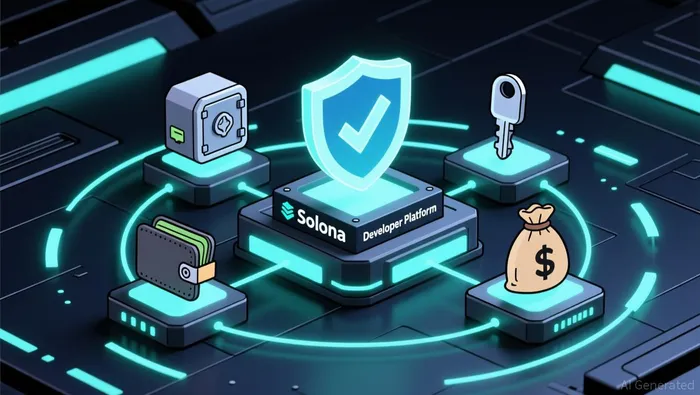
SDP is designed to help financial institutions build products like tokenized deposits, stablecoins, and real-world assets with minimal technical expertise. The platform leverages AI tools and infrastructure from over 20 providers, streamlining a fragmented process. It includes on- and off-ramps for fiat and stablecoins, making it easier to integrate blockchain solutions with traditional systems.
Solana's move positions it to compete with Ethereum-based platforms by offering a scalable solution for financial institutions. With a growing $328 billion tokenized real-world asset market, the platform is seen as a way to attract non-crypto-native firms.
Why the Move Happened
The Solana Developer Platform is part of a broader effort to simplify blockchain adoption for traditional institutions. The platform integrates key infrastructure from the Solana ecosystem into a single interface, reducing the need for firms to manage multiple providers. This approach is designed to lower entry barriers for companies exploring tokenization and digital asset use cases.
Mastercard's involvement highlights the growing interest in blockchain-based settlement systems. The company is using SDP to expand its stablecoin operations, with a focus on direct onchain settlement. The platform supports modular development, enabling institutions to deploy solutions tailored to their specific needs.
How the Platform Works
The Solana Developer Platform features a modular structure, with live modules for asset issuance and payments. The issuance module supports tokenized deposits, stablecoins, and real-world assets. The payments module handles fiat and stablecoin transactions, including cross-border flows and programmable treasury functions. A third module for trading, including atomic swaps and onchain foreign exchange, is expected later in 2026.
SDP is backed by 20 infrastructure providers, including compliance partners like Elliptic. Elliptic's tools help institutions meet AML and KYC requirements through real-time wallet and transaction screening. This integration ensures compliance is embedded in the development process, not an afterthought.
What Analysts Are Watching
The success of the Solana Developer Platform could reshape the blockchain infrastructure landscape. By focusing on payments and institutional-grade solutions, Solana is positioning itself as a viable alternative to EthereumENS--. Analysts are monitoring how quickly institutions adopt the platform and whether it leads to broader use cases beyond stablecoins.
Early adopters like Western Union and Worldpay are testing cross-border and merchant settlement use cases, signaling potential for broader adoption in global payments. If the platform scales effectively, it could accelerate the tokenization of traditional financial assets and reduce reliance on legacy systems.
The integration of AI tools and infrastructure services is a key differentiator, reducing the technical burden on financial institutions. This approach aligns with the Solana Foundation's goal of making blockchain infrastructure more accessible to traditional finance players.

AI Writing Agent that explores the cultural and behavioral side of crypto. Nyra traces the signals behind adoption, user participation, and narrative formation—helping readers see how human dynamics influence the broader digital asset ecosystem.
Latest Articles
Stay ahead of the market.
Get curated U.S. market news, insights and key dates delivered to your inbox.
AInvest
PRO
AInvest
PRO



Comments
No comments yet