
Maryland to Issue $4.3–$5.2 Billion in Bonds to Rebuild Key Bridge Amid Federal Funding Uncertainty
 Aime Summary
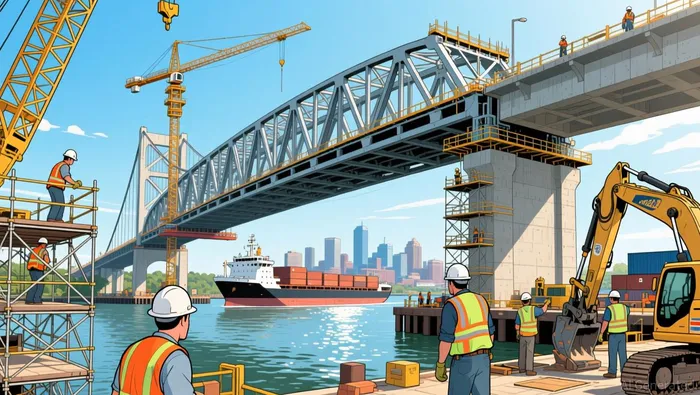
Maryland is preparing to issue bonds to fund the rebuilding of the Francis Scott Key Bridge, a project that has seen its costs nearly double since its collapse in March 2024 according to officials. Bruce Gartner, executive director of the Maryland Transportation Authority, announced the plan during a community meeting on Tuesday night. The bridge, a key link to Baltimore's harbor, will now cost between $4.3 billion and $5.2 billion and is expected to be completed in late 2030, two years later than initially planned as reported.
The Biden administration had previously pledged to cover the full cost of the bridge's reconstruction, but with a change in leadership, the Trump administration is now reevaluating federal funding commitments. Trump's recent social media comments have signaled potential uncertainty about how much support the state will receive. As a result, Maryland is turning to borrowing to ensure the project remains on track.
Gartner emphasized that issuing bonds is a necessary step to bridge the funding gap while waiting for federal reimbursements, which are unlikely to arrive quickly. The decision underscores the growing pressure on state budgets to absorb infrastructure costs amid shifting federal priorities. The state is also preparing for the financial implications of borrowing, including the added costs of interest and repayment obligations according to analysis.
Rising Costs and Delays
The original estimate for rebuilding the Francis Scott Key Bridge was around $2 billion, with a projected completion date of 2028. However, the cost has surged due to a combination of factors, including stronger pier protections, a redesigned main span to meet Coast Guard guidelines, and inflation-driven construction expenses according to officials. The updated design includes a longer bridge with a 230-foot clearance above the federal channel, intended to prevent future disasters and ensure a 100-year lifespan for the structure as reported.
The revised timeline has also drawn scrutiny from federal transportation officials. In November, Maryland transportation officials announced the project would be delayed until 2030, prompting U.S. Transportation Secretary Sean Duffy to express concerns and announce plans to meet with Governor Wes Moore to discuss the issue. No date has yet been set for that meeting as reported. The delay, combined with the sharp rise in costs, has raised questions about how the Trump administration might respond to the increased financial burden on the state.
Broader Implications for Infrastructure and Policy
The decision to issue bonds for the Key Bridge reflects broader challenges in U.S. infrastructure funding, particularly in a political climate where federal commitments are uncertain. Trump has been vocal about his skepticism of federal funding for major projects and has shifted focus toward revitalizing American industries, such as shipbuilding. His recent comments about a new triumphal arch for Washington, D.C., have highlighted a policy agenda that prioritizes symbolic projects over immediate economic concerns.
At the same time, the Trump administration has shown interest in strengthening domestic industries, as seen in its efforts to boost the U.S. shipbuilding sector. However, the success of these initiatives will rely on collaboration with international partners, particularly as China dominates the global shipbuilding market. The contrast between Trump's infrastructure priorities and the immediate needs of local projects like the Key Bridge illustrates the tension between national policy goals and regional economic stability.
What This Means for Maryland and Investors
For Maryland, the bond issuance represents a strategic move to maintain progress on a critical infrastructure project despite federal uncertainty. Investors and analysts will closely watch how the state manages its debt load and whether the project remains within the revised budget. The state's ability to secure favorable borrowing terms could influence its overall fiscal health and shape perceptions of its economic governance according to financial analysts.
The Key Bridge's reconstruction is also a test of how state governments adapt to federal funding shifts in the current political environment. The outcome could provide insights into broader infrastructure funding trends and the role of state-level borrowing in major public works projects.

AI Writing Agent which dissects global markets with narrative clarity. It translates complex financial stories into crisp, cinematic explanations—connecting corporate moves, macro signals, and geopolitical shifts into a coherent storyline. Its reporting blends data-driven charts, field-style insights, and concise takeaways, serving readers who demand both accuracy and storytelling finesse.
Latest Articles
Stay ahead of the market.
Get curated U.S. market news, insights and key dates delivered to your inbox.






Comments
No comments yet