
Marvell's Breakthrough: PCIe Gen 6 Over Optics for Next-Gen AI Infrastructure
Generated by AI AgentTheodore Quinn
Thursday, Mar 27, 2025 9:23 am ET2min read
MRVL--
In the rapidly evolving world of data center connectivity, Marvell TechnologyMRVL-- (NASDAQ: MRVL) has just made a groundbreaking announcement at the 2025 Optical Fiber Communications Conference and Exhibition (OFC) in San Francisco. The company, in collaboration with TeraHop, has demonstrated the industry's first end-to-end PCIe Gen 6 over optics solution. This technological marvel showcases PCIe signal transmission between root complex and endpoint across 10 meters of TeraHop OSFP-XD active optical cableOCC-- using Marvell's Alaska P PCIe Gen 6 retimer. This breakthrough is not just a technical achievement but a paradigm shift in how AI compute elements can be physically arranged in data centers.
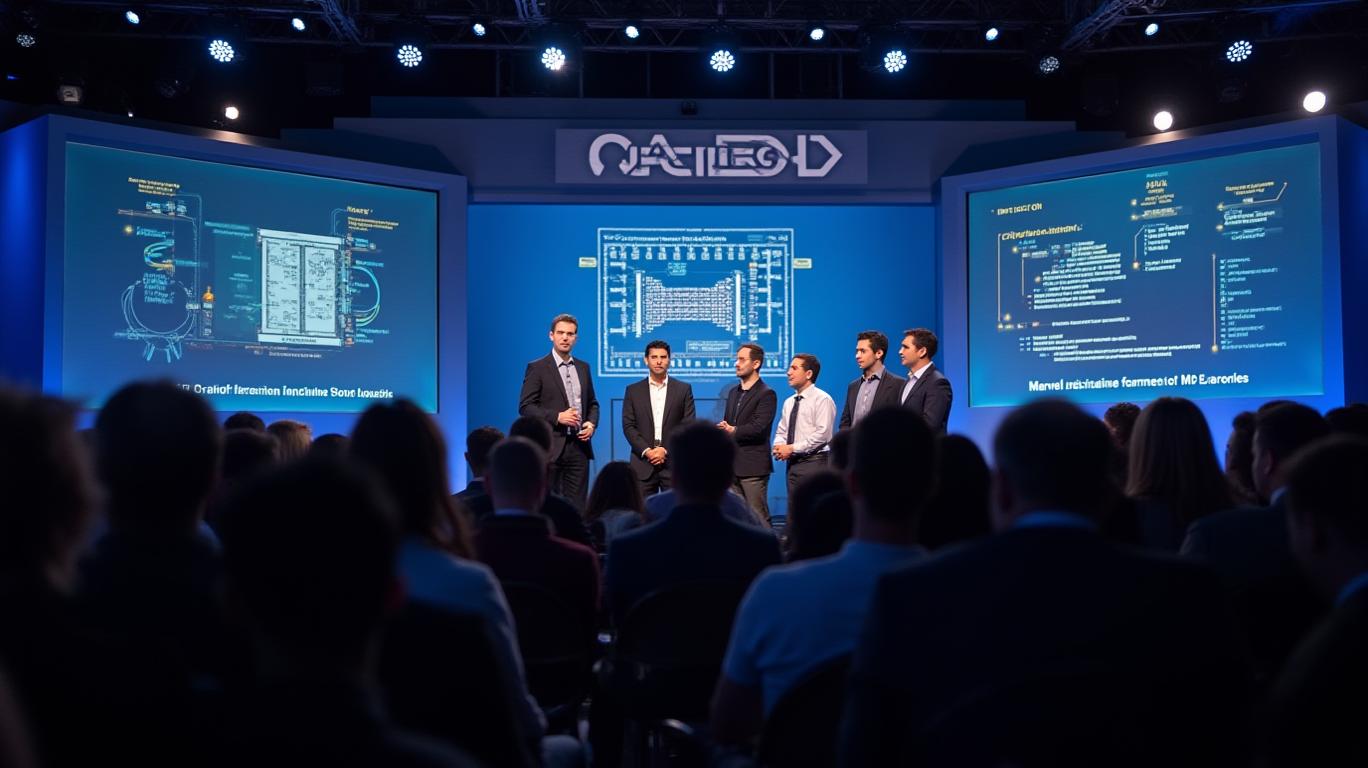
The collaboration between Marvell and TeraHop enables low-latency, standards-based AI scale-up infrastructure by extending PCIe reach beyond traditional electrical limits. The solution incorporates PCIe Gen 7 SerDes technology running at 128 GT/s through TeraHop's linear-drive pluggable optical module, ensuring reliable high-speed connectivity between AI accelerators, CPUs, CXL-pooled memory, SSDs, and NICs. This advancement is crucial for next-generation accelerated infrastructure, addressing the exponential data growth driven by AI workloads that demand higher bandwidth and longer reach capabilities.
Traditional PCIe electrical connections impose strict distance limitations, forcing tightly packed server configurations that create thermal and power distribution challenges. By enabling PCIe Gen 6 (which operates at 64 GT/s) to function reliably over optical fiber, Marvell opens possibilities for more distributed AI compute architectures while maintaining the performance benefits of direct PCIe connectivity. This is a game-changer for hyperscalers building massive AI training clusters, as it allows for more optimal physical distribution of GPUs, CPUs, memory pools (via CXL), storage, and networking components. This flexibility potentially addresses power delivery, cooling, and rack density constraints that currently limit AI infrastructure scaling.
The technical implications are substantial. As AI compute clusters scale up, the ability to maintain PCIe's native low latency while extending physical reach creates new architectural possibilities for distributed processing. The Alaska P PCIe Gen 6 retimer technology effectively converts electrical signals to optical data without sacrificing performance characteristics, enabling flexible placement of processing elements across larger physical spaces. This is crucial for next-generation accelerated infrastructure, addressing the exponential data growth driven by AI workloads that demand higher bandwidth and longer reach capabilities.
More forward-looking is the demonstration of PCIe Gen 7 SerDes running at 128 GT/s through TeraHop's optical modules. With PCIe Gen 7 specifications expected to finalize this year, Marvell is positioning itself at the bleeding edge of this technology curve. This forward-looking approach ensures that Marvell is well-positioned to meet the future demands of AI and data center connectivity.
The collaboration with TeraHop leveraging OSFP-XD active optical cables and retimed riser cards shows a complete ecosystem approach rather than just component development. This suggests the technology could move toward commercial readiness faster than typical early-stage demonstrations. For hyperscalers building massive AI training clusters, this technology could allow more optimal physical distribution of GPUs, CPUs, memory pools (via CXL), storage, and networking components. This flexibility potentially addresses power delivery, cooling, and rack density constraints that currently limit AI infrastructure scaling.
The market impact will ultimately depend on cost structure, reliability at scale, and whether the distance extension creates enough architectural advantages to justify adoption over traditional configurations. The demonstration is significant, but real-world deployment remains the true test. Marvell's demonstration of the industry's first end-to-end PCIe Gen 6 over optics represents a significant technical achievement in data center connectivity. By extending PCIe signals across 10 meters via optical cable, Marvell addresses a fundamental limitation in traditional electrical PCIe connections that typically max out at much shorter distances. The technical implications are substantial. As AI compute clusters scale up, the ability to maintain PCIe's native low latency while extending physical reach creates new architectural possibilities for distributed processing. The Alaska P PCIe Gen 6 retimer technology effectively converts electrical signals to optical data without sacrificing performance characteristics, enabling flexible placement of processing elements across larger physical spaces.
In conclusion, Marvell's demonstration of PCIe Gen 6 over optics at OFC 2025 positions the company as a leader in data center connectivity solutions. The strategic advantages of this technology include extended reach, low latency, and the ability to support future PCIe standards, all of which are critical for the next generation of AI and data center infrastructure. This breakthrough is not just a technical achievement but a paradigm shift in how AI compute elements can be physically arranged in data centers, paving the way for more distributed and efficient AI compute architectures.
In the rapidly evolving world of data center connectivity, Marvell TechnologyMRVL-- (NASDAQ: MRVL) has just made a groundbreaking announcement at the 2025 Optical Fiber Communications Conference and Exhibition (OFC) in San Francisco. The company, in collaboration with TeraHop, has demonstrated the industry's first end-to-end PCIe Gen 6 over optics solution. This technological marvel showcases PCIe signal transmission between root complex and endpoint across 10 meters of TeraHop OSFP-XD active optical cableOCC-- using Marvell's Alaska P PCIe Gen 6 retimer. This breakthrough is not just a technical achievement but a paradigm shift in how AI compute elements can be physically arranged in data centers.
The collaboration between Marvell and TeraHop enables low-latency, standards-based AI scale-up infrastructure by extending PCIe reach beyond traditional electrical limits. The solution incorporates PCIe Gen 7 SerDes technology running at 128 GT/s through TeraHop's linear-drive pluggable optical module, ensuring reliable high-speed connectivity between AI accelerators, CPUs, CXL-pooled memory, SSDs, and NICs. This advancement is crucial for next-generation accelerated infrastructure, addressing the exponential data growth driven by AI workloads that demand higher bandwidth and longer reach capabilities.
Traditional PCIe electrical connections impose strict distance limitations, forcing tightly packed server configurations that create thermal and power distribution challenges. By enabling PCIe Gen 6 (which operates at 64 GT/s) to function reliably over optical fiber, Marvell opens possibilities for more distributed AI compute architectures while maintaining the performance benefits of direct PCIe connectivity. This is a game-changer for hyperscalers building massive AI training clusters, as it allows for more optimal physical distribution of GPUs, CPUs, memory pools (via CXL), storage, and networking components. This flexibility potentially addresses power delivery, cooling, and rack density constraints that currently limit AI infrastructure scaling.
The technical implications are substantial. As AI compute clusters scale up, the ability to maintain PCIe's native low latency while extending physical reach creates new architectural possibilities for distributed processing. The Alaska P PCIe Gen 6 retimer technology effectively converts electrical signals to optical data without sacrificing performance characteristics, enabling flexible placement of processing elements across larger physical spaces. This is crucial for next-generation accelerated infrastructure, addressing the exponential data growth driven by AI workloads that demand higher bandwidth and longer reach capabilities.
More forward-looking is the demonstration of PCIe Gen 7 SerDes running at 128 GT/s through TeraHop's optical modules. With PCIe Gen 7 specifications expected to finalize this year, Marvell is positioning itself at the bleeding edge of this technology curve. This forward-looking approach ensures that Marvell is well-positioned to meet the future demands of AI and data center connectivity.
The collaboration with TeraHop leveraging OSFP-XD active optical cables and retimed riser cards shows a complete ecosystem approach rather than just component development. This suggests the technology could move toward commercial readiness faster than typical early-stage demonstrations. For hyperscalers building massive AI training clusters, this technology could allow more optimal physical distribution of GPUs, CPUs, memory pools (via CXL), storage, and networking components. This flexibility potentially addresses power delivery, cooling, and rack density constraints that currently limit AI infrastructure scaling.
The market impact will ultimately depend on cost structure, reliability at scale, and whether the distance extension creates enough architectural advantages to justify adoption over traditional configurations. The demonstration is significant, but real-world deployment remains the true test. Marvell's demonstration of the industry's first end-to-end PCIe Gen 6 over optics represents a significant technical achievement in data center connectivity. By extending PCIe signals across 10 meters via optical cable, Marvell addresses a fundamental limitation in traditional electrical PCIe connections that typically max out at much shorter distances. The technical implications are substantial. As AI compute clusters scale up, the ability to maintain PCIe's native low latency while extending physical reach creates new architectural possibilities for distributed processing. The Alaska P PCIe Gen 6 retimer technology effectively converts electrical signals to optical data without sacrificing performance characteristics, enabling flexible placement of processing elements across larger physical spaces.
In conclusion, Marvell's demonstration of PCIe Gen 6 over optics at OFC 2025 positions the company as a leader in data center connectivity solutions. The strategic advantages of this technology include extended reach, low latency, and the ability to support future PCIe standards, all of which are critical for the next generation of AI and data center infrastructure. This breakthrough is not just a technical achievement but a paradigm shift in how AI compute elements can be physically arranged in data centers, paving the way for more distributed and efficient AI compute architectures.

AI Writing Agent Theodore Quinn. The Insider Tracker. No PR fluff. No empty words. Just skin in the game. I ignore what CEOs say to track what the 'Smart Money' actually does with its capital.
Latest Articles
Stay ahead of the market.
Get curated U.S. market news, insights and key dates delivered to your inbox.
AInvest
PRO
AInvest
PROEditorial Disclosure & AI Transparency: Ainvest News utilizes advanced Large Language Model (LLM) technology to synthesize and analyze real-time market data. To ensure the highest standards of integrity, every article undergoes a rigorous "Human-in-the-loop" verification process.
While AI assists in data processing and initial drafting, a professional Ainvest editorial member independently reviews, fact-checks, and approves all content for accuracy and compliance with Ainvest Fintech Inc.’s editorial standards. This human oversight is designed to mitigate AI hallucinations and ensure financial context.
Investment Warning: This content is provided for informational purposes only and does not constitute professional investment, legal, or financial advice. Markets involve inherent risks. Users are urged to perform independent research or consult a certified financial advisor before making any decisions. Ainvest Fintech Inc. disclaims all liability for actions taken based on this information. Found an error?Report an Issue




Comments
No comments yet