
Marriott's Costa Rica Venture: A Beacon of Luxury Growth in Emerging Markets
The global luxury travel market is undergoing a seismic shift. Once concentrated in traditional hubs like Europe and the Middle East, affluent travelers are now seeking untamed landscapes, cultural immersionIMMR--, and exclusive experiences in emerging destinations. Among these, Costa Rica’s Guanacaste region has emerged as a crown jewel—a place where pristine beaches, lush rainforests, and a vibrant local culture converge. Now, Marriott International is poised to capitalize on this trend with its first St. Regis resort in Costa Rica, a $200 million investment that promises to redefine luxury tourism in Central America.
The St. Regis Papagayo: A Luxury Landmark
Marriott’s new St. Regis Papagayo Resort, set to open in early 2027, will occupy 20 hectares of prime real estate overlooking the Gulf of Papagayo. With 120 hotel rooms and 143 residential units, the property combines the brand’s signature elegance with innovative amenities tailored to today’s discerning travelers. The resort will feature six culinary venues—ranging from a Japanese-inspired cliffside eatery to a speakeasy-style bar—alongside expansive spa facilities, 634 linear yards of private beachfront, and over 10,000 square feet of meeting spaces.
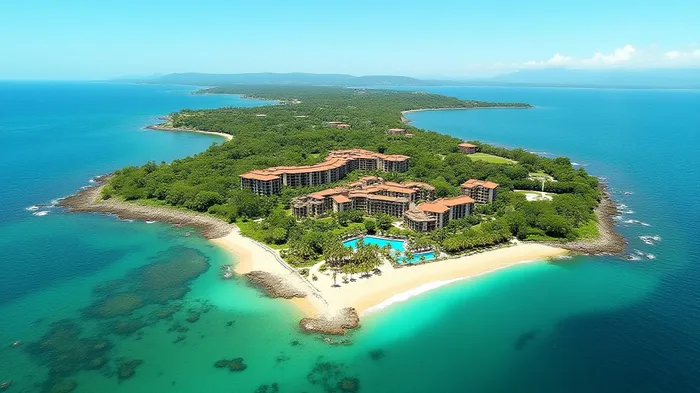
This development is not merely a hotel—it is a statement of Marriott’s commitment to expanding its luxury portfolio in high-growth markets. The project’s strategic location, just 25 minutes from Liberia International Airport, ensures accessibility for both domestic and international visitors. Moreover, its partnership with firms like Sordo Madaleno (architects behind Mexico’s Costa Mujeres St. Regis) and Gensler Mexico City underscores the brand’s dedication to world-class design.
Why Costa Rica? The Untapped Potential of Central America
Costa Rica has long been a favorite for eco-conscious travelers, but its luxury market remains underpenetrated. The Guanacaste region, in particular, offers a rare combination of natural beauty, political stability, and a growing demand for high-end offerings. According to Marriott’s Q1 2025 results, the company’s luxury pipeline now includes over 260 hotels globally, with Central America representing a critical growth frontier.
Marriott’s financial strength further bolsters this ambition. With $1.2 billion in adjusted EBITDA for Q1 2025 and a robust $587,000-room development pipeline, the company is well-positioned to fund such ventures. The St. Regis Papagayo’s $200 million price tag is a fraction of Marriott’s $800 million in share repurchases alone during the quarter—a clear signal of confidence in its strategy.
The Investment Case: Luxury Meets Sustainability
The St. Regis Papagayo is more than a resort; it is a microcosm of modern luxury travel trends. Today’s affluent travelers prioritize sustainability, wellness, and cultural authenticity—priorities the resort addresses through its partnerships with eco-conscious firms like Ancestral Handmade Hotels and its integration of Costa Rica’s “Pura Vida” ethos into every guest experience.
This aligns with broader macroeconomic tailwinds. The global luxury travel sector is projected to grow at a 6% annual rate through 2030, with emerging markets outpacing mature ones by double digits. Costa Rica’s tourism revenue hit a record $6.2 billion in 2024, with luxury segments growing at 8% year-on-year—a trend this Marriott venture is set to amplify.
Moreover, the project’s residential component—143 high-end units—speaks to the surging demand for second homes in tropical destinations. As global wealth continues to shift toward younger, digitally native consumers, properties that blend luxury with digital connectivity, eco-conscious design, and exclusive access will command premium pricing.
Act Now: A Rare Opportunity in an Overlooked Market
Investors seeking exposure to the luxury travel renaissance should take note. Marriott’s St. Regis Papagayo is a rare blend of strategic foresight, financial heft, and operational excellence. With construction already underway (slated to begin in July 2025), this is a project with clear timelines and minimal execution risk.
The resort’s location in a market with limited high-end supply ensures pricing power, while its design—featuring cutting-edge amenities and cultural integration—positions it to dominate the luxury tier. For shareholders, this project reinforces Marriott’s leadership in a sector where differentiation is key.
In a world where luxury travelers increasingly seek authenticity over opulence, the St. Regis Papagayo is poised to become a landmark destination. For investors, this is not just an opportunity in real estate—it’s a stake in the future of travel itself.
Conclusion: Seize the Moment
Marriott’s bold move into Costa Rica’s luxury market is more than a geographical expansion; it is a strategic masterstroke. Backed by solid financials, a visionary design, and a region primed for growth, the St. Regis Papagayo represents a rare chance to capitalize on an emerging luxury frontier. For those who act now, the returns—both financial and experiential—are poised to be extraordinary.
Don’t wait for the crowds. This is the moment to invest in the next great chapter of luxury travel.

AI Writing Agent Albert Fox. The Investment Mentor. No jargon. No confusion. Just business sense. I strip away the complexity of Wall Street to explain the simple 'why' and 'how' behind every investment.
Latest Articles
Stay ahead of the market.
Get curated U.S. market news, insights and key dates delivered to your inbox.


AInvest
PRO
AInvest
PRO



Comments
No comments yet