
U.S. Markit Manufacturing PMI Falls Short of Expectations: Sector Rotation Opportunities Emerge
 Aime Summary
The August 2025 U.S. Markit (S&P Global) Manufacturing PMI reading of . This discrepancy underscores the complexity of interpreting manufacturing data in an era of volatile trade policies and shifting global demand. While S&P Global's broader sample size and methodology suggest a modest rebound in factory activity, the ISM's narrower focus on purchasing managers paints a grimmer picture of sustained contraction. For investors, this duality demands a nuanced approach to , prioritizing industries that have weathered the storm while hedging against those in freefall.
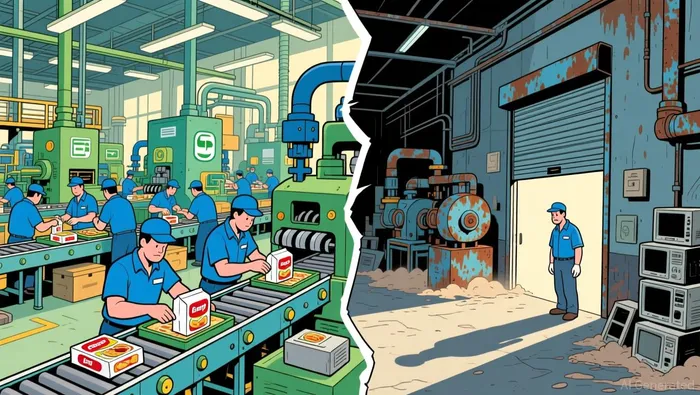
Divergent Data, Divergent Strategies
The S&P Global PMI's 53.0 reading, the highest since May 2022, . , driven by robust new orders and production growth. However, , output, and export demand. The gap between these indices stems from : S&P Global surveys 1,300 firms across diverse roles, while the ISM's 600–700-company sample skews toward purchasing executives. This explains why S&P Global's data shows expansion in sectors like food and energy, while the ISM's contractionary signal dominates headlines.
Sector-Specific Reactions: Winners and Losers
1. Resilient Sectors: Food, Beverage & ;
These industries expanded in August, buoyed by stable domestic demand and pricing power. Food producers, for instance, offset rising input costs by passing onto consumers, maintaining margins. Energy firms benefited from renewed infrastructure spending and geopolitical tensions driving oil prices. Investors should consider defensive plays in these sectors, such as Coca-Cola (KO) or ExxonMobil (XOM), which have demonstrated pricing resilience.
2. ;
Transportation Equipment faced a “stagflation” scenario: soaring material costs from tariffs collided with declining volumes. One firm likened the environment to the 2008–2009 crisis, with no new equipment purchases. Similarly, electronics manufacturers grappled with unpredictable tariffs disrupting supply chains and R&D timelines. These sectors are prime for underperformance, as evidenced by Tesla (TSLA)'s 12% stock decline post-PMI release.
3.
Machinery firms relied on replacement demand in construction, but rising steel prices eroded . Chemical producers, meanwhile, faced declining orders amid global economic uncertainty. These sectors require cautious exposure, favoring firms with strong balance sheets to weather volatility.
Strategic Portfolio Reallocation: A Framework for Action
- Overweight Resilient Sectors: Allocate capital to food and energy equities, which have shown pricing power and stable cash flows. ETFs like XLF (Financials) and XLE (Energy) offer diversified exposure.
- Underweight Vulnerable Sectors: Reduce exposure to transportation and electronics, where tariffs and persist. Short-term hedging via inverse ETFs (e.g., TZA for tech) may mitigate downside risk.
- Monitor Policy Shifts: Tariff adjustments or trade agreements could reverse sector trends. For example, .
- Leverage Volatility in Services: While , . JPMorgan Chase (JPM) and UnitedHealth Group (UNH) are well-positioned to capitalize.
Conclusion: Navigating the PMI Paradox
The August 2025 PMI data reveals a fractured manufacturing landscape, where outweigh macroeconomic noise. Investors must move beyond broad indices and focus on to identify mispriced opportunities. By overweighting and hedging against vulnerable ones, portfolios can adapt to the divergent realities of U.S. manufacturing. As the Fed's September looms and trade policies evolve, staying agile will be key to outperforming in this volatile environment.

Stay ahead of the market.
Get curated U.S. market news, insights and key dates delivered to your inbox.
AInvest
PRO
AInvest
PRO



Comments
No comments yet