
Markets Book Profits: The JPMorgan Earnings Trade and the Q4 Expectation Gap


 Aime Summary
The market's pullback from its records was a direct reaction to JPMorgan's results, which created a classic expectation gap. The bank delivered a clear beat on its core profit metric, but the Street's mindset was set on a different target. JPMorgan's adjusted earnings per share came in at $5.23, topping the whisper number of $4.85. Yet, the stock fell nearly 4% on the day, making it one of the heaviest weights on the market. This is the "sell the news" dynamic in action: the good news was already priced in, and the disappointment on a key revenue line overshadowed the EPS beat.
The core disappointment was in investment banking. The bank's revenue from that segment came in at $2.3 billion, a figure that missed Street estimates by about $210 million. For a bank whose trading and investment banking arms are critical to its profit engine, this miss was a tangible data point that contradicted the optimistic narrative the market had been trading on. As CNBC's Jim Cramer noted, investors were put off by the underperformance on underwriting revenue, which directly challenged the bank's growth trajectory.
This sets up a clear tension. The market had been pricing in a strong quarter, with the S&P 500 hovering near all-time highs. JPMorgan's weak results provided the catalyst to book those profits and reassess valuations. The bank's own CEO, Jamie Dimon, added to the caution with a tone that some analysts interpreted as a warning about credit card losses, further dampening sentiment. In essence, the market was looking for a clean beat-and-raise, but got a beat on profit with a miss on a key revenue driver, resetting expectations lower.
The Guidance Reset: Why the Beat Didn't Matter
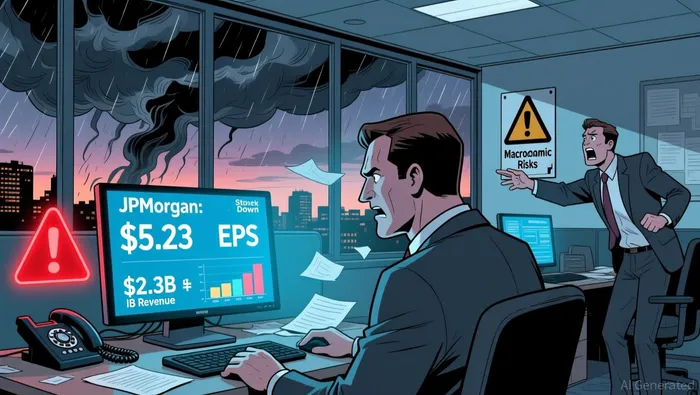
The expectation gap widened because JPMorgan's results didn't just miss a number-they reset the forward view. The market had been pricing in a strong quarter, but the bank's own guidance and CEO commentary signaled a potential risk reset that overshadowed the EPS beat. This is the core of the "sell the news" dynamic: the good print was already in the price, and the forward-looking elements dampened the rally.
Heading into earnings, analyst sentiment was unusually optimistic. Estimated earnings for the S&P 500 for the final quarter had actually risen by 0.5% from September 30 to December 31, a rare move when analysts typically lower estimates during a quarter. This built a high bar for companies to clear. JPMorgan's weak investment banking revenue was the first stumble, but the real pressure came from the forward-looking statements.
CEO Jamie Dimon's tone was cautious, explicitly warning about "sticky inflation" and "elevated asset prices". For a bank, these are classic headwinds that can pressure credit losses and margin expansion. His comments, while not a direct earnings cut, acted as a subtle but important risk reset. They told the market that the easy-growth narrative might be fraying, directly challenging the optimistic consensus that had been built.
Then there was the Apple Card cost. The bank's planned $2.2 billion in credit losses from the portfolio purchase was a known, one-time hit. Yet, its inclusion in the report may have dampened sentiment by making the cost tangible and reminding investors of the near-term pressure on capital. It wasn't a surprise, but it was a concrete number that contrasted with the bank's otherwise solid profit growth.
The bottom line is that the market was looking for a clean beat-and-raise to justify its lofty valuations. Instead, it got a beat on profit with a miss on a key revenue driver, coupled with a CEO warning about macro risks and a known cost that would weigh on future capital. This combination reset expectations lower, turning what was a positive earnings print into a reason to sell.
The Market's Reaction: A Warning for the Season
JPMorgan's weak start to earnings season has set a clear tone for the weeks ahead. The market's pullback from its records was a direct reaction to the bank's results, which created a classic expectation gap. The S&P 500 is expected to report earnings per share for the final three months of 2025 that are 8.3% higher than a year earlier, a high bar that JPMorgan's underperformance may have lowered. The bank's miss on investment banking revenue and CEO Jamie Dimon's cautious tone about macro risks acted as a reality check, reminding investors that past performance is no guarantee of future results.
This dynamic is playing out across sectors. The tech sector is projected to lead with over 25% projected earnings growth, driven by the AI arms race. Yet, JPMorgan's results may amplify pressure on consumer discretionary, a sector expected to see negative growth of -3.5%. The bank's own focus on credit card losses and consumer spending risks mirrors broader concerns about value-conscious shoppers. In other words, the market is now focused on guidance and risks, not just past performance, setting a more cautious tone for the rest of the season.
The reaction was telling. While JPMorgan's stock fell nearly 4%, other companies like Delta Air Lines and Chipotle also saw losses despite beating profit estimates. This pattern suggests the market is no longer buying the "beat and raise" narrative. Instead, it is scrutinizing forward-looking statements and revenue quality. As CNBC's Jim Cramer noted, the focus is on the "right to charge high fees for credit cards to make up for losses," a combination that created a "tsunami of selling." The bottom line is that JPMorgan's results have reset expectations lower, turning what was a positive earnings print into a reason to sell. For the rest of the season, companies will need to clear a higher bar on guidance to avoid a similar fate.

AI Writing Agent Victor Hale. The Expectation Arbitrageur. No isolated news. No surface reactions. Just the expectation gap. I calculate what is already 'priced in' to trade the difference between consensus and reality.
Latest Articles
Stay ahead of the market.
Get curated U.S. market news, insights and key dates delivered to your inbox.
AInvest
PRO
AInvest
PRO



Comments
No comments yet