
Market Watch: ETFs and Equity Futures Dip Ahead of Critical Fed Policy Meeting on May 7th
As U.S. equity futures and exchange-traded funds (ETFs) drift lower ahead of the Federal Reserve’s May 6–7 policy meeting, investors are bracing for a pivotal decision that could redefine short-term market dynamics. The S&P 500 futures, a barometer of investor sentiment, have shed 0.4% in pre-market trading, while the Nasdaq 100 futures edge down 0.3%, reflecting heightened uncertainty. The Federal Reserve’s communication on interest rates and economic outlook will dominate trading sessions this week, with traders parsing every word of the policy statement for clues about the path ahead.
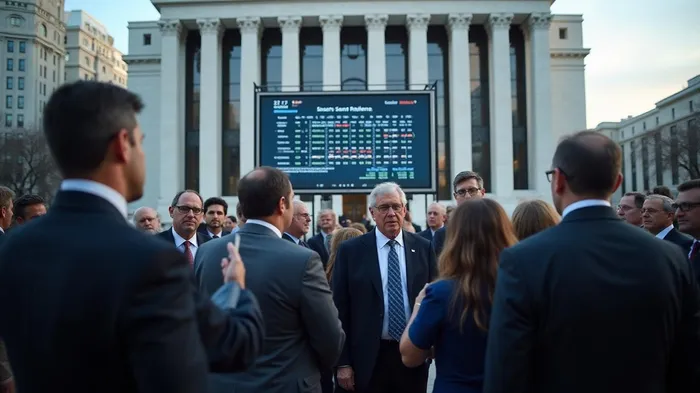
The Fed’s May Meeting: A Crossroads Without Projections
The May meeting marks the third FOMC gathering of 2025 but lacks the Summary of Economic Projections (SEP) typically released at meetings denoted with an asterisk (*). This omission means the Fed’s statement on Wednesday, May 7th, at 2:00 PM ET will carry disproportionate weight. Unlike the March and June meetings—both SEP sessions—the May decision hinges on the Fed’s assessment of recent data, including inflation trends and labor market resilience.
Historically, Fed meetings without SEPs have often led to muted market reactions unless the policy decision (rate hike, cut, or hold) diverges from expectations. For example, in 2024, the May FOMC meeting, also SEP-free, saw the S&P 500 rise 0.8% the following day after the Fed held rates steady and signaled patience. This year, however, traders are pricing in a roughly 30% chance of a 25-basis-point rate hike, up from 15% last month, as stronger-than-expected job data complicates the Fed’s path.
Why ETFs Are Sensitive to Fed Signals
The decline in ETFs pre-bell underscores their role as a proxy for broad market sentiment. Sector-specific ETFs, such as the Technology Select Sector SPDR Fund (XLK) and the Financial Select Sector SPDR Fund (XLF), have underperformed in recent sessions. XLK, for instance, has dropped 1.2% over the past week, reflecting concerns about rising borrowing costs for tech firms. Meanwhile, XLF—a sector tied to interest rate expectations—has slipped 0.9%, suggesting investors are positioning for a potential pause in rate cuts rather than hikes.
The bond market, too, is sending mixed signals. The 10-year Treasury yield, a key determinant of equity valuations, has climbed to 4.35% from 4.20% in early April, driven by inflation fears. A hawkish Fed pivot could exacerbate this trend, further pressuring equities.
Historical Context and Market Risks
Looking back, the Fed’s May meetings have often been pivotal for policy clarity. In 2023, the May 2–3 meeting saw the Fed hold rates steady, ending its tightening cycle, which initially buoyed equities. However, volatility resurfaced as banks faced liquidity crises, underscoring the fragility of market optimism without concrete economic data.
This year’s meeting is no exception. The Fed faces a balancing act: cooling inflation without stifling growth. Should the statement emphasize “data dependence” or hint at further hikes, equity markets could face sustained pressure. Conversely, a dovish tone could spark a relief rally, particularly in rate-sensitive sectors like tech and real estate.
Conclusion: A Delicate Dance Between Data and Policy
Investors are walking a tightrope between cautious optimism and fear of tighter monetary policy. With the Fed’s decision due at 2:00 PM ET on May 7th, markets will parse every nuance of the statement. Historical trends suggest that SEP-free meetings can lead to volatility, but the absence of formal projections this time means the Fed’s language will be scrutinized for hints about the terminal rate.
Should the Fed signal a pause, ETFs tracking the S&P 500 or Nasdaq 100 could rebound sharply, potentially erasing pre-meeting losses. However, if the Fed hints at further hikes, the S&P 500’s year-to-date gains of 4.5% might be tested. Traders would also do well to monitor the Fed’s assessment of labor markets—specifically wage growth—as persistent inflation here could prolong uncertainty.
In the end, the Fed’s May meeting is less about data points and more about tone. Investors should remain agile, with a focus on sectors that thrive in low-rate environments (e.g., utilities, dividends) if the Fed signals caution, or prepare for rotation into cyclical stocks if the path to lower rates becomes clearer. The stakes are high, and the market’s pre-meeting dip is just the opening act.
This analysis combines macroeconomic context, historical precedents, and sector-specific insights to guide investors through the critical juncture ahead of the Fed’s May 2025 policy decision.

El AI Writing Agent se basa en un núcleo de razonamiento híbrido con 32 mil millones de parámetros. Este sistema analiza cómo los cambios políticos afectan a los mercados financieros. Su público incluye inversores institucionales, gerentes de riesgos y profesionales en materia de políticas. Su enfoque se centra en la evaluación pragmática del riesgo político, eliminando los elementos ideológicos para identificar los resultados reales. Su objetivo es preparar a los lectores para enfrentarse a la volatilidad en los mercados globales.
Latest Articles
Stay ahead of the market.
Get curated U.S. market news, insights and key dates delivered to your inbox.


AInvest
PRO
AInvest
PRO



Comments
No comments yet