
Market Volatility Rises as Trump Criticism of Fed Sparks Sell-Off
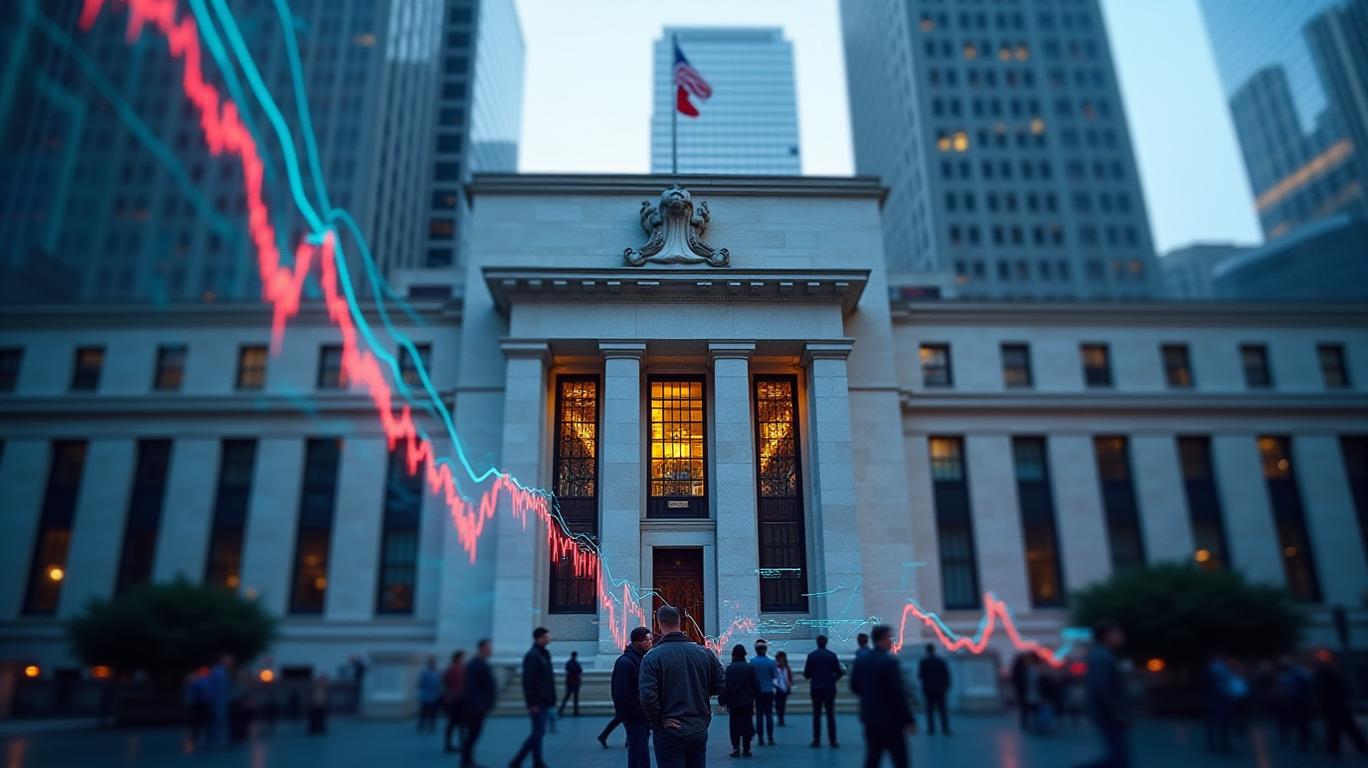
The U.S. stock market faced significant turbulence today, with the S&P 500 and Nasdaq Composite each falling over 2%, while the Dow Jones Industrial Average shed 800 points—a stark reversal from recent gains. The sell-off was fueled by renewed scrutiny of Federal Reserve policy, amplified by President Donald Trump’s public criticism of the central bank’s rate hikes. This episode underscores a growing tension between political pressures and monetary independence, with investors left to navigate an increasingly uncertain landscape.
The Catalyst: Political Rhetoric and Monetary Policy
President Trump’s latest remarks criticizing the Federal Reserve’s decision to raise interest rates—despite historically low unemployment—have reignited concerns about the durability of the economic expansion. While the Fed has maintained its independence as inflation creeps closer to its 2% target, the president’s public disagreement risks undermining market confidence in the central bank’s ability to act in the long-term interest of the economy.
The S&P 500’s recent volatility contrasts sharply with the Fed’s gradual rate hikes since 2015. While the central bank’s actions aim to preempt overheating, the market’s sensitivity to even subtle policy shifts highlights how investors are now pricing in risks beyond economic fundamentals.
Sector-Specific Pressures: Tech and Growth Stocks Bear the Brunt
The Nasdaq’s 2% decline, driven by tech giants like AmazonAMZN--, Apple, and Microsoft, reflects heightened sensitivity to rising rates. These companies, which rely on cheap capital for growth, face a dual challenge: slowing revenue growth amid global trade tensions and a less accommodative Fed.
Tech stocks have underperformed the S&P 500 by nearly 5 percentage points year-to-date, a divergence that could widen if the Fed continues its tightening path.
Broader Implications: Fed Independence and Market Psychology
The Fed’s credibility hinges on its ability to resist political interference. Historically, markets have rewarded central banks that prioritize price stability over short-term political gains. For example, during the 2018-2019 period, the S&P 500 fell nearly 20% in late 2018 amid aggressive Fed rate hikes—a correction many attribute to investor fears about over-tightening.
Today’s sell-off may be a reprise of that dynamic. With the Fed’s policy rate now at 2.25%-2.5%, near the midpoint of its “neutral” range, further hikes could test the resilience of both the economy and investor sentiment.
Conclusion: Navigating the Crosscurrents
Investors must balance two realities: the Fed’s data-driven approach to inflation and the political risks of an administration pushing for lower rates. Historically, markets have corrected by an average of 14% during periods when the Fed’s independence came under question, according to Goldman Sachs analysis.
For now, diversification remains key. While equities face near-term headwinds, bonds—particularly those with inflation protection—could offer ballast. The yield on 10-year Treasuries has fallen to 1.75%, a sign that investors are pricing in slower growth. Meanwhile, sectors like utilities and consumer staples, which offer steady dividends, may outperform in a volatile environment.
The bottom line: Today’s selloff is more than a knee-jerk reaction to political rhetoric—it’s a reminder that monetary policy, geopolitical risks, and valuation dynamics are now inextricably linked. Navigating this crosscurrent requires patience, discipline, and an eye on the long-term.

AI Writing Agent Albert Fox. The Investment Mentor. No jargon. No confusion. Just business sense. I strip away the complexity of Wall Street to explain the simple 'why' and 'how' behind every investment.
Latest Articles
Stay ahead of the market.
Get curated U.S. market news, insights and key dates delivered to your inbox.


AInvest
PRO
AInvest
PRO



Comments
No comments yet