
Market Volatility and Investor Behavior Around U.S. Holidays: The Interplay of Federal Reserve Uncertainty and Seasonal Psychology


 Aime Summary
The Fed's Role in Shaping Holiday Market Dynamics
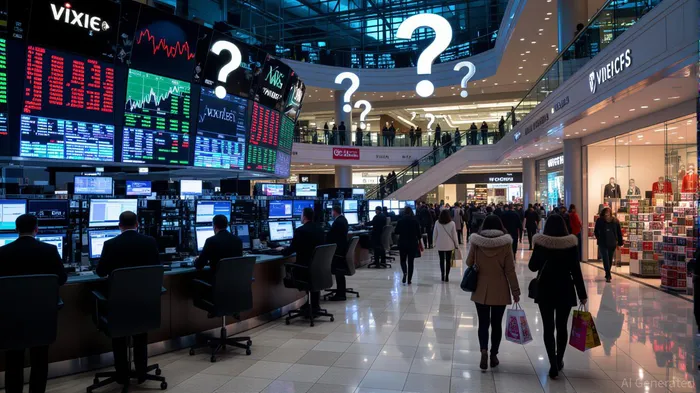
Federal Reserve policy uncertainty, particularly around interest rate decisions, has emerged as a critical driver of market behavior during key holiday periods. For instance, in late 2025, uncertainty over potential rate cuts led to a 4% decline in the S&P 500 and a 7% drop in the Nasdaq from their October peaks, as investors grappled with elevated AI valuations and inflation concerns. The VIX volatility index, a barometer of market anxiety, remained above 20-a level typically associated with heightened uncertainty-throughout the holiday season.
The Fed's own analysis underscores the economic costs of such uncertainty. A one-standard deviation increase in Economic Policy Uncertainty (EPU) correlates with a 0.5% drop in industrial production, with effects persisting for up to 14 months. This delayed response amplifies seasonal volatility, as businesses and households defer spending and investment decisions during periods of policy ambiguity. For example, the 2025 holiday season saw consumers prioritize essentials over discretionary purchases, driven by fears of tariffs and political instability.
Holiday-Specific Trading Patterns and Sentiment Shifts
Historical data reveals distinct trading patterns around major U.S. holidays, which are increasingly influenced by Fed policy uncertainty. Thanksgiving, for instance, has traditionally been a positive period for consumer discretionary stocks. From 2004 to 2024, Amazon (AMZN) outperformed the market in the days leading up to Thanksgiving, with a proposed strategy of buying AMZN five days before the holiday yielding an average annual return of 5.18%. However, in 2025, this pattern was disrupted by economic uncertainty. While AMZN still showed strength, broader consumer discretionary sectors faced headwinds as households adopted a more cautious approach to spending.
Similarly, the Christmas season has historically seen a surge in demand for safe-haven assets like gold (GLD). Data from 2004–2024 indicates that purchasing GLD two days before Christmas and holding until the first trading day of the New Year generated consistent gains. In 2025, this trend intensified as investors sought refuge from market turbulence linked to Fed policy ambiguity and geopolitical risks.
Quantifying the Impact: Case Studies and Volatility Metrics
Empirical studies highlight the measurable impact of Fed policy uncertainty on holiday trading volumes and volatility. For example, a 2025 analysis found that trade policy uncertainty (TPU) led to a 145 percentage point spike in U.S. tariffs on Chinese imports, causing a sharp decline in import volumes by mid-2025. Small and medium-sized businesses (SMBs) reliant on global supply chains were particularly affected, with higher tariff uncertainty correlating with reduced investment and employment plans.
Trading volume patterns also reflect this dynamic. During the 2025 Thanksgiving week, U.S. trading volumes were compressed due to the holiday, yet volatility remained elevated. The VIX's persistent level above 20 indicated that traders were bracing for uncertainty, even as historical trends suggested modest gains on the Wednesday before Thanksgiving and the Black Friday half-session. This tension between seasonal optimism and policy-driven caution created a fragile environment for investors.
Investor Behavior: Cautious Optimism and Strategic Adaptation
Investor sentiment during the 2025 holiday season was characterized by a duality of cautious optimism and strategic adaptation. While the National Retail Federation projected holiday sales to exceed $1 trillion for the first time, consumers prioritized necessity-based purchases over luxury items. This shift was mirrored in equity markets, where retail stocks like Walmart (WMT) and Amazon faced mixed performance due to overvaluation concerns in the AI sector.
Moreover, the December "Santa Claus rally"-historically a strong period for equities-remained a possibility in 2025, but its realization hinged on clarity from the Fed. Investors closely monitored economic data, such as consumer confidence (which fell to 50.3), a second-lowest on record, and durable goods orders, to gauge the likelihood of a rate cut. This interplay between policy uncertainty and seasonal expectations created a high-stakes environment for market participants.
Conclusion: Navigating the New Normal
The convergence of Federal Reserve uncertainty and holiday-driven market psychology has redefined traditional trading patterns and investor behavior. As policy ambiguity persists, investors must adopt strategies that balance seasonal trends with risk mitigation. For example, hedging against volatility through safe-haven assets or sector rotation into resilient industries (e.g., essentials retail) may offer advantages.
Ultimately, the 2025 holiday season underscores a broader trend: in an era of elevated uncertainty, even traditionally stable periods like the holidays are subject to heightened volatility. Investors who recognize this dynamic and adapt accordingly will be better positioned to navigate the challenges and opportunities it presents.

Delivering real-time insights and analysis on emerging financial trends and market movements.
Latest Articles
Stay ahead of the market.
Get curated U.S. market news, insights and key dates delivered to your inbox.


AInvest
PRO
AInvest
PRO



Comments
No comments yet