
Market Volatility Around U.S. Holidays: Navigating the Thanksgiving and Black Friday Window


 Aime Summary
Retail Sector: Balancing Consumer Caution and E-Commerce Momentum
The retail sector faced a dual challenge in November 2025: managing inflation-driven consumer caution while capitalizing on the shift toward e-commerce. According to the National Retail Federation, record crowds of 186.9 million shoppers were expected between Thanksgiving and Cyber Monday, but spending priorities skewed toward essentials rather than discretionary purchases. Tariffs and supply chain bottlenecks further constrained deep discounts, pushing retailers to adopt early promotions and targeted deals to attract price-sensitive consumers.
However, the sector's performance in November 2025 was mixed. While e-commerce giants like AmazonAMZN--, WalmartWMT--, and TargetTGT-- benefited from robust online platforms and early holiday promotions, traditional brick-and-mortar retailers struggled with margin pressures. Logistics companies such as FedExFDX-- and DHL also saw increased demand, as AI-driven tools optimized supply chains to handle surging freight volumes. Investors in retail stocks must weigh these divergent trends, prioritizing companies with strong digital infrastructure and cost-efficiency.
Tech Sector: AI Valuations and the Shadow of the Fed
The tech sector, particularly AI-driven stocks, experienced heightened volatility in November 2025. The S&P 500's consumer-discretionary sector, which includes major tech names like Amazon and Tesla, fell over 7% for the month, reflecting concerns about stretched valuations and macroeconomic headwinds. While Alphabet shares surged following the launch of its Gemini 3 AI model, other tech giants like Nvidia faced declines due to speculative shifts in AI chip sourcing.
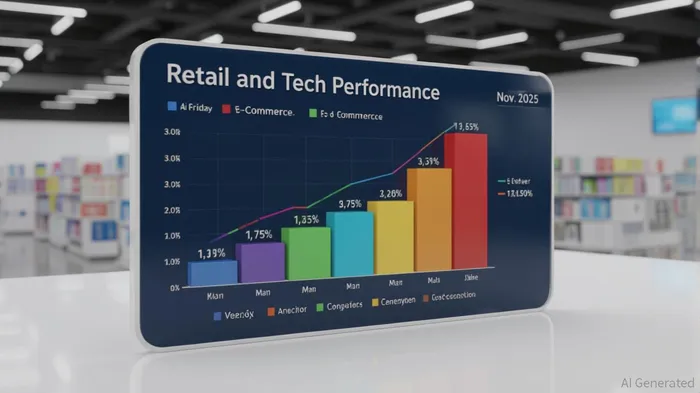
The AI sector's sensitivity to interest rate expectations became a defining feature of the holiday season. As of late November, the S&P 500 and Nasdaq Composite had fallen 4% and 7%, respectively, from October's record highs, as investors reassessed AI valuations amid fears of an overinflated "AI bubble". A Bank of America survey revealed that 20% of fund managers believed companies were overinvesting in AI, a sentiment not seen since 2005. This skepticism was compounded by rising short interest in the tech sector, signaling bearish sentiment.
Fed Commentary and Rate Cut Hopes: A Tipping Point for Markets
The Federal Reserve's December 2025 rate-cut decision loomed large over market behavior. By late November, traders priced in an 85% probability of a 25 basis point cut, driven by New York Fed President John Williams' comments suggesting short-term easing. This optimism briefly buoyed AI stocks, with Alphabet and Nvidia seeing gains as investors anticipated lower borrowing costs.
However, Fed Chair Jerome Powell's cautionary stance-emphasizing that a rate cut was not guaranteed-introduced uncertainty. The delayed release of key economic data, including a weaker-than-expected September jobs report (with unemployment rising to a four-year high), further clouded the outlook. For investors, the Fed's decision will likely determine whether AI stocks stabilize or face a deeper correction.
Strategic Timing and Risk Management: Key Takeaways
- Diversification and Sector Rotation: Retail investors should favor e-commerce leaders and logistics firms with strong cash flows, while tech investors may hedge against volatility by rotating into AI infrastructure providers (e.g., Broadcom, AMD) rather than pure-play AI stocks. According to market analysis, this strategy aligns with investor sentiment.
- Event-Driven Positioning: The shortened Thanksgiving trading week historically sees modest gains, but November 2025's performance underscored the importance of timing. Investors should monitor early Black Friday promotions and Fed commentary for directional cues.
- Macro Hedges: Given the Fed's pivotal role, investors in both sectors should consider hedging against rate uncertainty via Treasury bonds or volatility indices (e.g., VIX) to mitigate downside risk. This approach is recommended by financial analysts.
Conclusion
The November 2025 holiday season highlighted the interplay between consumer behavior, macroeconomic forces, and sector-specific dynamics. For retail investors, the key lies in capitalizing on e-commerce resilience while navigating margin pressures. For tech investors, the challenge is managing AI valuation risks amid shifting Fed policy. As the December rate-cut decision approaches, strategic timing and disciplined risk management will be paramount to navigating the volatile holiday window.

Delivering real-time insights and analysis on emerging financial trends and market movements.
Latest Articles
Stay ahead of the market.
Get curated U.S. market news, insights and key dates delivered to your inbox.




Comments
No comments yet