
Market Volatility Around U.S. Holidays: Implications for Short-Term Traders and Long-Term Investors


 Aime Summary
Market Structure and Seasonal Volatility
The week of Thanksgiving is historically marked by modest gains in the S&P 500, with the index rising in 60% of years since 1928 during the Tuesday-through-Friday trading window according to Investopedia. This pattern is partly driven by lighter trading volumes, as market participants take time off, reducing liquidity and amplifying price swings in thinly traded securities. In 2025, this trend continued, with the S&P 500 rising 0.6% on Black Friday, closing November with a 5.7% gain. However, the broader market context complicates this narrative. November 2025 saw a 4% decline in the S&P 500 earlier in the month due to concerns over AI valuations and economic fundamentals, highlighting how seasonal patterns can coexist with broader volatility.
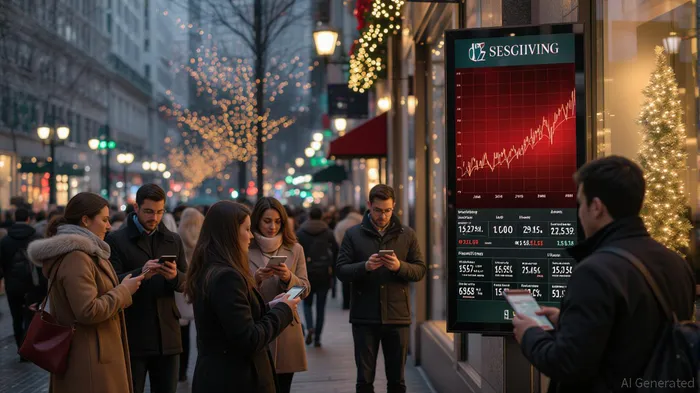
Short-term traders must weigh these structural factors. Reduced liquidity during the holiday week can create opportunities for momentum plays but also increase the risk of overreactions to news. For instance, the Cboe Volatility Index (VIX) reached its highest levels since April 2025, reflecting heightened uncertainty around Federal Reserve policy and economic data. Traders should monitor retail sales data and consumer sentiment indicators, as these can act as leading signals for market direction in the post-holiday period.
Investor Sentiment and Economic Uncertainty
Investor sentiment is a critical driver of market behavior during the holiday season. Consumer confidence dropped to 50.3 in November 2025, the second-lowest level since June 2022, eroded by prolonged government shutdowns and tariffs on imported goods. These tariffs, particularly on toys, baby products, and sports equipment, have raised prices and shifted consumer behavior toward budget-conscious shopping. Despite these pressures, holiday sales are projected to grow by 3.7% to 4.2% in 2025, reaching $1.01–$1.02 trillion, suggesting resilience in discretionary spending.
For long-term investors, the key lies in distinguishing between temporary sentiment shifts and structural trends. While short-term traders may benefit from the "Black Friday rally," long-term investors should focus on the broader implications of consumer behavior. For example, the rise of "Black November"-a prolonged shopping period-has reshaped retail strategies, favoring companies with robust e-commerce platforms and AI-driven personalization. This shift underscores the importance of sector rotation, with tech and logistics firms potentially outperforming traditional brick-and-mortar retailers.
Seasonal Patterns and Strategic Implications
Historically, Thanksgiving week has outperformed the S&P 500's annual return in seven of the past 10 years. In 2025, the index's 12.3% gain through November 21 exceeded its long-term average, driven by optimism around AI innovation in tech firms. However, this optimism contrasts with broader economic uncertainties, such as the impact of tariffs on inflation and the potential for a Fed rate cut in 2026 according to KSL.
Short-term traders can leverage these seasonal patterns by focusing on high-liquidity assets and avoiding overexposure to sectors sensitive to consumer spending, such as retail and travel. Conversely, long-term investors should prioritize companies with strong balance sheets and pricing power, as these are better positioned to weather economic volatility. For example, firms with AI-driven supply chains or digital transformation capabilities may benefit from both holiday-driven demand and long-term secular trends.
Conclusion
The interplay between market structure, investor sentiment, and seasonal patterns around U.S. holidays presents both challenges and opportunities. While historical data suggests a bullish bias for Thanksgiving and Black Friday, current economic conditions-including tariffs, inflation, and shifting consumer behavior-introduce complexity. Short-term traders must remain agile, capitalizing on liquidity-driven volatility while hedging against macroeconomic risks. Long-term investors, meanwhile, should focus on structural trends, such as the digitalization of retail and the role of AI in driving productivity. As the holiday season unfolds, the ability to balance these factors will be key to navigating the markets in 2025 and beyond.

Delivering real-time insights and analysis on emerging financial trends and market movements.
Latest Articles
Stay ahead of the market.
Get curated U.S. market news, insights and key dates delivered to your inbox.






Comments
No comments yet