
Market Stalemate: Labor Data Contradictions and Stock Performance


 Aime Summary
The latest jobs report presents a stark and puzzling contradiction. Initial jobless claims unexpectedly fell to 199,000 for the week ended December 27, a drop below the 220,000 forecast and the lowest level in a month. Yet this decline in new layoffs coincides with a record-high unemployment rate of 4.6%, the highest in over four years. The market's reaction is muted because the data reveals not a recovery, but a deepening stalemate.
This is the essence of the current "no hire, no fire" mode. Hiring has been sluggish for much of the year, eroding Americans' views of their employment prospects. At the same time, 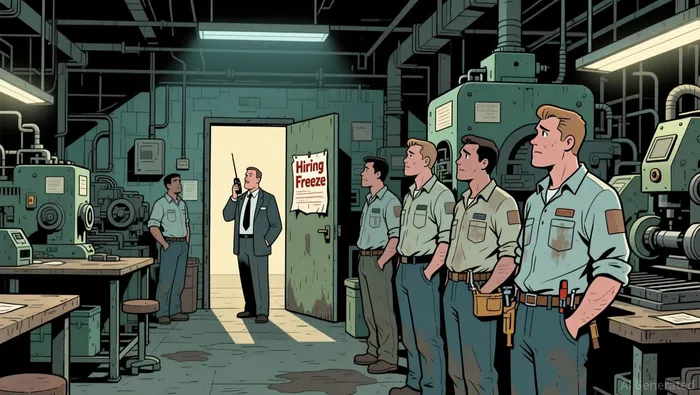 layoffs remain relatively limited, keeping the pool of people receiving unemployment benefits elevated. The result is a labor market locked in place: companies are neither aggressively expanding their payrolls nor cutting deeply. The number of people receiving benefits after an initial week of aid, a proxy for hiring, fell by 47,000 to 1.866 million last week, but that level is still higher than a year ago.
This structural freeze has significant implications. It aligns with a survey from the Conference Board showing consumer pessimism about the labor market deteriorated this month to levels last seen in early 2021. With the unemployment rate expected to remain elevated, the economy lacks the dynamic labor market expansion that typically fuels consumer confidence and spending. For policymakers, this stalemate is a key reason the Federal Reserve has signaled borrowing costs are unlikely to fall in the near term, as they await clarity on the direction of both labor and inflation.
The bottom line is that the falling claims number is a symptom of a deeper problem: a labor market that is neither healing nor collapsing. It is a sign of economic inertia, where the absence of strong hiring and the persistence of a high unemployment rate create a climate of uncertainty that weighs on growth.
The Market's Mixed Reaction
The final trading day of 2025 opened with a slight stumble, as the Dow Jones Industrial Average fell 0.1% to close at 48,248.41. This minor decline capped a week of mild losses for the blue-chip index, which had been on a five-session winning streak earlier in the month. Yet this closing dip is a footnote to a historic year. All three major indices entered the final trading day of 2025 up 14-21% for the year, powered by a relentless surge in technology stocks.
The standout performer was Nvidia, whose stock price rose 40.49% over the past year and was up 39.69% year-to-date as of December 30. The company's phenomenal run, along with strong gains from other AI leaders like Micron and Palantir, defined the market's trajectory. This year's massive rally has left stocks trading at elevated valuations, with the S&P 500 up more than 17% and the Nasdaq Composite up 21%.
The market's mixed reaction to the latest economic data-specifically a report on weekly jobless claims-illustrates this tension. The data showed a slight uptick in layoffs, a signal of a weakening labor market that could prompt the Federal Reserve to cut interest rates further. Yet this news was overshadowed by the year's dominant narrative: the transformative potential of artificial intelligence. The market's ability to shrug off this weakness and maintain its annual gains underscores the powerful conviction that has driven the rally.
Still, the slight decline on the last day of trading signals underlying fragility. After a record-setting run, the market is entering a new year with high expectations and limited room for error. The recent profit-taking and the Fed's cautious stance suggest that the easy money from the AI frenzy may be winding down. For investors, the setup is one of immense optimism tempered by the reality that the market's spectacular gains have already priced in a great deal of future success.
Policy Implications and Forward Scenarios
The Federal Reserve's policy path is now caught between conflicting signals, stalling any further aggressive easing. The central bank cut its benchmark rate by 25 basis points in December, bringing the target range to 3.50%-3.75%. Yet it simultaneously signaled that borrowing costs are unlikely to fall further in the near term. The reason is clear: policymakers are awaiting clarity on the labor market, which remains in a state of stagnation.
The current data presents a paradox. On one hand, initial jobless claims fell to a one of the lowest levels this year, suggesting a resilient labor market. On the other, the broader picture shows a persistent "no hire, no fire" mode. The unemployment rate has climbed to a four-year high of 4.6%, and consumer sentiment about jobs has deteriorated to levels not seen since early 2021. This disconnect-low claims but high unemployment-creates uncertainty that the Fed cannot ignore.
The key catalyst for resolution is the December employment report due January 9. This official data will provide the definitive unemployment rate and clarify whether the labor market is truly cooling or merely experiencing a statistical quirk. Until then, the Fed's caution is a function of data uncertainty. The central bank needs to see if the elevated unemployment is a temporary blip or the start of a more sustained trend.
The risk of a persistent "no hire" environment is significant. A labor market that fails to create jobs, even as claims remain low, could pressure consumer sentiment and spending over time. This would create a direct channel to corporate earnings, as weaker consumer demand would slow revenue growth. For the Fed, this is the core dilemma: it must balance the need to support growth against the risk of reigniting inflation if it cuts too aggressively into a still-tight labor market. The market's need for data is now the Fed's primary constraint.
Catalysts and Risks: What to Watch in 2026
The market's patience is being tested. After a year of volatile swings and record highs, the path forward hinges on a few critical data points and events that will determine if the current stalemate persists or breaks. The next few weeks offer the first clear signals of a breakout from the "no hire, no fire" labor market and the Fed's cautious wait-and-see stance.
First, watch for any shift in the Fed's communication. The central bank has signaled that borrowing costs are unlikely to fall in the near term as it awaits clarity on the labor market and inflation. The December employment report, due on January 9, is the first major data point to test this narrative. The latest claims data showed an unexpected drop in new jobless filings, but the unemployment rate remains at a four-year high of 4.6%. This contradictory picture underscores the stalemate. A stronger-than-expected jobs report could reignite inflation concerns and delay further rate cuts, while a weaker report might prompt the Fed to pivot to a more data-dependent stance, altering the rate path and market expectations.
Second, monitor the performance of high-flying stocks to test whether optimism is justified by fundamentals. The recent rally has been heavily concentrated in a few mega-cap names. For instance, NVIDIA's stock has delivered a 40.5% change over the past year, and Rocket Lab's shares have surged 176.6% year-to-date. These moves reflect immense market enthusiasm for AI and space sectors. However, their valuations are stretched. The market's patience will be tested as these stocks face the reality of quarterly earnings and execution. Any stumble in their growth trajectories could trigger a broader rotation, revealing whether the rally is built on durable momentum or speculative fervor.
Third, track the subsequent inflation data for the first clear signal of a breakout. The S&P 500 has been hovering near records, supported by in-line inflation data that kept rate-cut bets alive. Yet, with the Fed on hold, the onus is on economic data to provide the catalyst. The December CPI release, already in the rearview, set the stage. The next major inflation print will be critical. If it shows a sustained uptick, it could re-anchor inflation expectations and pressure the Fed's dovish stance. Conversely, persistently low inflation could embolden the central bank to cut rates sooner, providing a tailwind for risk assets.
The bottom line is that the market's high expectations are now binary. The next data point-the December jobs report-is critical. It will either confirm the Fed's wait-and-see approach or force a reassessment of the rate path. For investors, the setup is one of high sensitivity to incoming data. The stalemate will only break when the labor market or inflation provides a definitive signal.

El Agente de Escritura Artificiales Julian West. El Estratega Macro. No prejuicios. No pánico. Solo el Gran Narrador. Desvengo los cambios estructurales de la economía global con una lógica fria y autoritaria.
Latest Articles
Stay ahead of the market.
Get curated U.S. market news, insights and key dates delivered to your inbox.






Comments
No comments yet