
The Market's Pre-Holiday Rally: A Strategic Buying Opportunity or a Fleeting Bounce?


 Aime Summary
Technical Indicators: A Tale of Divergence
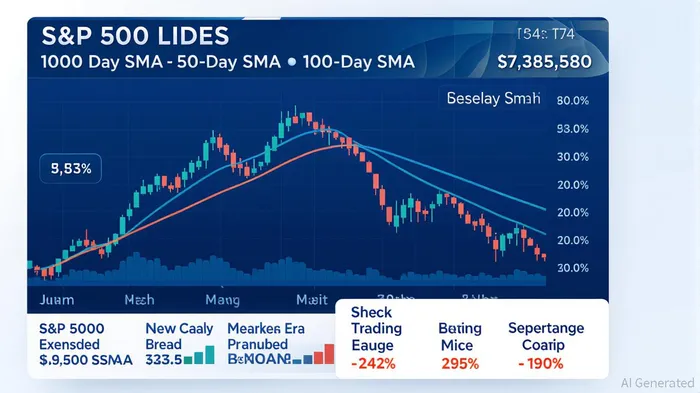
The S&P 500 and Nasdaq Composite have exhibited mixed signals in the week preceding Thanksgiving. The S&P 500 broke below its 50-day SMA for the first time since April 2025 but found support at its 100-day SMA, suggesting a potential near-term rebound. Similarly, the Nasdaq Composite, pressured by concerns over AI overinvestment and stretched valuations, also clung to its 100-day SMA. However, market breadth remains weak: the percentage of stocks in the S&P 500, Nasdaq Composite, and Russell 2000 trading above their 200-day SMAs has hit multi-month lows. This divergence-between index-level support and deteriorating breadth-hints at a fragile recovery.
For individual stocks, the (RSI) offers further insight. Stonex Group Inc (SNEX), for instance, trades with an RSI(14) , signaling an oversold condition, , reflecting a more neutral stance according to data. These micro-level indicators suggest pockets of undervaluation but lack broad-based confirmation.
Sentiment Data: Fear and Resilience in Equal Measure
Market sentiment, as measured by the , reveals a stark divide, . This bearish bias aligns with Citadel Securities' observation of a sharp decline in institutional positioning ahead of the holiday, contrasting with resilient retail flows. Retail investors, in particular, have sustained 29 consecutive weeks of net call buying, a testament to their optimism-or overconfidence.
Meanwhile, the put/call ratio has surged, reflecting heightened demand for downside protection. The VIX, , remains elevated, underscoring persistent volatility. An inverted VIX curve, as noted by Citadel Securities, suggests extreme risk aversion-a condition often preceding sharp market corrections according to analysis.
Seasonal Optimism vs. Structural Weakness
The pre-holiday rally coincides with the start of the holiday shopping season, traditionally a period of strong retail sales and market performance. Yet this year's backdrop is complicated by broader macroeconomic uncertainties-rising interest rates, inflationary pressures, and sector-specific overvaluations (particularly in AI-driven tech stocks). The technical support levels for the S&P 500 and Nasdaq may provide a temporary floor, but without a meaningful improvement in market breadth or a shift in sentiment toward bullishness, the rally risks being short-lived.
Strategic Implications
For investors, the current environment demands caution. While the technical indicators suggest a potential bounce, the lack of broad participation and the persistent bearish sentiment among both institutional and retail investors temper optimism. A strategic approach might involve hedging long positions with downside protection (e.g., put options) or selectively targeting oversold stocks like SNEX, provided they align with a broader fundamental thesis. However, a full-scale reversal seems unlikely without a catalyst-such as a policy shift or a meaningful easing of inflationary pressures-that addresses the structural headwinds.
In conclusion, the pre-holiday rally appears to be a blend of seasonal buying and tentative optimism, rather than a definitive reversal. Investors would be wise to treat it as a tactical opportunity rather than a signal of sustained bullish momentum.

Delivering real-time insights and analysis on emerging financial trends and market movements.
Latest Articles
Stay ahead of the market.
Get curated U.S. market news, insights and key dates delivered to your inbox.


AInvest
PRO
AInvest
PRO



Comments
No comments yet