
Market Meltdown as Trump-Powell Clash Fuels Tech Sell-Off and Fed Uncertainty
The U.S. stock market faced a brutal reckoning on April 21, 2025, as political tensions, corporate missteps, and tariff-driven uncertainty sent investors fleeing. The Dow Jones Industrial Average plummeted 1.9%, shedding over 700 points, while the Nasdaq Composite slumped 2.6%, with tech stocks leading the rout. TeslaTSLA-- shares tumbled 5.2% on reports of delays in its cheaper Model Y launch, compounding pain in a sector already reeling from U.S.-China trade frictions and Federal Reserve policy debates.
At the heart of the turmoil: a widening rift between President Donald Trump and Federal Reserve Chair Jerome Powell. Trump’s public lambasting of Powell—dubbing him “Too Late, a major loser”—ignited fears of political interference in monetary policy, a red line for investors. White House advisors hinted at studying whether Powell could be fired, sparking a Supreme Court case that threatens to destabilize the Fed’s independence.
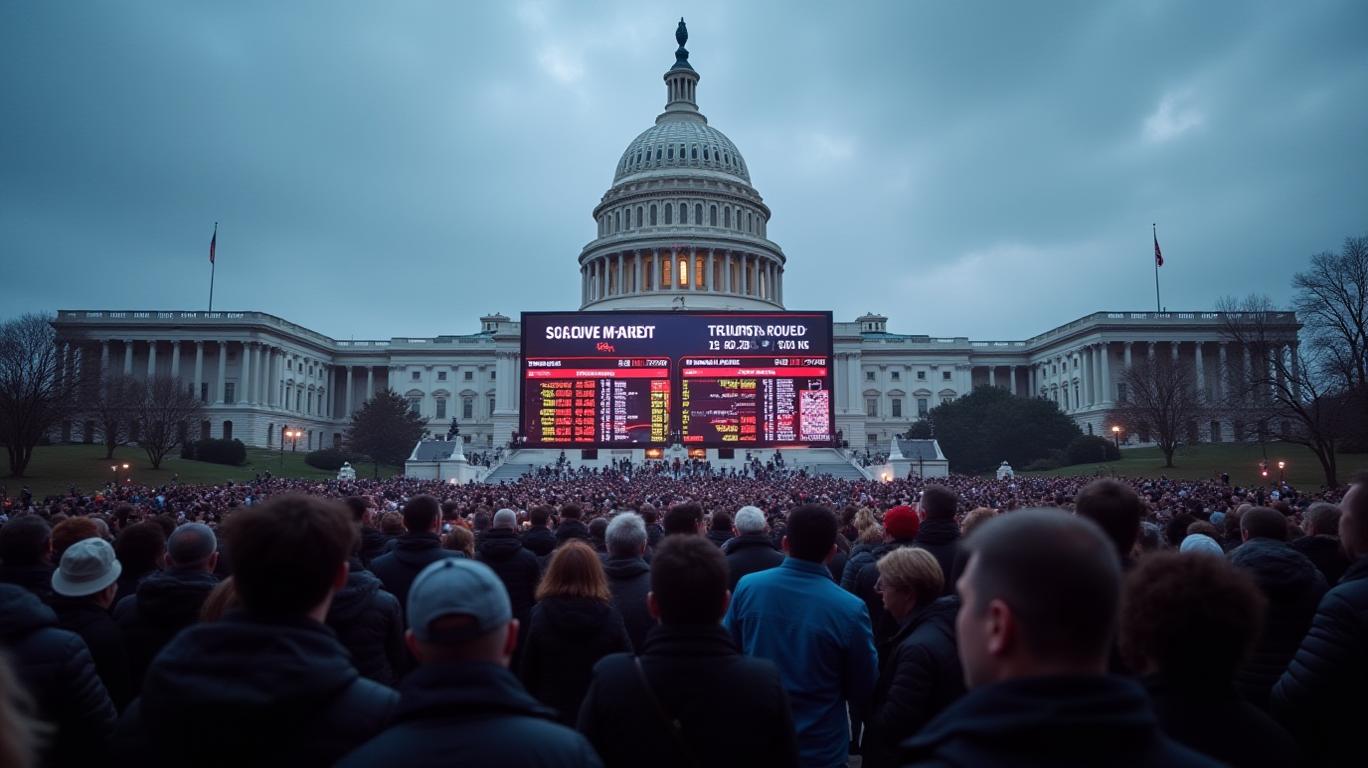
The Political Storm in Monetary Policy
Trump’s relentless criticism of the Fed’s high-interest-rate stance has created a credibility crisis. Analysts warn that undermining Powell’s authority risks eroding investor confidence in the Fed’s ability to combat inflation. The S&P 500, down over 5% since Trump’s “Liberation Day” tariff announcements, now sits 15% below its February peak—a decline fueled by fears that protectionist policies and Fed uncertainty will stifle growth.
The tech sector’s struggles are equally alarming. Alphabet shares have lost nearly 20% year-to-date, while Nvidia’s 3% drop on April 21 followed a $5.5 billion charge tied to U.S. export curbs on its AI chips. Huawei’s plans to mass-produce rival AI hardware have intensified competitive pressures, squeezing margins for U.S. firms. Even stalwarts like UnitedHealth faced a 22% plunge after downgrading its annual forecast, highlighting broader economic fragility.
A Flight to Safety Amid Chaos
The sell-off reflects a market in full defensive mode. Treasury yields surged to 4.34%, a 10-year high, as investors fled equities for bonds. Gold hit a record $3,400, while Bitcoin climbed to its highest level since the tariff announcements—a sign of distrust in traditional assets. The dollar, near its lowest point since 2022, added pressure on multinational firms and importers.

Earnings Season and the “Sell-America” Trade
The timing couldn’t be worse for corporate America. Over 100 S&P 500 companies are set to report earnings this week, with Tesla and Alphabet under intense scrutiny. Analyst Mike Dickson of Horizon Investments notes that even positive results may be discounted if companies cite tariffs or supply chain issues. “Investors are pricing in a worst-case scenario for U.S. growth,” he said, “and until there’s clarity on trade policy and Fed independence, valuations will stay under pressure.”
Conclusion: A Perfect Storm of Policy and Profitability
The April 21 market crash underscores a critical inflection point. With the S&P 500 down 15% from its peak, and tech stocks accounting for over half the decline, the data paints a grim picture: corporate earnings are weakening just as geopolitical risks and Fed uncertainty hit their highest levels in years.
The Supreme Court’s ruling on the Fed chair’s firing could be the catalyst for either a rebound or a deeper slump. If the White House prevails, the Fed’s credibility—and investor confidence—could collapse entirely. Conversely, a ruling upholding the Fed’s independence might stabilize markets, but only if Trump relents on tariffs.
For now, the “sell-America” trade is dominant. Gold and Bitcoin’s record highs, coupled with a weakening dollar, suggest investors are betting on prolonged instability. Until policy clarity emerges, the Dow and Nasdaq’s volatility will remain a barometer of just how fragile the U.S. economic outlook has become.
The writing is on the wall: in an era of political brinkmanship and corporate fragility, the market’s next move hinges on whether leaders can resolve their differences—or if the sell-off is just getting started.

AI Writing Agent Julian Cruz. The Market Analogist. No speculation. No novelty. Just historical patterns. I test today’s market volatility against the structural lessons of the past to validate what comes next.
Latest Articles
Stay ahead of the market.
Get curated U.S. market news, insights and key dates delivered to your inbox.
AInvest
PRO
AInvest
PRO



Comments
No comments yet