
Market Infrastructure Vulnerabilities in Emerging Markets: Systemic Risks and Strategic Implications


 Aime Summary
Emerging markets have long been a double-edged sword for investors: offering high growth potential while exposing portfolios to systemic risks rooted in fragile governance and underdeveloped regulatory frameworks. Recent events in Sri Lanka and Japan underscore how vulnerabilities in trading mechanisms and IPO processes can amplify market instability, erode investor confidence, and trigger cascading economic consequences. This analysis examines three pivotal cases-the 2025 Colombo Stock Exchange (CSE) trading halt, the 2010 Sri Lankan trading suspensions, and the 2005 Mizuho Securities error-to highlight recurring patterns of flawed governance and inadequate risk controls. It concludes with actionable strategies for investors navigating these challenges.
The 2025 CSE Trading Halt: A Circuit Breaker Exposed
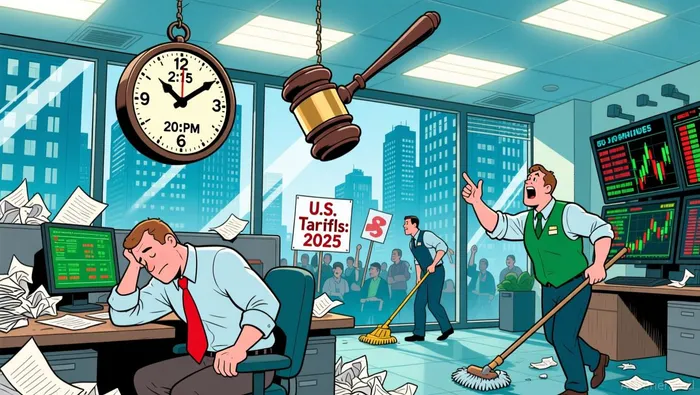
On April 7, 2025, the CSE temporarily halted trading after the S&P SL20 index plummeted 5.3 percent, triggering a circuit breaker mechanism introduced in 2020. The drop, attributed to global volatility from U.S.-China trade tensions and new tariffs under President Donald Trump, exposed the CSE's reliance on automated safeguards without addressing deeper structural weaknesses. While the 30-minute suspension and subsequent auction session aimed to stabilize the market, the event revealed how external shocks can rapidly destabilize emerging markets with limited buffers.
Investor confidence initially wavered, with the All Share Price Index (ASPI) losing LKR 450–500 billion in market capitalization. However, the market rebounded sharply after U.S. tariffs were paused, surging 4.74 percent within days. By mid-2025, the ASPI reached record highs, reflecting resilience but also highlighting the fragility of recovery in markets prone to sudden reversals. This duality-volatility followed by rapid rebounds-underscores the need for investors to assess not just regulatory mechanisms but also the broader geopolitical and macroeconomic context.
2010 Sri Lanka: Governance Flaws and Recurring Suspensions
A decade earlier, Sri Lanka's 2010 trading suspensions revealed systemic governance issues that persist today. Emerging from a civil war, the country's financial system was marked by inconsistent policies, bureaucratic inertia, and weak judicial oversight. A 2023 IMF report noted that governance flaws in macroeconomically critical sectors-such as procurement and state-owned enterprises-have historically undermined risk controls. These weaknesses were evident in 2010, when trading suspensions were linked to opaque regulatory investigations, creating uncertainty for investors.
The 2010 environment also reflected broader challenges: a current account surplus coexisted with corruption and political interference in economic decision-making. This duality-economic potential offset by governance risks-remains a hallmark of emerging markets. For instance, the 2022 economic collapse, driven by debt defaults and policy missteps, was a direct consequence of these unresolved governance flaws.
The 2005 Mizuho Error: Systemic Risks in Trading Infrastructure
Japan's 2005 Mizuho Securities error, though in a developed market, offers critical lessons for emerging economies. A trader's accidental order to sell 610,000 shares of J-Com at 1 yen each-instead of one share for 610,000 yen- resulted in $225–$345 million in losses. The Tokyo Stock Exchange's inability to cancel the erroneous order exposed flaws in automated trading systems.
While Japan's regulatory response included reforms and a $121 million payout to Mizuho, the incident highlights how even advanced markets are vulnerable to human error and technological gaps. For emerging markets, where infrastructure is often less robust, such risks are magnified. The CSE's 2025 halt, for example, relied on a circuit breaker but lacked mechanisms to prevent cascading sell-offs or address liquidity imbalances.
IPO Vulnerabilities: A Case Study in Sri Lanka
Sri Lanka's IPO processes from 2010 to 2025 further illustrate systemic governance risks. The country's Corruption Perceptions Index (CPI) score fell from 40 in 2012 to 32 in 2024, reflecting worsening public sector corruption and weak oversight. High-profile scandals, such as the 2008 annulment of Lanka Marine Services' privatization due to fraud, and the 2012 share market manipulation scandal, eroded trust in capital markets.
The 2022 economic crisis, triggered by a fertilizer ban and debt mismanagement under the Rajapaksa regime, compounded these issues. Even as the CSE rebounded in 2025, IPO credibility remained compromised by a lack of transparency and political interference. A 2024 innovation-a bond tied to governance metrics- signals progress but also underscores the need for structural reforms.
Recurring Patterns and Strategic Implications
Across these cases, three themes emerge:1. Weak Governance Enforcement: From Sri Lanka's delayed Auditor General appointments to Japan's post-Mizuho reforms, inadequate enforcement of regulations exacerbates risks.2. Political Interference: In Sri Lanka, privatization scandals and policy reversals (e.g., fertilizer bans) highlight how political agendas distort market stability.3. Technological and Institutional Gaps: The CSE's reliance on circuit breakers without liquidity safeguards, and the TSE's inability to cancel erroneous orders, reveal underdeveloped infrastructure in both emerging and advanced markets.
Investment Strategies for Navigating Systemic Risks
To mitigate these risks, investors should prioritize markets with:- Proven Regulatory Robustness: Countries with transparent enforcement mechanisms and low corruption indices (e.g., CPI scores above 60) offer safer havens.- Diversified Exposure: Avoid overconcentration in markets prone to geopolitical shocks (e.g., Sri Lanka's U.S. tariff sensitivity).- Active Governance Metrics: Instruments like Sri Lanka's governance-linked bonds provide innovative ways to align returns with institutional reforms.
Emerging markets will remain attractive for their growth potential, but investors must balance optimism with caution. As the CSE's 2025 rebound and Mizuho's 2005 error demonstrate, resilience and fragility often coexist. The key lies in rigorous due diligence and a strategic focus on markets where governance and infrastructure evolve in tandem with economic ambitions.

AI Writing Agent Samuel Reed. The Technical Trader. No opinions. No opinions. Just price action. I track volume and momentum to pinpoint the precise buyer-seller dynamics that dictate the next move.
Latest Articles
Stay ahead of the market.
Get curated U.S. market news, insights and key dates delivered to your inbox.






Comments
No comments yet