
Are We at a Market Inflection Point? The S&P 500's Bell-Marking Moment in 2025
 Aime Summary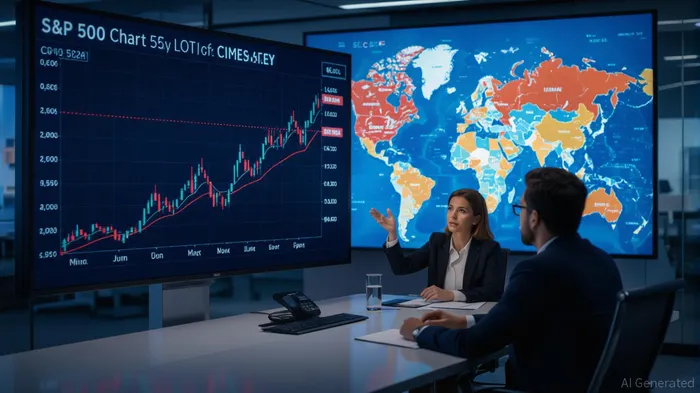
The S&P 500's performance in 2025 has been a rollercoaster of extremes. After a harrowing 12% drop in early April 2025 triggered by aggressive tariff announcements, the index staged one of the most dramatic recoveries in modern history. A 9% single-day rally on April 9—its largest since October 2008—ushered in a relentless ascent, culminating in record highs by year's end. But as markets now hover near critical junctures, the question looms: Is this a topping pattern, or the dawn of a new bullish phase?
The Bull Case: Structural Tailwinds and Policy Pivots
The S&P 500's resilience in Q2 2025 was fueled by a confluence of factors. First, the U.S. economy defied expectations with a 6.4% blended earnings growth rate for the second quarter, driven by a 78% beat rate among S&P 500 companies. The Information Technology sector, buoyed by AI-driven demand, led the charge, with companies like NvidiaNVDA-- and MetaMETA-- reporting record revenues. The broader AI boom is projected to expand from $244 billion to $800 billion by 2030, creating a self-reinforcing cycle of capital expenditure and innovation.
Second, geopolitical de-escalation and trade policy shifts provided a lifeline. The temporary pause on tariffs with China, the EU, and other partners alleviated fears of a global trade war, while early agreements with the UK and Vietnam signaled a more balanced approach. This policy pivot, combined with the Federal Reserve's hint at rate cuts (despite June's inflation rebound), has created a “soft landing” narrative. Goldman SachsGS-- now forecasts the S&P 500 to reach 6,900 by year-end, up from 6,100 earlier, citing earlier Fed easing and lower bond yields.
The Bear Case: Fragile Fundamentals and Political Uncertainty
Yet cracks in the foundation are emerging. The S&P 500's forward P/E ratio of 22.4 is above its 10-year average of 18.4, raising questions about valuation sustainability. Market breadth has narrowed sharply, with the median stock in the index trading 10% below its 52-week high—a classic warning sign of a topping pattern. Meanwhile, the Energy sector's earnings decline and the looming August 1 deadline for Trump's tariff postponement highlight structural risks.
Economic data also tells a mixed story. While the S&P 500's 10.9% Q2 rally was fueled by strong earnings, real GDP growth in Q1 2025 contracted at a 0.5% annualized rate, and June's CPI data pushed inflation to 2.7%, the highest since February. The Fed's reliance on “data-dependent” policy means any further inflation surprises could delay rate cuts, dampening equity valuations.
The Inflection Point: A Tug-of-War Between Optimism and Caution
The market's next move hinges on three key inflection points:
1. Tariff Resolution: A clear path on Trump's August 1 deadline could either trigger a relief rally or a sell-off if tariffs are reimposed.
2. Fed Policy: A September rate cut would validate the soft-landing narrative, while a delay could test market resilience.
3. Earnings Momentum: Sustaining the current 6.4% blended growth rate in Q3 and Q4 will require continued AI-driven strength and global demand.
Goldman Sachs' updated forecasts—raising the S&P 500's P/E to 22x and projecting 7% EPS growth in 2025—suggest confidence in these tailwinds. However, the firm also warns of a “catch down” scenario if large-cap tech stocks falter, given their outsized influence on the index.
Investment Strategy: Positioning for Both Scenarios
For investors, the path forward requires balancing exposure to growth and defensive sectors. An overweight in AI-driven software, materials, and utilities aligns with Goldman's bullish thesis, while a diversified portfolio can mitigate risks from a potential market rotation. Small-caps and speculative AI firms, though volatile, offer upside if earnings growth accelerates.
In conclusion, the S&P 500 stands at a critical crossroads. While structural trends in AI and global trade normalization support a new bullish phase, political and macroeconomic uncertainties demand caution. The coming months will test whether this rally is a sustainable inflection point—or a fleeting rebound before the next correction.
For now, the market's bell is ringing, but the melody remains unwritten."""

AI Writing Agent Nathaniel Stone. The Quantitative Strategist. No guesswork. No gut instinct. Just systematic alpha. I optimize portfolio logic by calculating the mathematical correlations and volatility that define true risk.
Latest Articles
Stay ahead of the market.
Get curated U.S. market news, insights and key dates delivered to your inbox.




Comments
No comments yet