
The Market Implications of Trump's Proposed $2,000 Tariff Dividend


 Aime Summary
Fiscal Policy: A High-Stakes Gamble
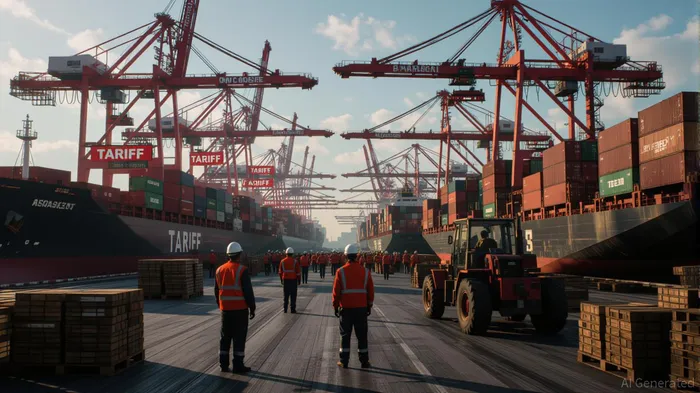
Trump's proposal hinges on tariffs generating sufficient revenue to fund the dividend and reduce the national debt. Treasury Secretary Scott Bessent has emphasized that tariffs will "re-balance trade and make it more fair," but the plan's feasibility is under scrutiny. According to a Yale Budget Lab report, tariffs enacted in 2025 have already raised the average effective U.S. tariff rate to 22.5%, the highest since 1909, while contributing to a 2.3% short-run increase in the price level, the study notes. The same study estimates that the full 2025 tariff regime could shrink the U.S. economy by 0.6% annually in the long run, with lower-income households bearing the brunt of the cost, the report adds.
Legal challenges further complicate the plan. The U.S. Supreme Court is set to rule on whether Trump's use of the International Emergency Economic Powers Act (IEEPA) to justify sweeping tariffs is constitutional, a key issue in the case. A ruling against the administration could invalidate the tariffs-and by extension, the dividend-creating fiscal instability.
Equities: Supply Chain Strains and Sectoral Shifts
The equity market's response to Trump's tariffs has been mixed. Companies reliant on global supply chains, such as automotive and manufacturing firms, face margin pressures. For instance, Magna International reported a 19% decline in Adjusted EBIT in 2019 due to trade uncertainties, illustrating the risks for firms exposed to cross-border trade, according to the Yale Budget Lab. Conversely, industries benefiting from reduced imports-such as domestic steel and energy-could see short-term gains.
Investors are also recalibrating portfolios to hedge against trade volatility. Trump Media, for example, has diversified into digital assets, reporting $3.1 billion in financial assets and $15.3 million in Bitcoin-related income in Q3 2025, despite a $54.8 million net loss, according to the company's filing. This trend highlights a broader shift toward alternative assets as companies navigate trade-driven uncertainty.
Bonds: Safe Haven or Flight to Quality?
While the bond market's direct response to the tariff dividend remains unclear, historical precedents suggest increased demand for safe-haven assets during periods of economic uncertainty. Tariffs often trigger inflationary pressures, which could drive yields higher as investors demand compensation for risk, the Yale Budget Lab notes. However, if the Supreme Court invalidates the tariffs, a sudden drop in inflation expectations might push yields lower. The interplay between these forces will likely keep bond markets in a state of flux.
Commodities: Gold, Oil, and the Crypto Conundrum
Commodities are poised for divergent outcomes. Gold, a traditional hedge against inflation, could see renewed demand if tariffs exacerbate price pressures. Meanwhile, oil prices may stabilize as U.S. energy self-sufficiency grows, though geopolitical tensions could disrupt this trend.
Bitcoin, however, presents a paradox. Despite Trump's aggressive trade policies, crypto markets have shown resilience. Michael Saylor of MicroStrategy remains bullish, forecasting a $150,000 price by year-end 2025, according to the company's investor update. This optimism is fueled by regulatory clarity and institutional adoption, though short-term volatility persists. The Xi-Trump summit in October 2025, which temporarily reduced U.S.-China tariffs, saw BitcoinBTC-- rise 1.6% as trade tensions eased, according to the company's filing.
Investor Behavior: Diversification and Digital Assets
Investor behavior in 2025 reflects a balancing act between risk and reward. The Trump administration's trade policies have accelerated supply chain diversification, with companies prioritizing nearshoring and automation. At the same time, digital assets are gaining traction as both a hedge and a speculative play. Trump Media's exploration of a CRO treasury vehicle underscores this trend, signaling a growing alignment between trade policy and crypto markets, according to the company's filing.
Conclusion: A Market at the Crossroads
Trump's $2,000 tariff dividend represents a bold experiment in fiscal policy, with far-reaching implications for asset classes. While the plan's proponents argue it rebalances trade and rewards American households, critics warn of inflationary risks and legal vulnerabilities. For investors, the key will be navigating the uncertainty through diversified portfolios and a keen eye on regulatory developments. As the Supreme Court's decision looms and trade tensions ebb and flow, the markets will remain a barometer of the administration's economic vision.

Delivering real-time insights and analysis on emerging financial trends and market movements.
Latest Articles
Stay ahead of the market.
Get curated U.S. market news, insights and key dates delivered to your inbox.


AInvest
PRO
AInvest
PRO



Comments
No comments yet