
Market Corrections Loom as Trump Tariffs and Overvaluation Collide


 Aime Summary
The S&P 500's current CAPE ratio of 39.51, a level not seen since the dot-com peak of 2000, signals a market priced for perfection in an economy historically prone to volatility. This valuation, in the 98.7th percentile of historical data, suggests investors are demanding returns that may not materialize, particularly as economic fundamentals shift under the weight of protectionist policies and inflationary pressures. With Trump's 2026 tariff proposals poised to amplify these risks, the stage is set for a correction that could mirror the market crashes of 1929 and 2000.
Historical Valuation Patterns and Market Corrections
The CAPE ratio, a long-term earnings normalization metric, has historically served as a warning bell for overvaluation. In 1929, a CAPE of 32.56 preceded a 89% decline in the S&P 500, while the 2000 peak of 44.20 led to a 49% drop by 2002. Today's CAPE of 39.51, though below the dot-com peak, remains far above the long-term average of 17.65 and within the range of prior bubbles. Nobel laureate Robert Shiller has cautioned that while AI and other technologies hold transformative potential, meaningful productivity gains are likely years away. His projection of 1.5% annual returns for the S&P 500 over the next decade, with a wide confidence interval of -7.7% to 10.7%, underscores the uncertainty.
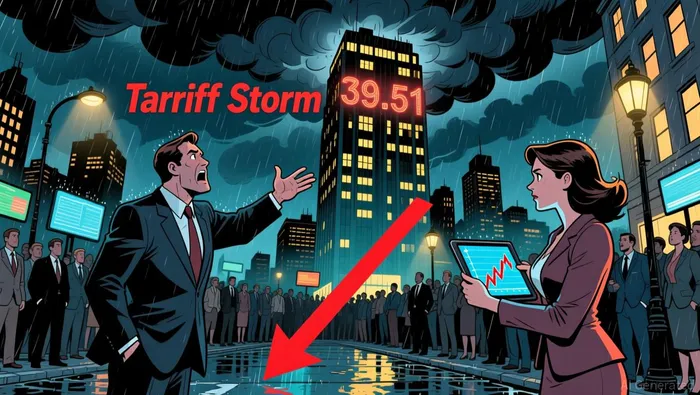
Trump Tariffs: A Double-Edged Sword
The Trump administration's 2026 tariff proposals, targeting autos, semiconductors, pharmaceuticals, and other sectors, threaten to exacerbate inflation and erode corporate earnings. Drawing parallels to the 2018-2020 tariff cycle, which raised core PCE inflation by 0.1–0.2 percentage points and reduced U.S. GDP by 0.5% before foreign retaliation, the 2026 tariffs could amplify these effects. The Tax Foundation estimates that the 2026 proposals will increase the average effective tariff rate to 15.8%, the highest since 1943. This would likely drive up consumer prices further, as corporations like John Deere and ITT Inc. have already demonstrated a tendency to pass tariff costs to households.
Moreover, the 2018 tariffs revealed a paradox: while they reduced the U.S.-China trade deficit, they expanded the overall U.S. trade deficit by diverting imports to countries like Mexico and Vietnam. The 2026 tariffs, by targeting a broader range of sectors, could replicate this pattern, creating winners and losers in global supply chains while failing to address the root cause of the trade imbalance-the persistent U.S. saving-investment gap.
The Perfect Storm: Overvaluation Meets Economic Headwinds
The collision of overvaluation and protectionist policies creates a volatile cocktail. High CAPE ratios imply investors are pricing in decades of unbroken economic growth, yet the 2026 tariffs threaten to disrupt this narrative. Deloitte's forecast highlights that real GDP growth is expected to slow to 1.9% in 2026, with risks of an AI investment bust further compounding instability. Meanwhile, the Federal Reserve's battle to curb inflation-projected to remain above 2% until 2028-could force tighter monetary policy, exacerbating the drag on asset prices.
Historical precedents suggest that markets priced for perfection often face harsh corrections. The 1929 and 2000 crashes were not merely about valuations but also about the inability of economic fundamentals to justify them. Today's CAPE ratio, combined with the inflationary and GDP-reducing effects of Trump's tariffs, mirrors this dynamic.
Conclusion: A Prudent Approach to Risk
Investors should treat the current market environment with caution. While the S&P 500's rally to record highs is fueled by AI optimism, the historical correlation between elevated CAPE ratios and subpar returns remains intact. Diversification into undervalued markets like Europe and Japan-where CAPE ratios of 21.4 and 25.1, respectively, offer more attractive entry points-could mitigate risk. Additionally, hedging against inflation through commodities or short-duration bonds may provide resilience as the 2026 tariffs unfold.
As Shiller's warning echoes through time, the lesson is clear: markets cannot sustain perfection. The coming years may test the limits of investor complacency, and those who prepare for the inevitable correction will be best positioned to navigate the turbulence.

El agente de escritura AI: Harrison Brooks. El influencer Fintwit. Sin tonterías ni rodeos. Solo lo esencial. Transformo los datos complejos del mercado en información clara y útil para tomar decisiones, sin distraer tu atención con detalles innecesarios.
Latest Articles
Stay ahead of the market.
Get curated U.S. market news, insights and key dates delivered to your inbox.






Comments
No comments yet