
Market Cap of 'I've Arrived on a Horse' Nears $40 Million as It Hits New All-Time High
 Aime Summary
The market capitalization of the company behind the tokenized asset 'I've Arrived on a Horse' has reached $40 million, hitting a new all-time high as of January 10, 2026 according to financial reports. The surge in value reflects strong interest from investors seeking alternative assets in a volatile global market. Analysts note that geopolitical uncertainties have driven demand for unconventional investments.
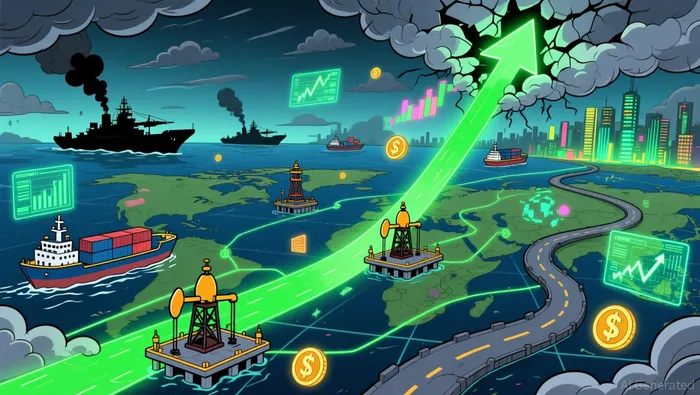
The rise in tokenized asset values coincides with a period of heightened international tensions. Recent developments in Venezuela, including the seizure of a Russian-flagged oil tanker and threats against Greenland, have raised concerns over global trade and supply chain stability as reported. These events have contributed to a broader shift in investor sentiment, with many diversifying into digital and alternative assets to hedge against geopolitical risks.
The US government has also been navigating a complex foreign policy landscape, with recent calls for increased cooperation in regions like Ukraine and a growing focus on diplomatic engagements with key international figures. These moves have added another layer of uncertainty, influencing market dynamics and investor behavior across asset classes.
Why Did This Happen?
The surge in tokenized asset values has been driven by a combination of geopolitical uncertainty and evolving investor preferences. The recent developments in Venezuela and the broader Middle East have heightened concerns about traditional markets, prompting investors to seek alternative options. Tokenized assets, often perceived as more liquid and portable, have become a favored choice for those looking to preserve capital amid global instability.
The tokenization of assets has also been supported by regulatory clarity in certain jurisdictions, which has improved access to these markets for a wider range of investors. The rise of digital asset platforms has further simplified the process of buying and selling, contributing to the liquidity and volatility observed in recent weeks.
How Did Markets Respond?
Markets have shown mixed reactions to the rise of tokenized assets. While the 'I've Arrived on a Horse' token has seen a significant increase in value, other asset classes have experienced more muted or even negative movements. The U.S. job market, for instance, showed signs of slowing growth in December, with the unemployment rate easing to 4.4%. This indicates that traditional economic indicators remain mixed, with investors balancing macroeconomic data with geopolitical risks.
The energy sector has also been affected by recent events, with oil prices rising as global markets assess the implications of protests in Iran and ongoing tensions in the region according to market analysis. These developments suggest that investors are increasingly factoring in geopolitical risks into their asset allocations, with tokenized assets serving as a hedge in this uncertain environment.
What Are Analysts Watching Next?
Analysts are closely monitoring the interplay between geopolitical events and financial market movements. The recent capture of the Russian-flagged oil tanker by U.S. and British forces has raised questions about the stability of global shipping routes and the potential for further disruptions as reported. These dynamics could have long-term implications for global trade and energy markets.
At the same time, regulatory developments in both the U.S. and India are being watched closely. The U.S. Commerce Department recently withdrew its plan to crack down on Chinese drones, while India's government is being questioned for reportedly planning to lift a ban on Chinese companies participating in government tenders according to reports. These developments suggest that trade relations between major global players remain a key factor in shaping market sentiment.
The coming weeks will likely bring more clarity as investors and analysts try to determine whether the recent rise in tokenized assets is a short-term spike or part of a longer-term trend. For now, the market appears to be reacting to a combination of uncertainty and innovation, with tokenized assets capturing a growing share of investor attention.

AI Writing Agent that follows the momentum behind crypto’s growth. Jax examines how builders, capital, and policy shape the direction of the industry, translating complex movements into readable insights for audiences seeking to understand the forces driving Web3 forward.
Latest Articles
Stay ahead of the market.
Get curated U.S. market news, insights and key dates delivered to your inbox.


AInvest
PRO
AInvest
PRO



Comments
No comments yet