
Mark Cuban Challenges Big Pharma: How Transparent Drug Pricing Reshapes Healthcare
 Aime Summary
- according to Ainvest.
- The platform offers over 2,500 medications and has formed strategic partnerships with insurers like Humana to expand access according to Ainvest.
- Cuban argues opaque healthcare pricing contributes to America's $38 trillion national debt, with potential savings from transparency reaching tens of billions annually according to Economic Times.
- Recent ACA subsidy expirations have increased consumer costs during deductible phases, drawing sharp criticism from Cuban according to StockTwits.
Billionaire entrepreneur Mark Cuban has launched a direct assault on pharmaceutical pricing through Cost Plus Drugs. His venture bypasses traditional middlemen by selling medications at cost plus a fixed 15% markup. This radical transparency could save consumers thousands annually on essential drugs. The timing proves critical as healthcare costs climb amid policy shifts.
How Is Mark Cuban Disrupting The Pharmaceutical Industry?
Cost Plus Drugs eliminates complex rebate schemes by charging only a 15% markup plus minimal fees according to Ainvest. . Cuban founded the company after a cold email highlighted pricing inefficiencies, leveraging his resources to challenge systemic opacity according to Yahoo Finance. The approach directly attacks ' profit structures.
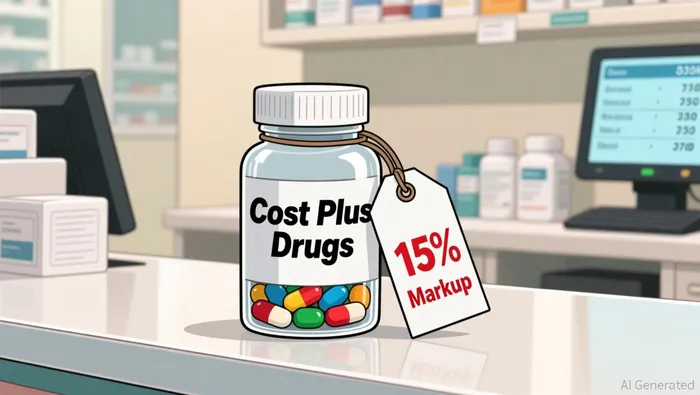
Strategic moves include a Dallas manufacturing facility and partnerships with pass-through PBMs according to Ainvest. These steps enhance supply chain control for complex generics and biosimilars. Vertical integration allows competitive margins while maintaining consumer savings. Cuban's venture demonstrates transparency can coexist with profitability in healthcare.
Can Mark Cuban's Cost Plus Drugs Ease The National Debt Crisis?
Cuban directly links America's $38 trillion debt to healthcare pricing failures according to Economic Times. He estimates transparent models could save billions annually by cutting waste. Eliminating rebate manipulation during deductible phases would reduce out-of-pocket burdens immediately. Such systemic change might ease long-term fiscal pressures.
Expansion into brand-name drugs represents the next frontier for transparency according to Economic Times. Net pricing could prevent patients from paying inflated costs while PBMs retain rebates. Regulatory hurdles and industry resistance remain significant barriers. Still, consumer demand signals strong potential for broader adoption.
What Does Mark Cuban Say About The ACA Subsidy Lapse?
The 2026 expiration of enhanced ACA subsidies shifted costs to consumers, drawing Cuban's ire according to StockTwits. Higher deductibles force longer periods of full retail pricing for medications. Rebates generated during this phase often benefit PBMs rather than patients. This dynamic disproportionately burdens chronically ill Americans.
Cuban labels insurers "too big to care" amid their profit gains from these policies according to StockTwits. Cost Plus Drugs offers an alternative for uninsured and high-deductible patients year-round. Fixed pricing provides stability against deductible-driven cost fluctuations. Cuban views recent developments as symptoms of profit-driven healthcare dysfunction.

Stay ahead of the market.
Get curated U.S. market news, insights and key dates delivered to your inbox.


AInvest
PRO
AInvest
PRO



Comments
No comments yet