
Mark Cuban: The AI Dilemma Facing CEOs Today
 Aime Summary
- Mark Cuban warns that public company CEOs face a binary 'lose-lose' scenario where either aggressive AI transformation or strategic inaction invites shareholder litigation.
- The 'Innovator's AI Dilemma' suggests that dismantling current operations risks lawsuits for destroying value, while stagnation invites suits for negligence.
- Cuban advises executives to use AI models to chart a path to becoming 'AI-native' while maintaining economic viability to mitigate these risks.
- This analysis highlights a structural tension between the need for rapid innovation and the constraints of traditional corporate governance.
- The dilemma underscores that the future market will bifurcate into 'AI-great' companies and failures, with no middle ground for incumbents.
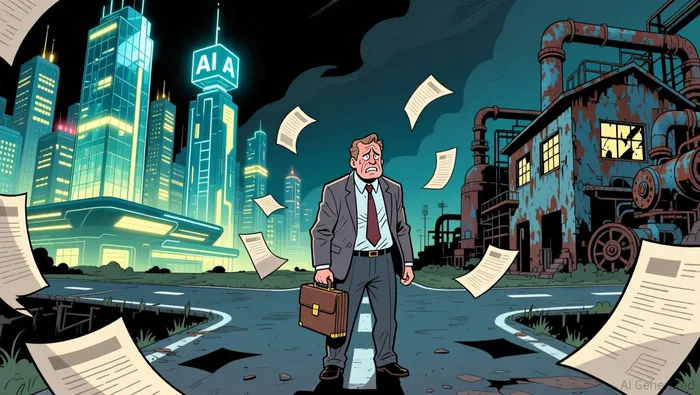
Billionaire investor and entrepreneur Mark Cuban has issued a stark warning to the corporate world, suggesting that the path to survival in the age of artificial intelligence is fraught with legal peril for chief executives. The core of his argument is that public company leaders are trapped in a strategic bind where every potential move carries a high risk of shareholder backlash and subsequent litigation. Whether a CEO chooses to radically restructure their company to become AI-native or decides to maintain the status quo, the outcome appears to be the same: a potential lawsuit and a decline in stock value. This phenomenon, which Cuban terms the 'Innovator's AI Dilemma,' reflects a broader shift in how markets and investors evaluate corporate strategy in an era of rapid technological disruption.
What Is The For Public CEOs?
At the heart of Mark Cuban's recent commentary is a specific strategic trap facing incumbents who compete against agile, . He argues that established companies face a binary choice: they must either tear down their existing business models to rebuild as AI-native entities, or they risk falling behind and becoming obsolete. However, Cuban warns that this choice is not a strategic opportunity but a legal minefield. Companies that attempt a 'teardown' to modernize operations risk immediate financial instability and plummeting stock prices, which can lead to lawsuits from shareholders who view the destruction of current value as negligence. Conversely, companies that fail to reinvent themselves face criticism for allowing competitors to erode market share, which can also result in litigation for failing to act in the best interests of the company. This dynamic creates a situation where executives are effectively sued regardless of their decision. , yet many lack the technical depth to make these strategic decisions effectively. Cuban notes that the core challenge lies in explaining these drastic structural shifts to public shareholders while managing the risk of an AI investment bubble. The result is a high-stakes environment where the pressure to innovate clashes with the legal and financial constraints of traditional corporate governance, leaving CEOs in a precarious position where the path to the future is blocked by the fear of lawsuits.
Why Are CEOs Facing Litigation Risks Regardless Of Their Choice?
The legal risks identified by Cuban stem from the fundamental mismatch between the speed of technological change and the expectations of traditional shareholders. When a company undertakes a radical transformation to integrate AI, it often incurs significant short-term costs and operational disruptions. These actions can depress stock prices, leading to shareholder lawsuits alleging that the management destroyed value without a clear path to recovery. In this scenario, the market punishes the disruption, and the legal system is invoked to hold executives accountable for the financial pain caused by the transition.
On the other hand, if a company chooses to maintain the status quo, it risks being displaced by competitors who have already embraced AI-native operations. This stagnation can lead to a slow erosion of market share and profitability, which shareholders may interpret as a failure of leadership to adapt to the new reality. Cuban argues that in both cases, the outcome is shareholder dissatisfaction and potential litigation. The 'Innovator's AI Dilemma' is that the very actions required to survive the future—radical transformation or aggressive adaptation—are the same actions that trigger legal challenges in the present. This creates a 'no-win' scenario where the cost of inaction is the same as the cost of action, leaving executives with few safe options.
How Can Leaders Navigate The AI Transition Safely?
Despite the grim outlook, Cuban offers a specific piece of advice for navigating this treacherous landscape. He urges CEOs to leverage their own AI models to determine the optimal path to becoming AI-native without sacrificing economics. The core of his strategy is to use AI not just as a tool for efficiency, but as a strategic partner in decision-making. By querying their own AI models to chart a logical path from their current state to an AI-native structure, leaders can identify the most viable route to transformation. If a CEO cannot derive a logical path from their AI models, Cuban suggests that their company is in serious trouble.
This approach requires a shift in mindset from simply adopting AI tools to fundamentally restructuring the organization around them. Companies like have begun to exemplify this proactive approach by acquiring AI startups and integrating AI leadership roles to navigate the transformation. However, Cuban emphasizes that this is not just about technology; it is about the ability to pivot quickly and adapt to changing market conditions. He argues that curiosity, agility, and adaptability are the three essential soft skills for business success, as technical knowledge alone is insufficient in a rapidly evolving environment. Leaders must be willing to embrace uncertainty and adjust their strategies as the technology evolves, ensuring that they remain competitive in an 'AI-great' future.
The implications of Cuban's analysis extend beyond individual companies to the broader market structure. As AI continues to reshape industries, the gap between 'AI-great' companies and those that fail to adapt will widen, creating a bifurcated market. This shift will likely lead to increased volatility and a higher incidence of shareholder litigation as investors demand accountability for strategic decisions. For investors, this means that the traditional metrics of corporate performance may need to be re-evaluated in the context of AI adoption. The ability to navigate the 'Innovator's AI Dilemma' will become a key differentiator for public companies, determining which firms survive and thrive in the new economy.
Ultimately, the 'Innovator's AI Dilemma' highlights the urgent need for a new framework for corporate governance in the age of artificial intelligence. As the technology continues to evolve, the rules of the game are changing, and the old ways of doing business are becoming obsolete. CEOs who can successfully navigate this transition will be the ones who define the future of their industries, while those who fail to adapt will be left behind. The challenge is immense, but the rewards for those who can master the balance between innovation and legal risk are equally significant.

Stay ahead of the market.
Get curated U.S. market news, insights and key dates delivered to your inbox.


AInvest
PRO
AInvest
PRO



Comments
No comments yet