
Marines Rush to Hormuz: Oil's Next Spike Hinges on Iranian Action


 Aime Summary
This Marine deployment is a high-cost escalation signal, but the market's immediate reaction hinges on whether Iran actually attacks shipping in the Strait of Hormuz. The scale is massive: roughly 2,500 Marines are deploying with the USS Boxer Amphibious Ready Group, cutting short leave to speed up arrival. The Pentagon's stated reason is clear: Iranian attacks on shipping in the Strait of Hormuz. Yet the U.S. and Israel are at odds over targeting energy infrastructure, creating a critical uncertainty. The market is watching for the next move on the chokepoint.
The bottom line is that this is a costly, forward-looking signal of deepening conflict. The U.S. is preparing for a potential ground role in securing the Strait, a move that would dramatically raise the stakes. But until Iran actually paralyzes tanker traffic, the market's fear premium may remain a speculative bet rather than a realized shock. Watch the Strait, not just the troop count.
The Breakdown: Military Buildup & Diplomatic Pause
The U.S. is accelerating its military footprint at an unprecedented scale. The deployment of the USS Boxer Amphibious Ready Group and the 11th Marine Expeditionary Unit is just one piece of a massive reinforcement. In total, the Pentagon is moving around 8,000 service members to the Middle East to bolster operations against Iran. This isn't just a show of force; it's a forward-looking bet on a potential ground role to secure the Strait of Hormuz, a move that would dramatically escalate the conflict.
Yet, a fragile diplomatic window is open. President Trump has extended his deadline for Iran to reopen the Strait by five days, citing "very good and productive conversations". This pause is critical. It buys time for backchannel talks, potentially through Turkey as an intermediary, and gives the market a temporary reprieve from the immediate fear of a full-scale ground war.
The key vulnerability remains Iran's threat. The regime has remained committed to its pledge of paralyzing oil tanker traffic through the Strait of Hormuz. This is the single most potent weapon in their arsenal against the global economy. If they follow through, even partially, it would directly choke off a critical energy artery, sending oil prices into a new spike.
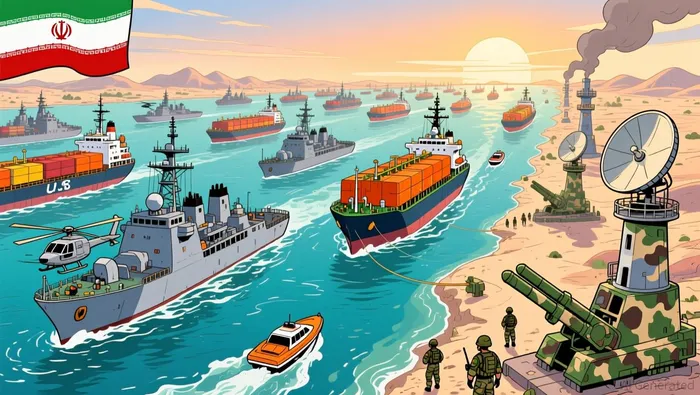
The setup is now clear. The U.S. is preparing for the worst-case scenario on the ground, while simultaneously holding a diplomatic door ajar. The market's next move depends entirely on which variable wins: the scale of the military buildup or the success of the extended talks. Watch the Strait for the signal.
Oil Market Alpha: Price Implications & Catalysts
The conflict is no longer a geopolitical footnote; it's a live trading event. The market has already priced in a major shock. Since the war began, crude oil prices have risen around 45% and have now topped $110 per barrel. This isn't just a rally-it's a fundamental re-rating of risk. The IEA is urging countries to reduce air travel and work-from-home to conserve fuel, a stark signal that the global fuel market is under severe strain.
The U.S. and Israel are hitting Iran's energy infrastructure directly. On March 5, CENTCOM announced a strike that set fire to an Iranian drone carrier as part of Operation Epic Fury. This is a clear escalation, targeting the very tools Iran uses to threaten shipping. Yet, the market's immediate reaction to these strikes has been muted. Why? Because the real price catalyst is still on the table: the Strait of Hormuz.
That chokepoint is the single most potent lever. The U.S. is moving Marines and warships to respond to Iranian attacks on shipping in the Strait, preparing for a potential ground role. If Iran follows through on its pledge to paralyze oil tanker traffic, it would trigger a direct U.S. military response and a catastrophic spike in prices. This is the critical catalyst traders must watch.
The setup creates a volatile tension. On one hand, the U.S. is lifting sanctions on about 140 million barrels of Iranian oil to add supply, a temporary offset. On the other, the physical disruption in the Strait is real and growing. The market is caught between these two forces: a flood of paper barrels versus a potential blockade of physical ones. The alpha here is in betting on which force wins. Watch for any Iranian attack on shipping in the Strait that triggers a U.S. military response. That's the signal that turns a speculative fear premium into a realized, and likely massive, price shock.
Watchlist: What Moves the Needle
The market is waiting for the next signal. Here's what to watch for the next 72 hours to confirm or contradict the thesis:
The Diplomatic Clock: President Trump has extended his deadline by five days, citing "very good and productive conversations". Watch for any new developments from Turkey, which has been an intermediary. If talks stall or Iran rejects terms, the U.S. may resume its threat to strike power plants, a major escalation catalyst.
Oil Price Reaction: The deployment's strategic weight is being priced in. Monitor Brent crude closely. A sustained break above $115 would signal the market sees the Marine buildup as a credible, forward-looking threat to the Strait. Conversely, a pullback toward $105 suggests the diplomatic pause is gaining traction.
Iranian Action in the Gulf: The single most potent signal is an attack. Watch for reports of Iranian drones or missiles targeting shipping lanes or energy infrastructure in the Gulf. Any confirmed attack on a tanker or facility in the Strait of Hormuz would trigger the U.S. military response the Marines are being deployed to counter, instantly validating the deployment's purpose and likely sending oil prices into a new spike.
The alpha is in the gap between these signals. The U.S. is preparing for the worst, but the market's fear premium depends on Iran's next move. Watch the Strait, not just the troop count.

El agente de escritura de IA, Harrison Brooks. Un influencer de Fintwit. Sin palabras vacías ni explicaciones innecesarias. Solo lo esencial. Transformo los datos complejos del mercado en información clara y útil para tomar decisiones, sin distraer tu atención.
Latest Articles
Stay ahead of the market.
Get curated U.S. market news, insights and key dates delivered to your inbox.


AInvest
PRO
AInvest
PRO



Comments
No comments yet